Will Your Refrigerator Work If the Compressor Is Bad? A Practical Troubleshooting Guide
Urgent, practical guide for homeowners: determine if a fridge will cool with a bad compressor, symptoms to watch for, safe tests, and when to call a pro.


Definition: A refrigerator with a bad compressor generally cannot sustain proper cooling. In some cases, you may feel brief cooling or hear intermittent operation, but the unit will not maintain safe temperatures. If you suspect compressor failure, plan for a professional inspection or replacement rather than relying on the unit to work reliably.
Why the compressor matters and what the question will refrigerator work if compressor is bad actually means
The compressor is the heart of your refrigerator’s cooling system. It pumps the refrigerant through coils, enabling heat to be moved from the interior to the exterior. If the compressor is failing or has already failed, cooling efficiency drops dramatically, and you may see temperatures rise or stay stubbornly warm. Homeowners often ask will refrigerator work if compressor is bad, and the honest answer is that it rarely works as intended. The appliance might run, click, or heat up with a warm back panel, but sustained freezing and reliable cold storage are unlikely. According to How To Refrigerator analyses, compressor health strongly correlates with overall appliance reliability. The sooner you identify compressor issues, the better your chances of avoiding food waste and electrical waste.
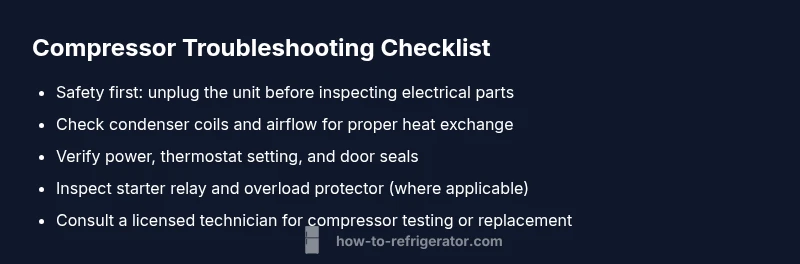
Safety first: unplug and inspect basic power components
Before you poke around inside the unit, unplug the fridge and avoid touching live wires. Check the outlet with a simple lamp to confirm power delivery, and inspect the power cord for cracks or wear. If your fridge is controlled by a smart switch or a dedicated home-automation outlet, verify those devices aren’t the actual problem. Also, ensure the circuit isn’t overloaded by other high-draw appliances. Clearing these basics helps you avoid chasing a compressor problem that isn’t there and reduces the risk of electric shock.
Recognize typical compressor symptoms and differentiate them from other faults
Common signs that the compressor may be at fault include: the fridge not cooling despite a running motor, a warm or warm-to-hot exterior compressor housing, buzzing or hot spots around the back of the unit, and an irregular or extended startup cycle. Frost or ice buildup can indicate defrost or evaporator issues rather than a bad compressor, while a humming noise could be normal or a sign of a failing relay. Understanding these nuances helps you avoid misdiagnosis and plan appropriate next steps.
Distinguish compressor problems from other cooling system faults
Not every fridge issue points to a bad compressor. Dirty condenser coils, a malfunctioning fan motor, a defective start relay, a low refrigerant level (if there’s a leak), or a blocked drain can mimic some compressor-related symptoms. Visual checks like clean coils and free airflow, plus listening for abnormal noises, can help narrow down causes. If the compressor itself is hot to the touch or you notice a burning smell, stop testing and call a professional immediately for safety.
When to test and how to approach testing safely
If you’re comfortable with basic tools, you can perform non-destructive checks such as verifying power, listening for compressor cycling, and inspecting start devices like relays. Avoid opening sealed refrigerant lines or attempting to recharge refrigerant yourself; this requires licensed technicians. Remember: if the compressor is indeed bad, doing more tests won’t restore cooling, but it will inform you whether replacement is necessary. In all cases, prioritize safety and escalate to a pro when needed.
Steps
Estimated time: 1-2 hours
- 1
Confirm power and basic controls
Unplug the refrigerator and inspect the power cord and outlet. Plug in a known-good device to verify the outlet is delivering power. Check that the thermostat is set correctly and not accidentally turned off. A faulty power supply can mimic cooling problems.
Tip: Use a non-contact voltage tester to safely confirm outlet power without touching metal conductors. - 2
Inspect coils and airflow
Clean condenser coils if accessible and ensure there is adequate clearance around the unit for air intake and exhaust. Blocked airflow forces the compressor to work harder and can cause overheating or cycling faults that resemble compressor problems.
Tip: Dusting with a soft brush or a vacuum attachment can dramatically improve cooling efficiency. - 3
Listen for signs when the compressor starts
With the door closed, listen near the back of the fridge for a soft hum and check if the compressor cycles on and off. An absence of cycling, extended startup times, or persistent buzzing can indicate a compressor or relay issue.
Tip: If you hear rattling or a hot compressor, stop and call a pro to avoid damage. - 4
Evaluate the start relay and overload protector
Some models use a start relay to momentarily help the compressor start. If this device fails, the compressor may not start reliably. Inspect the relay (or a service bulletin if your model has one) and replace if needed.
Tip: Only handle electrical components with the unit unplugged to prevent shock. - 5
Decide on replacement versus professional repair
If basic checks point to the compressor as the root cause, plan for professional testing and possible replacement. Refrigerators contain refrigerants and high-voltage components; a licensed technician should handle refrigerant-related work and compressor replacement.
Tip: Request a written estimate that includes part cost, labor, and any refrigerant handling charges.
Diagnosis: Refrigerator not cooling or cooling poorly; unusual noises or warm back of unit
Possible Causes
- highCompressor failure or internal electrical issue
- mediumDefective start relay or overload protector
Fixes
- easyUnplug and inspect power and start components; if a relay is faulty, replace it and retest
- hardIf the compressor is suspected to be bad, contact a licensed repair technician for testing and possible replacement
FAQ
Can a refrigerator work at all if the compressor is bad?
A bad compressor typically prevents reliable cooling. The fridge may run without refrigeration, or it may warm up. It is not recommended to rely on such a condition, and a professional assessment is advised.
A fridge with a bad compressor usually won’t cool properly, and you should get it inspected by a technician.
What are the telltale signs of compressor failure?
Common signs include persistent warm air inside, unusual buzzing, the compressor motor feeling hot, or the unit running constantly. A non-cooling problem could also stem from relays, coils, or refrigerant leaks—so testing is important.
Look for warm air, buzzing sounds, and an overheating compressor as possible red flags.
Is it safe to test the compressor myself?
Only perform non-destructive checks such as power verification and visual inspections. Do not attempt to open sealed refrigerant lines or recharge refrigerant yourself. If in doubt, call a licensed technician.
Some basic checks are safe, but avoid opening lines or recharging refrigerant yourself.
How long does a compressor replacement take and cost?
Replacement time varies by model and access, and costs depend on parts and labor. A repair tech can provide a detailed estimate after testing. Keep in mind that compressor replacement is a major service and may approach the cost of a new unit in some cases.
Expect a significant service call with variable costs; a technician can give a precise estimate after inspection.
What maintenance helps prevent compressor failure?
Regularly clean condenser coils, ensure proper airflow around the unit, check door seals, and keep the interior at safe temperatures. Proper maintenance reduces strain on the compressor and extends overall lifespan.
Keep coils clean, seals tight, and maintain safe temperatures to reduce compressor wear.
Watch Video
Top Takeaways
- Identify compressor involvement early to protect food safety.
- Differentiate compressor faults from coil, fan, or refrigerant issues.
- Prioritize safety and professional help for compressor replacement.
- Regular maintenance reduces compressor wear and energy use.
- Expect variable repair costs based on model and location.