How to Tell If Refrigerator Compressor Is Bad: Quick Troubleshooting Guide
Urgent, homeowner-focused guide to identify a bad refrigerator compressor with safe checks, diagnostic flow, and step-by-step fixes you can perform now.


The most common sign that the refrigerator compressor may be failing is a lack of cooling paired with an overheated compressor or a buzzing sound that won’t go away. Quick checks include feeling for warm coils, listening for unusual hums, and confirming the condenser and door seals. If basic fixes don’t restore cooling, the compressor or start relay may be bad.
What the compressor does and why failure happens
The compressor is the heart of your refrigerator's cooling system. It compresses refrigerant to move heat from the interior to the condenser coils. When the compressor starts failing, you might notice persistent warm air, unusual heat on the back of the fridge, or a persistent buzzing. According to How To Refrigerator, many compressor failures stem from electrical issues inside the motor, worn bearings, or overheating due to dirty condenser coils. Regular operation can also wear relays or overload protectors, which can simulate a bad compressor without the motor itself failing. Household conditions like frequent door openings, high ambient temperatures, or poor ventilation around the unit can stress the compressor. Keeping coils clean, ensuring proper airflow, and avoiding power surges help extend life. If you observe moisture around the compressor or oil leakage, stop operating the fridge and call a pro. For homeowners, a failed compressor generally means a replacement or professional repair, as skilled diagnostic tools and refrigerant handling are required.
Common symptom patterns to watch for
When the cooling performance drops, it’s a red flag worth evaluating. Not cooling at all or only in the freezer can indicate a compressor problem, especially if the back of the unit feels warm or you hear a steady hum or buzz. Other signs include frequent cycling on and off, frost buildup in the freezer despite proper defrost settings, and a loud rattling or grinding sound when the compressor runs. If the compressor is intermittently cutting in and out or stays hot to the touch long after a cycle, the motor may be failing. It’s important to note that many issues mimic a bad compressor: a dirty condenser coil, a faulty thermostat, a malfunctioning fan, or a bad start relay can all produce similar symptoms. How To Refrigerator notes that a thorough test is needed to confirm the compressor is the culprit, because some symptoms can be caused by surrounding parts.
Safe quick checks you can perform today
Safety first: unplug the fridge before testing. Inspect the door seals for gaps that allow warm air in. Check that the condenser coils are clean and have good airflow; vacuum off dust and debris. Listen for the condenser fan when the compressor runs and note whether it spins freely. Feel the back of the unit to see if the compressor surface is uncomfortably hot. Verify the thermostat setting and ensure the freezer is not in defrost mode. If you have an external circuit breaker, reset it. These checks can rule out simple causes with no special tools. According to How To Refrigerator, ruling out the basics quickly helps you decide when a pro is needed.
How to test the compressor safely
With the unit unplugged, locate the compressor—usually a metal can near the back bottom of the fridge. Remove the service panel if needed and inspect wiring for loose connections or signs of damage. Reconnect power and cautiously use a digital multimeter to test resistance between compressor terminals; you should see continuity in a normal winding. If you encounter an open circuit or a short to ground, the compressor winding is likely damaged and needs replacement. Remember that refrigerant handling and proper charging require licensed tools, so avoid DIY repairs that involve refrigerant. If results are inconclusive, proceed with professional testing. The goal is to confirm whether the compressor itself is at fault or if a start relay, overload protector, or another component is to blame.
Diagnostic mindset: start-relay, overload, and condenser coils
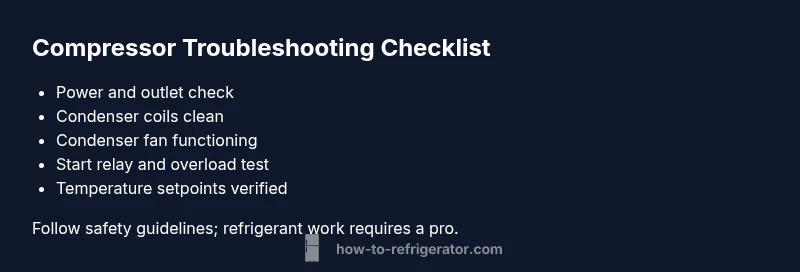
Develop a systematic approach: first rule out power and airflow, then test the start relay and overload protector as common failure points. A failed relay can stop the compressor from starting, mimicking a bad motor. If the relay checks out, examine the overload protector for obvious heat damage. Don’t overlook condenser coils—dirty coils force the compressor to work harder and can mimic a compressor problem. Use a flashlight to inspect coil fins and clean with a soft brush or vacuum. If the condenser is clean and the compressor still won’t start or runs excessively hot, the issue is more likely internal to the compressor or its controls. How To Refrigerator emphasizes documenting symptoms and testing steps to avoid guessing, especially when refrigerants and sealed systems are involved.
When to repair vs replace and safety considerations
If a seal fails, refrigerant leaks, or the compressor shows signs of internal damage, replacement is often the most reliable option. Compressor replacement is a complex task that involves refrigerant recovery and electrical safety; it typically requires a licensed technician. If your unit is under warranty or has service coverage, check with the manufacturer before paying out of pocket. In many cases, a faulty start relay or faulty overload protector can be replaced without removing the entire compressor, offering a cost-effective fix. The decision to repair vs replace should factor in the unit’s age, energy efficiency, and expected remaining lifespan. Always prioritize safety, especially around high-voltage components and refrigerants. For homeowners, the How To Refrigerator team recommends leaning on a pro for final testing and any refrigerant work.
Practical prevention and maintenance tips
Proactive maintenance reduces the risk of compressor failure. Schedule quarterly coil cleanings and ensure adequate clearance around the back and sides of the appliance for air intake. Keep the door seals clean and intact to minimize warm air infiltration. Place the fridge in a ventilated area away from heat sources and protect it from power surges with a quality surge protector. Regularly check the thermostat setting to maintain consistent temperatures and avoid excessive cycling. If you hear unusual noises, address airflow issues first, then examine the electrical connections. Consistent maintenance extends life and helps you spot problems before a total compressor failure.
What to do next if you confirm a bad compressor
If tests indicate a bad compressor, don’t continue using the unit. Contact a licensed technician to confirm the diagnosis and discuss replacement options. If the appliance is under warranty, file a service request promptly. Gather observations, photos, and any test results to share with the technician. In many cases, you’ll need a replacement compressor or a full condensing unit rebuild. While awaiting service, minimize food waste by transferring perishables to a working fridge or cooler. The How To Refrigerator team recommends acting quickly to protect food safety and prevent further damage to the sealed system.
Steps
Estimated time: 60-90 minutes
- 1
Power down safely
Unplug the refrigerator from the wall outlet and switch off any power strips. This prevents shock and protects protective components while you inspect. Wait a few minutes to ensure capacitors discharge before touching internal parts.
Tip: Use a non-conductive flashlight to avoid touching metal components. - 2
Check exterior conditions
Inspect doors for gaps, seals for wear, and the general condition of the condenser area. A leaky seal or obstructed airflow can mimic compressor problems by forcing the unit to work harder.
Tip: Take a moment to clean the door gaskets with mild soap and water. - 3
Inspect condenser coils
Access the rear or bottom coils and look for dust and lint buildup. Use a vacuum with a brush attachment or a soft brush to remove debris, creating optimal airflow for heat exchange.
Tip: Do not use metal tools that could bend coil fins. - 4
Verify fan operation
When powered, listen for the condenser fan to run smoothly. If the fan is blocked, noisy, or dead, it can cause overheating and lead to compressor stress.
Tip: If the fan is seized, do not force it—this can damage the motor. - 5
Test the thermostat setting
Ensure the thermostat is set appropriately (not in defrost or off) and the freezer is not over-cooled. Incorrect settings can cause temperature instability that feels like compressor failure.
Tip: Record current settings before adjusting to avoid misconfigurations. - 6
Assess start relay and wiring
Access the back panel and locate the start relay. If you can swap with a known good relay or test continuity with a meter, you may determine whether the relay is the issue.
Tip: Only swap with identical part numbers and disconnected power. - 7
Check electrical supply
Inspect the outlet and plug for damage and test with a different known-good outlet if possible. Verify the house circuit isn’t tripped or overloaded by other appliances.
Tip: Avoid using extension cords; plug directly into a wall outlet. - 8
Decide on next steps
If cooling returns after these checks, monitor for a few hours. If the unit remains warm or you hear abnormal noises, plan a professional assessment for compressor evaluation or replacement.
Tip: Document symptoms and tests to share with the technician.
Diagnosis: Refrigerator not cooling or the back is unusually warm with a buzzing sound
Possible Causes
- highPower issue (outlet, circuit, or cord)
- highFaulty start relay or overload protector
- mediumDirty condenser coils causing overheating
- lowCompressor motor failure
Fixes
- easyEnsure the fridge is plugged in and the outlet is functioning; reset the circuit breaker if tripped.
- easyInspect and clean condenser coils; improve airflow around the unit.
- mediumTest or replace the start relay/overload protector as a first repair attempt.
- hardIf the compressor itself may be failing, contact a licensed technician for further testing and possible replacement.
FAQ
What are the most common signs that the compressor is bad?
Common signs include warm interior, a buzzing sound, and frequent cycling. These can also be caused by other components, so a proper test is essential.
Common signs are warm food, buzzing, and frequent cycling.
Can a bad compressor trip the circuit breaker?
Yes, a failing compressor can draw abnormal current and trip a breaker, especially if other issues amplify the load.
Yes, it can trip a breaker if it draws excess current.
Is it safe to test a compressor myself?
You can perform non-invasive checks, but testing electrical components inside the compressor requires training and equipment; avoid refrigerant work.
It's risky to test inside; avoid handling electrical parts or refrigerant.
What should I do first if I suspect a bad compressor?
Unplug, check basic causes (power, coils, seals), then call a pro if cooling doesn’t improve.
First unplug and check basics, then call a pro.
How long does a fridge compressor typically last?
Compressor life varies; with good maintenance, many last several years, but a failure often indicates replacement rather than repair.
Compressor life varies; many last several years with maintenance.
Watch Video
Top Takeaways
- Start with power and airflow checks.
- Test start relay and overload first before replacing the compressor.
- A bad compressor often needs a professional replacement.
- Safety and refrigerant handling require licensed technicians.