How to Tell If Refrigerator Compressor Is Working
Learn safe, practical steps to determine if your fridge compressor is functioning, plus symptoms, diagnostics, and when to call a pro for a lasting fix.


If your fridge isn’t cooling and you can’t hear a faint compressor hum, the compressor may not be running. Start with power, thermostat, and condenser coil checks; if the unit still won’t start, suspect the start relay or capacitor and consider a professional inspection.
Why it matters to know how to tell if refrigerator compressor is working
Knowing whether the compressor is operating is essential for keeping food safe and avoiding wasted energy. The compressor is the heart of a refrigerator’s cooling system, and its health directly affects temperature stability. This guide explains how to assess compressor activity with non-destructive checks first, plus clear signs that indicate when a more advanced diagnosis or replacement may be needed. According to How To Refrigerator, reliable compressor operation is often linked to simple electrical issues or dirty components rather than a failed motor, so start with the basics before assuming the worst. This approach helps homeowners troubleshoot quickly and safely without unnecessary service calls.
Safety first: testing guidelines you can trust
Before you touch any electrical components, unplug the fridge and wait 5–10 minutes to avoid a compressor surge or electrical shock. Use a multimeter only if you’re comfortable with live testing; otherwise, rely on visual checks. Do not attempt to disassemble the compressor housing or perform refrigerant work unless you’re trained, since those tasks require licensed technicians. Wear gloves and eye protection when handling external components like the power cord or fan assembly. If you’re unsure at any step, stop and call a professional.
Symptoms and what they mean when assessing the compressor
Different symptoms point to different issues, not all of which involve the compressor motor. A non-cooling fridge with a faint hum usually suggests electrical or relay-related problems, while a fridge that’s warm to the touch on the back panel may indicate a stalled compressor or dirty condenser coils. A loud buzzing or clicking can signal a relay or overload protector fault. Subtle changes—like the compressor cycling on and off irregularly—can indicate temperature control issues or refrigerant flow problems. Use these cues to organize your diagnostic flow rather than jumping to conclusions.
Quick home checks you can do today (safe and non-invasive)
Start with power: verify the outlet is functioning by testing a lamp or using a known-good plug. Check the door seals to ensure a tight seal, since a poor seal can cause the unit to work harder without a noticeable benefit. Inspect the condenser coils (usually on the back or underneath) for dust and debris and clean them with a coil brush or vacuum. Ensure the thermostat is set within the manufacturer’s recommended range. Finally, listen for a faint compressor hum when you open the door and wait a few minutes; if there’s no sound at all, there may be an electrical or relay issue.
How the compressor should sound and feel under normal operation
A healthy compressor typically produces a steady, low-volume hum that you can feel as a gentle vibration along the back panel. After a few minutes, you should notice the temperature gradually dropping inside the fridge. If you hear loud buzzing, rapid clicking, or no noise at all, that’s a red flag. In some models, a soft, steady fan sound should also be present; the absence of this fan noise can indicate airflow problems that indirectly affect compressor efficiency. Remember, audible cues vary by model, so use your appliance’s typical sounds as a baseline.
Diagnostic flow: from symptom to diagnosis to solutions
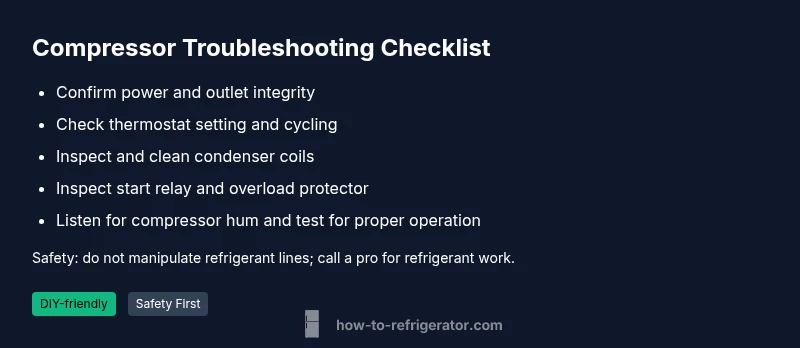
- symptom: fridge isn’t cooling; 2) check for power and thermostat; 3) inspect condenser coils and fan operation; 4) if coils are clean and fan runs but the compressor doesn’t hum, inspect the start relay and overload protector; 5) test for 120V at the compressor circuit if safe; 6) if you identify a faulty relay or capacitor, replacement may be possible; otherwise call a pro. This flow helps isolate the issue without guesswork and keeps you safe.
Step-by-step fixes for common issues (practical and safe)
- Check power and outlet reliability: ensure the fridge is plugged in, the outlet has power, and the circuit breaker isn’t tripped. If the outlet is dead, reset the breaker or replace the outlet. Tip: use a different outlet to confirm the problem isn’t the receptacle. 2. Verify thermostat settings: ensure the control is not set to the vacation or off mode; set to a mid-range temperature and re-check after 15–30 minutes. Tip: document changes to avoid confusion later. 3. Clean condenser coils: unplug the unit, remove the grille or back panel, and gently brush away dust. A dirty coil makes the compressor work harder and can mimic failure. Tip: never use water directly on electrical components. 4. Examine the start relay and overload protector: if accessible, reseat or replace the relay following the manufacturer’s instructions. If you’re unsure, call a pro. Tip: take a photo of wiring before removing components. 5. Listen for humming and feel the back panel: if there’s no hum or it’s intermittent, the relay or capacitor could be faulty. A professional should test refrigerant flow and compressor integrity. 6. When to call a professional: if the unit still doesn’t cool after the above steps, or you detect refrigerant smells, obvious oil leaks, or excessive heat, stop and contact a licensed technician. Tip: routine professional maintenance can prevent surprising compressor failures.
When to call a professional and what to expect
If basic checks don’t restore cooling or you notice refrigerant signs, a licensed technician should assess refrigerant pressure, electrical safety, and potential compressor replacement. Expect a diagnostic visit to include electrical testing, capacitor/relay checks, and a pressure test of the refrigeration circuit. The technician will provide a repair estimate and discuss whether a compressor re-build or replacement is appropriate for your model and age. Prompt professional input can prevent further damage and protect food safety.
Prevention and maintenance to extend compressor life
Regular maintenance is a proactive defense against compressor failure. Clean coils every 3–6 months if you have pets or lots of dust; keep the unit in a climate-controlled area and avoid overfilling the shelves, which blocks air circulation. Check door seals for wear and replace as needed to prevent cold air leakage. Schedule professional inspections annually to catch issues before they escalate. Small, consistent upkeep can keep the compressor operating reliably for years.
Steps
Estimated time: 60-120 minutes
- 1
Confirm power
Unplug the fridge, inspect the outlet with a known-good device, and reset the circuit breaker if needed. Plug back in and listen for the compressor hum after a few minutes.
Tip: If the outlet is shared, try a dedicated outlet to rule out nuisance trips. - 2
Check thermostat settings
Set the thermostat to mid-range, wait 15–20 minutes, and see if the compressor starts. If your fridge has a digital display, ensure it’s functioning and set correctly.
Tip: Avoid extreme temperature settings; frequent changes can complicate diagnostics. - 3
Inspect condenser coils
Carefully access the coils and remove dust with a soft brush or vacuum. Reassemble and wait 15–30 minutes to observe improved performance.
Tip: Never spray water directly on electrical components. - 4
Evaluate start relay/capacitor
If the model has an accessible start relay, reseat or replace it following the manufacturer’s instructions. Note any signs of burn marks or melting.
Tip: Take a photo of wiring before removing parts for reference. - 5
Test for compressor hum
If you can’t hear a hum after basic steps, double-check power and relays. A lack of hum may indicate an electrical or refrigerant-related issue that needs pro service.
Tip: Do not poke at sealed refrigerant lines; leaks require licensed technicians. - 6
Decide on professional help
If symptoms persist—especially refrigerant smells, oil leaks, or persistent overheating—schedule a repair with a licensed technician.
Tip: Request a written estimate and explain the steps you’ve already taken.
Diagnosis: Fridge not cooling or compressor not running
Possible Causes
- highNo power to the unit or tripped circuit breaker
- mediumThermostat setting or control issue
- lowDirty condenser coils causing overload on the compressor
- mediumStart relay or capacitor failure
- lowFaulty overload protector or wiring fault
Fixes
- easyVerify outlet power and reset any tripped breakers; test with a known-good device
- easyAdjust thermostat to a proper cooling range and observe if compressor engages
- easyClean condenser coils and ensure proper airflow; re-check after 15–30 minutes
- mediumInspect start relay/capacitor where accessible and reseat or replace per manufacturer guidance
- mediumCheck wiring and overload protector; if uncertain, call a licensed technician
FAQ
What are typical signs that the compressor is working normally?
A healthy compressor usually emits a low hum and the back panel feels warm after a few minutes of operation. The fridge should maintain a steady cool temperature without excessive cycling.
A healthy compressor hum is normal, and the back should warm gradually as it cools. If there's no sound or the fridge stays warm, there may be an issue.
Can I diagnose a faulty compressor at home?
You can perform non-invasive checks like power, thermostat, and coil cleanliness. More advanced tests (relay, capacitor, refrigerant) require a professional.
You can check basics at home, but for relay, capacitor, or refrigerant issues, call a pro.
What should I do first if the fridge isn’t cooling?
Start with power and thermostat checks, then inspect coils. If these don’t fix it, assess the start relay and overload protector before calling a technician.
First, check power and thermostat. If the problem persists, inspect the relay and overload protector before you call a technician.
Is a compressor replacement worth it for an older fridge?
It depends on age, model, and cost. A pro can compare a replacement compressor versus full unit replacement and help you decide.
A professional can tell you if replacing the compressor is worth it or if a full unit replacement makes more sense.
When should I call a professional immediately?
If you smell refrigerant, notice oil leaks, or the compressor overheats repeatedly, stop and call a licensed technician right away.
If you smell refrigerant or see oil leaks, call a licensed technician now.
Can dirty coils cause a fridge to stop cooling?
Yes—heavy dust buildup makes the compressor work harder, reducing efficiency and potentially causing premature shutdowns.
Dirty coils can force the compressor to work harder and cut cooling efficiency. Clean them regularly.
Watch Video
Top Takeaways
- Check power and thermostat first
- Clean coils to reduce compressor load
- Listen for hum as an important diagnostic cue
- Call a pro for relay/capacitor or refrigerant concerns