Can Refrigerator Compressor Be Repaired? A Homeowner’s Guide
Learn whether a refrigerator compressor can be repaired, signs of failure, safe alternatives, and when to hire a pro. How To Refrigerator explains practical steps and cost considerations for homeowners.


In most residential cases, a refrigerator compressor cannot be repaired; it is a sealed component and professional replacement is the normal path. Diagnosis of the true failure requires specialized tools and refrigerant handling by licensed technicians.
Can refrigerator compressor be repaired
The question many homeowners ask is can refrigerator compressor be repaired. In practice, most residential compressors are hermetically sealed units. Opening or attempting to service the compressor itself is not a DIY-friendly task and can create safety and environmental hazards. According to How To Refrigerator, the typical path for a faulty compressor is replacement or professional evaluation rather than a home repair. If your fridge is still under warranty, contact the manufacturer or an authorized service provider before any disassembly. Diagnosing a true compressor failure starts with careful, non-invasive checks of power, start components, and temperature readings. A compressor failure often means the motor winding or the refrigeration circuit is compromised beyond simple fixes, which generally requires a replacement compressor or entire unit. Any attempt to repair the sealed system can release refrigerant, pose electrical hazards, and may violate local regulations. For homeowners, understanding when to repair versus replace is key to restoring cooling safely.
wordCount": 178
Tools & Materials
- Multimeter(Test electrical components and motor circuits; check voltage to the compressor and start relay)
- Screwdrivers (Phillips and flat-head)(Access electrical panels and mounting hardware)
- Nut driver set(Detach mounting hardware if a professional requests access to the compressor)
- Safety gear (gloves and safety glasses)(Protect from sharp edges and potential refrigerant exposure)
- Flashlight or headlamp(Illuminate hard-to-reach areas and verify wiring connections)
- Manometer and gauge set(For pressure checks during professional assessment)
- Vacuum pump(Used in evacuating lines during proper professional service)
- Refrigerant leak detector(Optional tool to locate leaks when working with sealed systems)
Steps
Estimated time: 2-6 hours
- 1
Power down and unplug
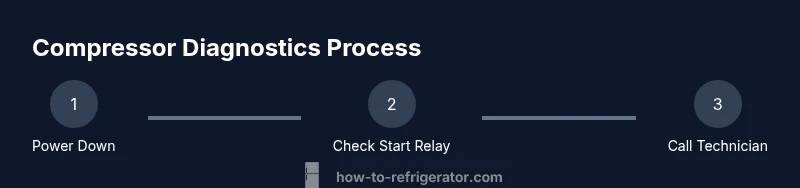
Unplug the refrigerator to remove all live power before touching any components. This step protects you from electrical shock and reduces the risk of triggering the compressor circuit during inspection.
Tip: If you must move the unit, disconnect at the outlet first and avoid tugging on power cords. - 2
Perform non-invasive checks
Verify the thermostat setting, ensure the outlet is supplying power, and inspect for obvious signs of wiring damage. These checks help determine if the issue is something simple or deeper in the refrigeration circuit.
Tip: Document any unusual sounds, smells, or visible wear for the technician. - 3
Inspect start relay and overload
If your model exposes a start relay or overload protector near the compressor, reseat or replace it only if you are confident in handling these parts. A faulty relay can mimic compressor failure without the need to touch the sealed unit.
Tip: Only replace with the exact part specified for your model to avoid further issues. - 4
Check electrical connections
Look for loose wires or corroded connectors at the compressor and surrounding control boards. Tighten and secure connections, but avoid forcing components that resist normal movement.
Tip: Use a diagram from the service manual to locate the correct wires. - 5
Assess condenser and refrigerant conditions
Clean the condenser coils and ensure there are no obvious refrigerant leaks around accessible areas. Note that handling refrigerant and internal leaks is a job for licensed professionals.
Tip: A clean condenser improves overall cooling even if the compressor is failing. - 6
Consult a licensed technician
If basic checks don’t resolve the symptoms, call a certified refrigeration technician. They can confirm whether the compressor is at fault and discuss replacement vs. unit replacement options.
Tip: Ask for a clear breakdown of parts, labor, and whether refrigerant handling is required. - 7
Decision: repair vs replacement
Based on the technician’s assessment, age of the unit, and warranty coverage, decide whether to repair or replace. In many cases, a stubborn compressor issue is more cost-effective as a replacement rather than a repair.
Tip: Get multiple quotes and compare the total cost and expected lifespan after repair or replacement. - 8
Plan for future maintenance
Implement preventative steps such as coil cleaning, door seal checks, and keeping the unit in a stable temperature range to reduce future stress on the compressor.
Tip: Schedule periodic maintenance reminders to extend the life of the appliance.
FAQ
Can a refrigerator compressor be repaired?
In most cases, the compressor itself is a sealed component and cannot be repaired by a homeowner. A licensed technician may repair surrounding components or replace the compressor or entire unit.
Generally, you cannot repair the compressor at home; a licensed technician will assess and decide between replacement options.
What are common signs of a failing compressor?
Not cooling adequately, unusual buzzing or overheating, and the fridge cycling on and off frequently can indicate compressor trouble. Always rule out start relays and thermostat first.
Look for poor cooling, odd noises, or frequent cycling as potential compressor issues.
Is it safe to repair a compressor at home?
No. Sealed refrigerant systems and electrical components pose risks of exposure and shock. Refrigerant handling and sealed system work should be done by a licensed professional.
No—don’t attempt home repairs on the sealed compressor system.
Should I replace the fridge or just the compressor?
Often replacing the compressor alone isn’t cost-effective. A technician can advise whether a compressor replacement or full unit replacement makes more sense for reliability and warranty reasons.
A pro can help you decide whether to repair the compressor or replace the entire fridge.
What maintenance helps prevent compressor failure?
Keep coils clean, ensure proper door seals, and maintain stable temperatures. Regular checks reduce strain on the compressor and extend overall appliance life.
Keep it clean, seal the door well, and don’t overfill the fridge to avoid stressing the compressor.
Are there warranty considerations I should know?
Warranties may cover certain failures or labor. Check the original warranty and any extended coverage before authorizing repairs.
Check warranty coverage before paying for repairs to avoid surprises.
Watch Video
Top Takeaways
- A failed compressor is rarely DIY repairable.
- Professional assessment is essential for accurate diagnosis.
- Replacement can be the most practical option in many cases.
- Regular maintenance helps prevent future failures.