Will Refrigerator Leak If Unplugged? A Practical Troubleshooting Guide
Learn why a refrigerator may leak after unplugging, how to diagnose common causes, step-by-step fixes, safety tips, and when to call a pro. How To Refrigerator guides homeowners through fridge fixes with clear, actionable steps.


Most refrigerators should not leak when unplugged. If you see water after unplugging, it’s usually from residual defrost water or a blocked defrost drain, not active cooling. Wipe up the spill, check the drain pan and drain tube for clogs, and ensure the unit is level before plugging back in. If water persists, inspect the ice maker line and pan for cracks.
Will refrigerator leak if unplugged? Understanding the risk
Water pooling after you unplug a refrigerator is a common concern, but the behavior depends on what water exists inside the appliance rather than active cooling. According to How To Refrigerator, most unplugged leaks arise from water that was already in the drainage system or condensation that forms when cool surfaces meet warmer kitchen air. The key distinction is whether the water is residual or actively produced while the unit is running. When the compressor is off, there isn’t ongoing refrigeration drawing moisture into a drain; any pooling usually results from water that hasn’t drained yet or evaporates slowly from a pan. The situation can nonetheless damage flooring or cabinetry if left unchecked. Recognizing the typical pathways water takes inside a fridge helps you address the source quickly and prevent recurring issues. This is why a careful inspection and a calm drying routine are often enough to resolve unplugged leaks.
Common causes of unplugged leaks
Leaking water after unplugging a refrigerator most often points to issues with water handling components or drainage rather than the cooling system itself. How To Refrigerator Analysis, 2026 indicates common causes include blockages in the defrost drain, a cracked or displaced drain pan, and loose or cracked water lines feeding the ice maker or water dispenser. Condensation can also collect on the interior walls if warm room air meets cold surfaces before the drain system can clear it. In some cases, a recently moved appliance may have a kinked drain tube or misrouted tubing that channels water toward the floor. By mapping these paths, you can quickly test and rule out each potential source without dismantling the entire unit.
Safety considerations before troubleshooting
Safety first: unplug the unit before inspecting any interior components, and keep the area dry to avoid slips. Do not use metal tools to probe plastic fittings, and never reach into the freezer when hands are wet. If you notice exposed electrical components or a damaged power cord, stop and call a professional. Use a flashlight to trace water paths and wear gloves to protect your hands from sharp edges or ice remnants. After addressing the leak, ensure there is no standing water on the floor and that nearby outlets are dry to prevent electrical hazards. Remember, if you are unsure about any step, it’s safer to consult a repair technician. The How To Refrigerator team emphasizes safety as the top priority when diagnosing unplugged leaks.
Diagnostic checklist: what to inspect first
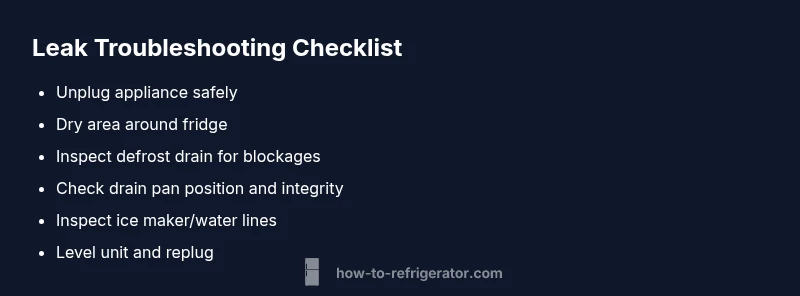
Begin with the simplest checks and work toward the more complex. Look for obvious signs of a cracked or displaced drain pan beneath the refrigerator. Inspect the defrost drain tube for kinks, cracks, or clogs and clear any obstruction with warm water or a non-metallic brush. Check the drain pan under the fridge to see if it sits level and whether its seams are intact. Examine both the freezer and fresh-food sections for any frost buildup that indicates a blocked defrost cycle. Finally, verify that the ice maker and water dispenser lines are securely connected and intact, as a small leak here can travel and appear as a floor leak after unplugging.
Step-by-step fixes for the most common cause
The most common unplugged-leak culprit is a blocked defrost drain. Start by locating the defrost drain tube behind a rear panel or within the inner back wall. Flush the drain with warm water and a mild cleaning solution to remove slime or mineral buildup. Use a flexible pipe cleaner or a long, soft brush to gently clear the tube. Recheck the drain pan alignment and ensure it can drain into the pan without obstruction. If the drain line is cracked, or the pan is damaged, replace the affected parts and reseal joints. Finally, relevel the refrigerator so that water flows toward the drain naturally, and allow time for any residual moisture to dry before replugging.
Prevention tips to avoid future leaks
Regular maintenance helps prevent unplugged leaks from developing. Clean the defrost drain annually or as needed, and keep the area behind the fridge free of dust and moisture to reduce clogs. Ensure the fridge sits level on all four feet and avoid moving the unit frequently, which can misalign drain components. Periodically inspect the drain pan for cracks or splits and replace if necessary. Use a condensate fan or a humidity monitor in very humid kitchens to reduce condensation. By creating a routine of gentle inspections and timely part replacements, you can reduce the risk of leaks when unplugged.
When to call a professional
If you observe persistent water after unplugging or see frost buildup that seems to originate from inside the freezer wall, it’s time to contact a qualified technician. Electrical components or refrigerant handling should never be attempted by DIYers without proper training. A professional can diagnose hidden leaks, replace defective lines, and verify that the defrost system and drainage path function correctly. The How To Refrigerator team recommends seeking help promptly for leaks that recur after attempts to dry and reset the unit.
Steps
Estimated time: 60-90 minutes
- 1
Power down and locate the drain path
Unplug the refrigerator and locate where water is collecting or draining. Check the back panel or interior rear wall to find the defrost drain. Confirm there is clear access to the drain pan beneath the unit.
Tip: Always unplug before touching any internal components. - 2
Wipe up existing water
Dry the floor around the appliance and wipe any standing water from the base. This prevents slip hazards and helps you observe new leaks more clearly as you test. Dispose of the water safely.
Tip: Use an absorbent towel or mop to prevent floor damage. - 3
Inspect defrost drain and pan
Check the defrost drain for kinks or blockages. If you see slime or mineral buildup, clear it with warm water and a pipe cleaner. Inspect the drain pan for cracks or misalignment and adjust as needed.
Tip: Avoid sharp tools that could puncture plastic parts. - 4
Check ice maker and water lines
If you have an ice maker or water dispenser, inspect the lines for cracks or loose fittings. Tighten connections if safe to do so, and replace any damaged hoses. A small drip here can flow to the floor after unplugging.
Tip: Use a flashlight to illuminate tight spaces. - 5
Relevel and test
Place the fridge back on a level surface if needed. Reconnect power and monitor for new leaks for the next 24 hours. Keep the doors slightly ajar to allow air flow during the first test window.
Tip: A level fridge helps drain water into the pan correctly. - 6
Review results and plan next steps
If water reappears, recheck the drain system and consider replacing the drain pan or lines. If no leaks occur, monitor the unit for several days and document any changes to create a maintenance plan.
Tip: Document findings for future reference.
Diagnosis: Water leaks or pooling after unplugging the fridge
Possible Causes
- highResidual defrost water from thaw cycle
- mediumBlocked defrost drain causing water backup
- lowCracked or displaced drain pan
Fixes
- easyWipe up water and check drain pan alignment; ensure it drains toward the pan properly
- easyInspect defrost drain line for obstructions and clear; use warm water/pipe cleaner as needed
- mediumInspect drain pan for cracks or leaks and replace if damaged; reseal joints
FAQ
Will unplugging a fridge stop it from leaking?
Unplugging stops active operation, but existing water can still leak until the drainage path dries. Most unplugged leaks originate from the drain system or condensate collection. If water continues after replugging, investigate the drain and pan and consider professional help for persistent leaks.
Unplugging stops active operation, but water already present can still leak; check the drain and pan, and contact a pro if leaks persist.
Is it safe to unplug a fridge to stop a leak?
Yes, safely unplugging a fridge is a common first step when investigating leaks. Make sure the area is dry and avoid touching electrical components with wet hands. If you suspect a hazardous situation, call a pro rather than troubleshooting further.
Yes, unplug first, dry the area, and call a pro if unsure.
What should I check first if water is on the floor after unplugging?
Begin with the defrost drain and drain pan; clear any blockages and ensure the pan is properly positioned. Then inspect ice maker lines and the rear drain for cracks. Dry the floor and recheck after replugging to confirm the source is resolved.
Check the drain, pan, and lines; dry the area and retest after replugging.
How long should I wait after unplugging to see if there is more water?
Give it at least 30 minutes to observe any immediate drainage changes, then replug and monitor for 24 hours. If pooling recurs, reassess the drain path and containment components.
Wait 30 minutes, then replug and watch for 24 hours.
Do I need to replace the defrost drain if it’s clogged?
Often a clogged defrost drain can be cleared without replacement. If the tube is cracked or severely worn, replacement is advised. Always test after replacement to ensure proper drainage.
Usually you can clear a clog; replace only if cracked or worn.
Watch Video
Top Takeaways
- Unplugged leaks usually come from drainage or condensation, not active cooling
- Clear defrost drain and inspect drain pan first
- Level the fridge to improve drainage toward the pan
- Call a professional for persistent leaks or refrigerant concerns