Why Would a Refrigerator Leak Water? A Quick Troubleshooting Guide
Discover why your refrigerator leaks water and how to fix common causes fast. This urgent How To Refrigerator guide walks you through a safe, step-by-step troubleshooting process to stop leaks today.


If you’re asking why would a refrigerator leak water, the most common culprits are drainage issues, a clogged defrost drain, or a shifted water line. Start with simple checks: inspect the drain pan, verify the defrost drain isn’t blocked, and confirm the ice maker and water line are secure. Most leaks are fixable without tools, and addressing them promptly protects floors and food.
Why a Refrigerator Leaks Water (and what you should do about it)
According to How To Refrigerator, a water leak from a fridge is usually not a failed compressor or a dangerous electrical fault. Instead, the leak almost always traces back to how water is handled inside and around the appliance. The How To Refrigerator team emphasizes a measured, safety‑first approach: locate the leak source, then apply targeted fixes rather than a broad teardown. In this guide we focus on practical, homeowner‑level troubleshooting. If you want to resolve the issue quickly, start with the simplest checks and progress to more involved steps only as needed. The phrase why would a refrigerator leak water is common because leaks appear in different places and have different root causes, but most are addressable with safe, simple actions.
A leak can happen for several reasons, including a blocked defrost drain, a misaligned drain pan, a leaking water supply line, condensation buildup, or a faulty ice maker. By understanding these paths, you can act fast and minimize damage to floors, cabinetry, and stored food. This guidance includes brand-backed tips from How To Refrigerator to keep your troubleshooting focused and effective.
Tip: Keep a towel handy and unplug the fridge only after you unplug to avoid shocks near water. This is a safety best practice recommended by the How To Refrigerator team.
Brand note: The How To Refrigerator team’s research underlines: most leaks are preventable with regular maintenance and timely repairs. Implement routine checks to reduce repeat leaks and protect your kitchen. According to How To Refrigerator analysis, staying proactive beats reactive fixes every time.
In short, don’t panic—start with the simplest, most likely causes.
Steps
Estimated time: 45-90 minutes
- 1
Unplug and Inspect the Area
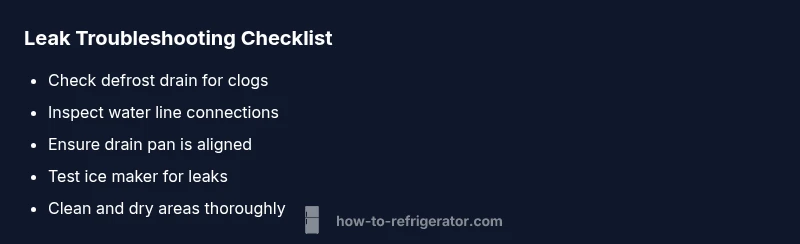
Power down the fridge to avoid any electrical hazards. Look for visible signs of a blocked defrost drain or loose hoses at the back and bottom. A quick wipe-down helps you see fresh drips.
Tip: If you smell burnt plastic or see scorching, stop and call a pro. - 2
Check the Defrost Drain
Follow the back panel to locate the defrost drain. Use a flexible tool to clear any debris and pour a small amount of warm water to verify drainage without overflowing.
Tip: Do not use hot water that could crack the plastic drain. - 3
Inspect the Drain Pan and Tray
Locate the pan beneath the fridge and ensure it’s properly seated and not cracked. Clean and dry the pan before repositioning it.
Tip: A cracked pan is a common leak source and should be replaced. - 4
Verify Water Line Connections
Access the area where the water line connects to the fridge and ice maker. Tighten fittings gently and check for cracks or mineral buildup.
Tip: Avoid overtightening to prevent leaks or stripped fittings. - 5
Test Ice Maker and Water Dispenser
If the ice maker or water valve leaks, disconnect power briefly and inspect fittings. Re-seat or replace as needed.
Tip: If you replace components, run several cycles with a catch tray in place. - 6
Clean and Dry All Surfaces
Wipe down all affected areas and allow time for everything to dry before restoring power. Monitor for any fresh leaks over the next 24–48 hours.
Tip: Keep a log of observed leaks to identify patterns.
Diagnosis: Visible water pooling on the floor or dripping from the back or bottom of the fridge
Possible Causes
- highBlocked defrost drain causing water to back up into the fridge and spill onto the floor
- mediumLeaking water line or connection to ice maker
- lowWater pan or drain pan misalignment or overflow
Fixes
- easyUnclog or clear the defrost drain using a flexible, non-metallic tool and flush with warm water.
- easySecure or replace any loose water line connections and confirm the ice maker line is fully seated.
- easyReposition or empty and resecure the drain pan so it drains into the catch basin properly.
FAQ
What is the most common cause of a refrigerator leaking water?
Blocked defrost drain is frequently the source of leaks, followed by loose connections to the ice maker or water line. Checking these areas first often resolves the issue.
Most leaks start with a clogged defrost drain or loose water line connections, which you can check quickly.
Can a leaky fridge cause water damage to my floor?
Yes. A leak can pool on the floor and damage flooring over time if not addressed. Use a towel to control the spill and keep the area dry.
Yes, leaks can damage floors if left unchecked.
Do I need to unplug the fridge to inspect it?
For safety, unplug the fridge before inspecting or handling any internal components. Keep hands dry and avoid touching electrical parts.
Yes, unplug first to stay safe.
When should I call a professional?
If leaks persist after clearing drains and checking lines, or if you notice cracks in components, contact HVAC or appliance repair services.
If it still leaks after trying these steps, it’s time to call a pro.
Can a faulty ice maker cause leaks even if I don’t use ice?
Yes. A faulty ice maker valve or line can leak water into the cabinet or onto the floor even when not actively making ice.
Ice maker faults can leak even when not in use.
How can I prevent future leaks?
Regular defrost drain cleaning, check door seals for condensation, and keep the fridge level to prevent spills.
Keep up with routine maintenance to prevent leaks.
Watch Video
Top Takeaways
- Check defrost drain first for clogs
- Secure all water line connections
- Position the drain pan correctly to catch drips
- Unplug before inspecting to stay safe
- Call a pro if leaks persist after basic fixes