Why Would a Refrigerator Stop Working? A Homeowner's Troubleshooting Guide
Learn why a refrigerator stops working and follow urgent, step-by-step troubleshooting to restore cooling safely. From power checks to coil cleaning, quick fixes help.


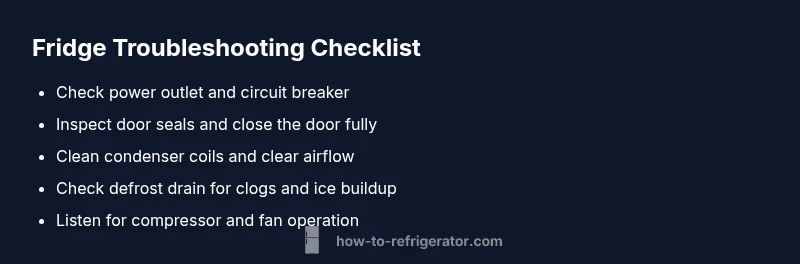
Most often, a refrigerator stops working due to power or basic mechanical issues. Start with a quick power check: ensure the outlet is live and the circuit breaker is on, then confirm the door is sealing properly. If the compressor runs but cooling is weak, inspect condenser coils and defrost drainage. These quick steps fix many common faults and buy time for a deeper diagnosis.
Why would a refrigerator stop working
If you're wondering why would a refrigerator stop working, you're not alone. The most common culprits are power issues, a faulty door seal, dirty condenser coils, or frost buildup in the defrost system. According to How To Refrigerator, the vast majority of outages boil down to a handful of accessible causes: a loss of power, poor sealing, restricted airflow, or water/ice blockages. This guide prioritizes urgent, actionable checks you can perform as a homeowner, while clearly signaling when professional help is needed. Recognize that addressing these basics quickly can prevent food spoilage and reduce repair costs. By staying calm and following a proven flow, you can stabilize cooling today and plan the next steps with confidence.
Immediate checks you can perform safely
Before you dive deeper, perform these checks in order. They are designed to be done with the unit unplugged for safety and then reconnected to verify results:
- Confirm the outlet is live: plug in a small device or use a tester; reset the circuit breaker if needed.
- Check the door seals: ensure the gasket is intact and making a proper seal; replace damaged seals promptly.
- Listen for the compressor: when the fridge is plugged in, you should hear a soft hum or a click as it cycles on and off.
- Inspect the interior light: if the light doesn’t come on when the door opens, it may indicate power or control issues.
- Clear the immediate area: ensure there’s at least a few inches of clearance around the back and sides for airflow. These quick checks address the most common, high-impact issues and can often bring cooling back without tools. If you find a power issue or a failed seal, fix it now; if nothing changes, proceed to deeper diagnostics.
Common hardware culprits
Several hardware factors commonly cause a refrigerator to stop cooling. Start by verifying power delivery, as a loose outlet or tripped breaker is the simplest fix. Dirty condenser coils reduce airflow and force the compressor to work harder, eventually reducing cooling efficiency or causing shutdowns. Frost buildup can block evaporator airflow and drain paths, leading to cooling failure or ice accumulation. A faulty start relay or a failing compressor are more advanced issues that typically require professional assessment. Environmental factors like warm room temperatures, frequent door openings, and poor ventilation around the unit can also impair performance. Understanding each component helps you triage the problem without assuming the worst.
When to replace vs repair
Deciding between repair and replacement hinges on age, cost, and reliability. If your fridge is past its usual lifespan (often around 10-15 years, depending on the model) or the repair cost approaches or exceeds the price of a new unit, replacement may be the wiser choice. Persistent cooling problems after addressing basic issues suggest an underlying fault that could reoccur, such as a failing compressor. In contrast, a straightforward fix like coil cleaning or seal replacement tends to be cost-effective and worth attempting. Always weigh the potential downtime, energy efficiency, and warranty status when deciding.
Safety precautions and what not to do
Safety comes first when troubleshooting a refrigerator. Always unplug before inspecting electrical components, use a flashlight instead of leaning into coils, and avoid sticking fingers into the condenser area. Never use water on electrical parts, and avoid forcing doors or rattling components—these can cause further damage. If you notice oil, burnt smells, refrigerant hissing, or water pooling near electrical connections, stop and call a licensed technician immediately. When in doubt, opt for professional service to prevent personal injury or property damage.
Steps
Estimated time: 45-75 minutes
- 1
Verify power supply
Unplug the fridge and check the outlet with a tester or a known-good device. If the outlet is dead, reset the circuit breaker and try again. Ensure the fridge plug is fully seated.
Tip: Use a dedicated circuit if possible to prevent overloads. - 2
Check door seals and internal temperature
Inspect the door gasket for cracks or gaps; replace if compromised. Ensure the door fully seals when closed and that the temperature dial is set correctly for your environment.
Tip: A poor seal can let warm air in and defeat cooling quickly. - 3
Clean condenser coils
Unplug the unit and locate the coils (usually at the back or beneath the fridge). Use a soft brush and vacuum to remove dust and debris, then re-test cooling.
Tip: Do not bend or damage the fins; gentle strokes work best. - 4
Inspect the defrost system
Look for frost or ice buildup on the evaporator; check the defrost drain for clogs. If frost is heavy, allow a controlled defrost or consult a technician.
Tip: Avoid using sharp objects to remove ice; use a plastic scraper and run water over the drain if needed. - 5
Listen for compressor and fans
Plug back in and listen for the compressor hum; check if fans inside the freezer or behind the back panel are running. Obvious odd noises can indicate a component fault.
Tip: Note any buzzing or clicking sounds that repeat—these can signal a relay issue. - 6
Decide on next steps
If cooling returns after these steps, monitor for 24-48 hours and maintain proper door seals. If problems persist, contact a professional for a detailed diagnosis and possible repair.
Tip: Document symptoms and steps taken to speed up service.
Diagnosis: Refrigerator is not cooling or not turning on
Possible Causes
- highPower issue (outlet, breaker, or cord unplugged)
- lowDoor not sealing properly or open (air leaks)
- mediumCondenser coils dirty or blocked (poor airflow)
- lowDefrost drain blockage or frost buildup
- lowFaulty start relay or compressor issue
Fixes
- easyCheck outlet and circuit breaker; plug in unit or reset breaker
- easyInspect and replace door seals if damaged; ensure door closes fully
- easyClean condenser coils with a brush and vacuum; ensure adequate clearance around the unit
- easyCheck defrost drain for clogs and clear; address frost buildup safely
- hardIf the start relay or compressor seems faulty, contact a professional for diagnosis and potential replacement
FAQ
What are the most common causes when a fridge stops cooling?
The most common causes are power issues, a failed door seal, dirty condenser coils, and frost buildup in the defrost drain. A faulty start relay or compressor is less common but requires professional assessment.
Common causes are power problems, seals, dirty coils, and frost build-up. If those aren’t the issue, a professional check may be needed.
Is it safe to unplug and reset a refrigerator?
Yes, unplugging briefly to reset circuits can help. Do not repeatedly toggle power, and ensure you’re in a dry, safe area before handling. Plug back in and test after a few minutes.
Yes, you can reset it by unplugging briefly and plugging back in, but avoid frequent toggling.
How long should a fridge take to cool after a cleaning or defrosting?
Cooling times vary, but you should start to feel cold air within a few hours. Full stabilization may take up to 24 hours, depending on size and usage.
It can take several hours to feel cooling, with full stabilization up to a day in some cases.
When should I call a professional repair service?
If you suspect a failed compressor, refrigerant leak, or start relay issue, or if basic fixes don’t restore cooling, contact a licensed technician.
Call a professional when basic checks don’t fix it or you suspect major components.
Can frost buildup cause a refrigerator to stop cooling?
Yes. Frost can block airflow through the evaporator, reducing cooling efficiency. Defrost system issues or drain blockages can worsen the problem.
Frost buildup can stop proper cooling by blocking airflow.
Top Takeaways
- Check power and seals first
- Clean condenser coils for better cooling
- Identify when professional help is needed
- Maintain seals and airflow to prevent future issues