Refrigerator Does Not Work: Troubleshooting and Fixes
If your refrigerator does not work, this urgent troubleshooting guide helps homeowners diagnose power, thermostat, and cooling issues fast—with safe steps and when to call a pro.


Most likely the refrigerator does not work due to a simple, fixable issue such as a tripped breaker, a loose power cord, or an improper thermostat setting. Start by checking the outlet, resetting the circuit breaker, and ensuring the fridge is plugged in firmly. If it still runs but won’t chill, progress to cleaning coils and verifying door seals before calling a pro.
What 'refrigerator does not work' means
When homeowners say the refrigerator does not work, they typically confront two distinct scenarios: the unit runs but won't cool, or it doesn't run at all. Both are urgent because food safety and energy waste are at stake. According to How To Refrigerator, most fridge failures start with simple, addressable issues rather than a failed compressor. Before you panic, start with the basics: verify power, confirm the thermostat setting, and check for obvious signs of trouble such as a warm interior or unusual noises. Even a small delay in cooling can cause bacteria growth in perishables. By understanding the difference between a unit that is not cooling and one that is silent, you tailor your next step and avoid unnecessary repairs. This guide walks homeowners through a practical, safe troubleshooting path that prioritizes fast wins and safe disassembly.
Safe at-home checks you can perform today
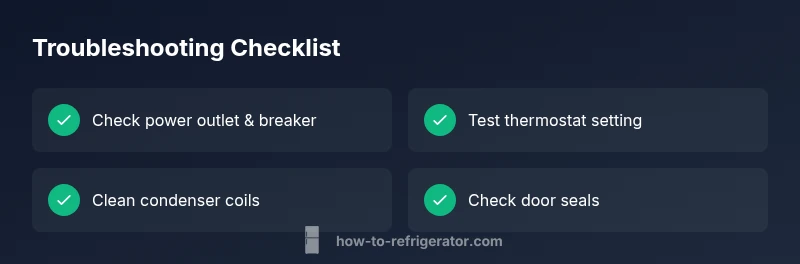
Before you pick up tools, perform non-destructive checks that pose little risk to you or the appliance. First, inspect the power supply: ensure the fridge is firmly plugged in, the outlet works (try another device if unsure), and the circuit breaker hasn’t tripped. Next, inspect the door seals; a loose or dirty gasket can cause frost-free fridges to overwork and fail to maintain proper temperatures. Then verify the temperature control: set the refrigerator compartment to about 37–40°F (3–4°C) and the freezer to 0°F (-18°C). If your model has a factory reset or child lock, ensure it isn’t engaged. Finally, listen for the compressor and fans. A warm condenser coil or a constantly running motor is a red flag, even if the interior seems dry. If you notice frost build-up, melted ice, or leaking water, note those symptoms for the next steps.
Diagnosis by symptom: not cooling vs no power
Not cooling symptoms indicate the unit runs but does not transfer cold air effectively. Common causes include dirty condenser coils, blocked airflow from overstocked shelves, or a faulty thermostat. No-power symptoms mean the fridge isn’t drawing electricity: check the outlet, the cord, and the breaker. If there’s no voltage at the outlet, the fridge will not start regardless of what you adjust inside. Start with the easiest checks and save the tougher ones for later steps. Using a simple, bias-free approach helps you decide whether you can safely fix it or must call a professional.
Common causes in order of likelihood
- Tripped breaker or unplugged outlet (high) — power issues are the most frequent culprit; restore power and re-test cooling.
- Incorrect thermostat or temperature control (high) — many fridges are set too warm by mistake; adjust to 37–40°F.
- Dirty condenser coils or blocked vents (medium) — cleaning coils improves airflow and cooling.
- Damaged door seals (medium) — a poor seal makes the fridge work harder and frost can form.
- Frosty evaporator or defrost drain problems (low) — can cause ice build-up and blocked drainage.
- Start relay or faulty compressor (low) — may require professional diagnosis if other fixes fail.
- Low refrigerant leaks (low) — not common in modern sealed units; only a pro should handle refrigerant issues.
- Malfunctioning control board (low) — rare, but possible in newer models.
Step-by-step fix for the most common cause: power and thermostat
- Verify power and reset the circuit: Unplug the fridge, wait 60 seconds, plug back in, and reset the breaker if needed. Check indicator lights to confirm power is reaching the unit. If the outlet is switched, ensure the switch is ON.
- Test the outlet with another device: Plug a lamp or charger into the same outlet to confirm it supplies power. If the other device doesn’t work, the problem is the outlet or circuit, not the fridge.
- Set the thermostat correctly: Move the control to 37–40°F for the fresh food compartment and 0°F for the freezer. Do not rely on the quick-set or energy-saving mode during testing.
- Inspect and clean condenser coils: Unplug the fridge, locate coils (usually under or behind) and gently remove dust with a brush or vacuum. A clean coil improves heat exchange and cooling.
- Check door seals and airflow: Inspect gaskets for cracks or gaps; run a soap-and-water test to spot leaks. Ensure shelves don’t block vents and airflow to the back of the unit.
- Test after fixes and monitor performance: Plug the unit back in, wait 2–4 hours, and re-check temperatures. If not cooling within 6–8 hours, escalate to professional service.
When to call a professional and what to expect
If basic checks fail to restore cooling, or you notice loud humming, bubbling sounds, warm interior despite a running compressor, or visible refrigerant signs, it’s time to call a pro. Refrigerant leaks, compressor failures, and faulty control boards require specialized tools and licensing. Prepare your model number, age, and a brief description of symptoms to share with the technician. Expect a diagnostic visit that may include pressure checks, electrical testing, and coil inspection. Timelines vary, but prompt refusal to operate a failing fridge can prevent food loss and safety issues.
Prevention and maintenance to extend fridge life
Regular maintenance reduces the odds of future failures. Clean condenser coils every 6–12 months, test door seals for leaks, and avoid overloading shelves that block airflow. Keep the interior clean and dry, and set a consistent temperature around 37–40°F for the main compartment. If your model supports automatic defrost, ensure the feature is functioning and watch for frost buildup. Finally, schedule annual professional checks if your fridge is older than 8–10 years to catch wear before a breakdown.
Prevention and maintenance to extend fridge life
Regular maintenance reduces the odds of future failures. Clean condenser coils every 6–12 months, test door seals for leaks, and avoid overloading shelves that block airflow. Keep the interior clean and dry, and set a consistent temperature around 37–40°F for the main compartment. If your model supports automatic defrost, ensure the feature is functioning and watch for frost buildup. Finally, schedule annual professional checks if your fridge is older than 8–10 years to catch wear before a breakdown.
Steps
Estimated time: 1-2 hours
- 1
Verify power and reset circuit
Unplug the fridge, wait 60 seconds, plug back in, and reset the breaker if needed. Check indicator lights to confirm power is reaching the unit. If the outlet is switched, ensure the switch is ON.
Tip: If the outlet is controlled by a wall switch, double-check the switch position. - 2
Test the outlet with another device
Plug a lamp or charger into the same outlet to confirm it supplies power. If the other device doesn’t work, the problem is the outlet or circuit, not the fridge.
Tip: Avoid using a damaged cord; use a known-good accessory. - 3
Set the thermostat correctly
Move the control to 37–40°F for the fresh food compartment and 0°F for the freezer. Do not rely on the quick-set or energy-saving mode during testing.
Tip: Avoid frequent door openings during the test to stabilize temperatures. - 4
Inspect and clean condenser coils
Unplug the fridge, locate coils (under/behind) and gently remove dust with a brush or vacuum. A clean coil improves heat exchange and cooling.
Tip: Clean coils every 6–12 months for best efficiency. - 5
Check door seals and airflow
Inspect gaskets for cracks or gaps; run a soap-and-water test to spot leaks. Ensure shelves don’t block vents and airflow to the back of the unit.
Tip: Replace damaged seals promptly to protect efficiency. - 6
Test after fixes and monitor performance
Plug the unit back in, wait 2–4 hours, and re-check temperatures. If not cooling within 6–8 hours, escalate to professional service.
Tip: Keep a temps log for the first 24–48 hours if issues persist.
Diagnosis: Fridge not cooling or not starting
Possible Causes
- highPower supply issue
- mediumThermostat setting or control problem
- lowCondenser coils dirty or blocked airflow
Fixes
- easyCheck outlet, plug, and reset circuit breaker; ensure power reaches the unit
- easySet thermostat to 37–40°F and freezer to 0°F; verify no locks or resets are active
- easyClean condenser coils and clear airflow paths; re-test cooling
FAQ
Why is my refrigerator not cooling even though the light is on?
A common cause is an incorrect thermostat setting or dirty condenser coils. Check the temperature control first, then inspect and clean the coils. If the problem persists, look for airflow blockages.
Most likely thermostat or coil issues. Check the setting, then clean coils if needed.
What should I check first if the fridge does not work at all?
Begin with power: outlet, cord, and circuit breaker. If power is present, verify the door seals and thermostat settings. If the unit still won't run, there may be a wiring or component fault requiring a professional.
Power and thermostat first, then call a pro if needed.
Is it safe to unplug and reset the fridge?
Yes, unplugging briefly can reset electronics. Wait 5–10 minutes before replugging and test. Ensure you unplug safely and avoid exposure to wet surfaces.
Unplug for a short reset, then replug and test.
Why is the compressor hot or noisy?
A hot or loud compressor can indicate overload or a refrigerant issue. Turn off the unit and contact a technician if the noise continues after a reset.
A hot or loud compressor usually means professional evaluation is needed.
How long should I wait after defrosting?
After defrosting, give the unit time to re-stabilize. Check temperatures after 2–4 hours and monitor for continued issues.
Wait a few hours for temps to stabilize after defrosting.
When should I call a repair service?
If basic checks fail or you suspect refrigerant leaks, compressor issues, or frost buildup, a licensed technician should diagnose and repair.
Call a repair service when basic fixes don’t help.
Watch Video
Top Takeaways
- Check power and thermostat first
- Clean condenser coils to restore cooling
- Inspect door seals for efficiency
- Know when to call a pro for refrigerant or compressor issues
- Maintain fridge regularly to prevent future failures