Why Refrigerator Not Working: Quick Troubleshooting Guide
Learn how to diagnose and fix a refrigerator that won't run or cool. Step-by-step checks, safety tips, and maintenance to restore cooling fast.


Quick answer: Most fridge failures stem from power issues or a faulty start relay. First, verify the unit is plugged in, the outlet has power, and the circuit breaker is on. If the compressor doesn’t restart after unplugging for two minutes, proceed with the diagnostic flow and step-by-step fixes below.
Immediate safety and quick checks
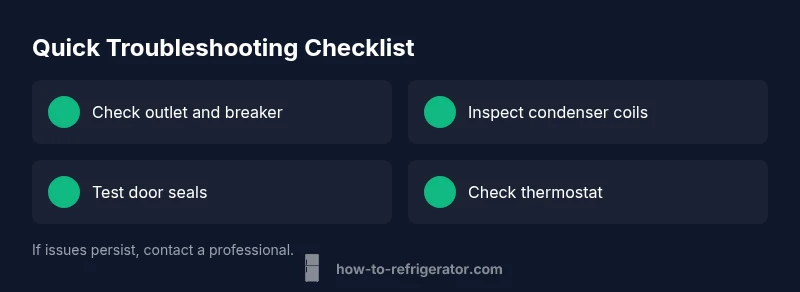
Before you dig into diagnostics, prioritize safety. If you notice warm surfaces, buzzing, or a burning smell, stop and call a professional. For routine checks, unplug the refrigerator before touching electrical components and never probe inside the sealed compressor area with power applied. First, confirm the unit is plugged in and the outlet has power by testing with a lamp or using a multimeter. Check the circuit breaker or fuse box for a tripped breaker or blown fuse and reset/replace as needed. If the outlet is controlled by a wall switch, ensure it's on. Inspect the power cord for any visible damage; if worn or kinked, replace the cord or call a pro. Next, ensure the door is fully closed and the gasket is clean. A door that leaks air forces the compressor to work harder and can prevent proper cooling. If any checks reveal evident issues, address them before continuing. If cooling still fails, move to the diagnostic flow for a structured approach.
Common causes at a glance
When a refrigerator stops cooling, it usually comes down to one of a few common issues. Understanding these helps you triage quickly and safely.
- Power issues: A tripped breaker, blown fuse, or loose outlet cord can stop the compressor from starting.
- Temperature control problems: A mis-set thermostat, calibration drift, or a failed temperature control board can mismanage cooling.
- Dirty or blocked condenser coils: Dust and pet hair reduce heat exchange; that can cause the compressor to run longer and room-temperature cooling.
- Faulty start relay or overload protector: The relay helps start the compressor; a failure can produce a buzzing sound or no run.
- Door seals and gasket leaks: Cracks or gaps let warm air in, causing temperature rise and longer compressor cycles.
- Frost or defrost issues: Ice buildup can block airflow or drain, leading to warm compartments.
If you’ve exhausted easy basic checks and still see warm food, the issue may be more serious (refrigerant leaks or compressor failure) and require professional service. Use this list to guide your next tests.
Diagnostic flow: symptom → diagnosis → solutions
This flow helps you move from what you observe to a practical fix without guessing. Start with the simplest checks and progress to targeted tests.
-
Symptom: refrigerator won’t start or won’t cool. Diagnosis: rule out power first; test outlet with a device, check the breaker, and inspect the cord. If power is solid but the compressor doesn’t run, consider the start relay or thermostat. Solutions: reset power, replace a faulty relay, or recalibrate thermostat.
-
Symptom: humming or clicking sounds without cooling. Diagnosis: start relay or compressor issue. Solutions: unplug and test the relay; if clicking persists, escalate to professional.
-
Symptom: frost build-up or ice block in the defrost path. Diagnosis: defrost drain or heater failure. Solutions: manual defrost and then inspect drain; if recurring, service needed.
Follow this flow in sequence: quick checks first, then targeted tests, and finally professional help when indicated.
How to test the compressor and start relay safely
Testing the compressor and start relay involves careful electrical checks and safe handling. If you are not comfortable with electrical work, skip ahead to professional help. Safety first: unplug before handling any components. Access the back panel where the compressor sits and locate the start relay on the side of the compressor. Remove the relay and test continuity with a multimeter; a failed relay typically shows no continuity or inconsistent readings. If replacing, use an equivalent part from a reputable supplier and reassemble the panel. Restore power and listen for the compressor starting; a healthy start usually shows a brief hum and then continuous operation. If the compressor still won’t start or you detect overheating, stop and call a pro; refrigerant or compressor work requires licensed technicians. If there is any sign of burning smell or buzzing, power off immediately and seek professional help. This step is for safe, basic testing, not for comprehensive refrigerant system repair.
Safety tips and common mistakes
- Safety first: unplug before any intervention; avoid touching exposed wires or compressor terminals.
- Don’t attempt refrigerant handling yourself; leaks require licensed technicians.
- Use insulated tools and avoid wearing metal jewelry when working near energized components.
- Do not spray water or cleaners directly on electrical components.
- Avoid forcing doors or seals; damaged gaskets can worsen cooling problems.
- Keep children and pets away from the work area to prevent accidents.
- If you’re unsure, pause and contact a professional rather than risking damage.
Prevention and maintenance to avoid future failures
Preventive care reduces emergency repairs and prolongs fridge life. Clean condenser coils every 6–12 months; remove dust with a brush or vacuum. Inspect door seals monthly and replace torn gaskets promptly to preserve cold air. Ensure the fridge is level; improper leveling can cause door misalignment and gasket wear. Check the fan and vents for obstructions and ensure proper airflow across the coils. Schedule an annual professional inspection for refrigerant health and seal checks. By building these maintenance habits, you minimize the chances of a simple nuisance becoming a costly repair. Document symptoms and timing; patterns help technicians diagnose faster.
Steps
Estimated time: 30-60 minutes
- 1
Verify power and reset
Disconnect power, inspect the outlet, and reset the breaker if needed. Plug back in and listen for the compressor; if it remains silent, proceed to the next test. Check for any tripped GFCI outlets that may affect the fridge circuit.
Tip: A quick power test with a lamp helps confirm the outlet is live. - 2
Check thermostat settings
Ensure the thermostat is not set to the maximum or off position. If the unit has a digital display, verify calibration and reset to factory defaults if available. After adjustments, wait 5–10 minutes to observe changes in cooling.
Tip: A mis-set thermostat is a common, easily reversible cause of poor cooling. - 3
Inspect condenser coils
Unplug the fridge and locate the coils (usually behind a grille or at the back). Use a soft brush or vacuum to remove dust; ensure airflow is unobstructed. After cleaning, replug and run for 30 minutes to see if cooling improves.
Tip: Keep coils clean to improve heat exchange and efficiency. - 4
Test start relay and compressor
Access the back panel and locate the start relay. Reseat or replace it if suspected. If you have a multimeter, check continuity; a failed relay often shows no continuity. If the compressor still won’t start after a relay replacement, seek professional help.
Tip: Only attempt relay testing if you’re comfortable with basic electronics. - 5
Decide on next steps
If tests point to a sealed refrigerant issue or a faulty compressor, or if you notice unusual odors or smoke, stop and call a licensed technician. Keep a service log and note any patterns to inform the technician.
Tip: Document symptoms, times, and any noises to help the pro diagnose faster.
Diagnosis: Fridge won't start or not cooling
Possible Causes
- highPower issue (outlet, cord, or breaker)
- mediumThermostat setting or control board fault
- highFaulty start relay or overload protector
- mediumDirty condenser coils or restricted airflow
- lowDoor gasket leaks or door not sealing properly
- lowDefrost system failure or frost blockage
Fixes
- easyCheck outlet with a tester, reset breaker, and try another outlet if needed
- easyAdjust thermostat to a mid-range setting and recalibrate if applicable
- mediumTest and replace a faulty start relay or overload protector
- easyClean condenser coils and clear any airflow obstructions
- easyInspect and replace door seals as needed
- mediumAddress defrost drain issues with manual defrost or professional service
- hardIf refrigerant leaks or compressor issues persist, call a professional
FAQ
Why won't my refrigerator start or run at all?
Power issues are the most common cause. Check the outlet, test power with a device, and verify the breaker. If power is solid but the compressor doesn’t start, proceed with the diagnostic flow or consider a starter relay fault.
First check the power outlet and breaker. If the fridge still won’t start, follow the diagnosis steps in this guide.
Why does the fridge click but not start?
A faulty start relay or overload protector can cause a clicking sound without the compressor starting. Test or replace the relay as a first step. If the problem persists, there may be a compressor issue that requires professional service.
If you hear clicking but nothing starts, the start relay is a typical culprit. Consider testing or replacing it.
Can I fix a refrigerant leak myself?
No. Refrigerant work is restricted to licensed technicians due to safety and environmental regulations. If you suspect a leak, schedule professional service promptly.
No—refrigerant leaks require a licensed technician.
What maintenance helps prevent future fridge failures?
Regular coil cleaning, door seal inspection, and keeping the unit level reduce failure risk. Also perform quick checks every few months and deep-clean coils annually.
Do routine maintenance—clean coils and inspect seals—to prevent future issues.
When should I replace instead of repair?
If repair costs approach or exceed the value of the fridge, or failures persist after multiple repairs, replacement may be more cost-effective. Compare estimates with the cost of a new unit.
If repairs keep piling up or cost too much, consider replacement.
Is it safe to run a fridge after cleaning the coils?
Yes, once coils are clean and the unit is reassembled, plug it in and monitor for normal operation. If it doesn’t cool after an hour, seek professional help.
After cleaning, plug it back in and watch how it runs; call a pro if issues recur.
Watch Video
Top Takeaways
- Start with power checks to rule out basic causes
- Clean coils and seal gaps to restore efficiency
- Test start relay and thermostat before calling a pro
- Don't handle refrigerant yourself; professional service is required
- Maintain a routine to prevent future failures