What To Do If Your Refrigerator Isn’t Working
Step-by-step troubleshooting for a non-working refrigerator, fast checks, diagnostics, safe fixes, and when to call a pro. Learn how to diagnose not-cooling, noisy, or not-starting fridges with practical, safe guidance from How To Refrigerator.


The most likely causes are a power issue, a misadjusted thermostat, or a door seal problem. First, verify the outlet is live and the fridge is plugged in, and ensure the door is fully closed. If basics are fine, reset the thermostat, then follow the diagnostic flow. If it still won’t start, move to the detailed checks below.
Problem overview
When a refrigerator isn’t working, it can disrupt your whole kitchen routine. Symptoms range from no power to the unit running but not cooling properly. According to How To Refrigerator, many fridge problems start with simple, fixable causes such as a tripped breaker, a loose plug, or a door that isn’t sealing well. Recognizing the difference between a temporary glitch and a true failure helps you prioritize repairs and avoid unnecessary service calls. This guide focuses on practical, at-home checks you can perform safely, along with clear thresholds for when professional help is warranted.
First checks you should perform
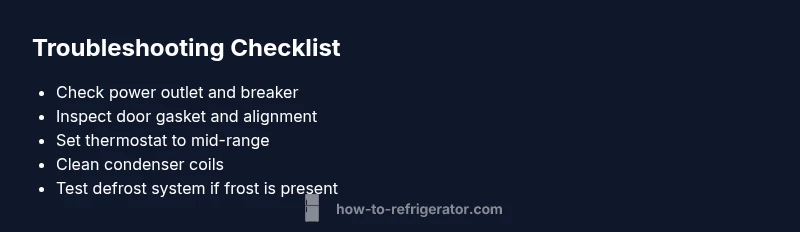
Begin with the simplest checks before diving into deeper diagnostics. Ensure the fridge is firmly plugged in and the outlet is powered by testing a lamp or another small appliance. Check the circuit breaker for trips and reset if needed. Confirm the door is closing fully and the gasket isn’t torn or dirty, which can cause temperature instability. Set the thermostat to a mid-range temperature (around 37–38°F in the fridge, 0°F in the freezer) and listen for the compressor after a minute. If the compressor isn’t coming on, or you hear a continuous hum, note that fault for later steps. Keeping a log of symptoms and times helps you identify patterns and communicate clearly with a technician later.
Common symptoms and quick triage
Not all fridge issues are the same. A fridge that never starts usually points to power or control problems, while a unit that runs but doesn’t cool often signals refrigerant, condenser, or airflow concerns. If you hear buzzing or clicking noises, the compressor or fan might be failing. If frost builds up on the evaporator coil or you see excessive frost in the freezer, the defrost system may be malfunctioning. If water leaks appear or the interior warms unevenly, check for door seal failures or drainage blockages. Each symptom narrows the likely culprits and guides the next steps. Remember, some issues require careful handling and may require professional diagnosis, especially when refrigerant handling is involved.
Diagnostic flow overview
A structured diagnostic approach helps you separate quick fixes from true malfunctions. Start with the most accessible checks (power, outlet, door seal, thermostat) and progressively test components like the condenser coils, fan, and defrost timer. Document what works and what doesn’t to build a concise case for a technician. If you’re unsure about any step or safety concerns arise, stop and seek professional guidance. This flowchart-style method keeps you organized and reduces unnecessary repairs.
Step-by-step fixes you can try safely (in order)
-
Power, plug, and outlet test: Unplug the fridge, wait 60 seconds, and plug back in. If the outlet is dead, reset the breaker or call an electrician. Visual checks for frost or moisture around the plug may indicate water exposure risk. Tip: Keep a spare flashlight handy to inspect behind the fridge safely.
-
Breaker and fuses: Locate your home’s main panel and check for tripped breakers or blown fuses relating to the kitchen. Reset breakers fully and re-test the fridge. If a breaker trips again, there could be a short or overload requiring a pro. Tip: Avoid overloading the circuit with multiple high-draw appliances.
-
Door seal and alignment: Inspect gaskets for cracks or gaps and clean them with warm, soapy water. Manually close the door and feel for air leakage with a dollar bill test (insert bill and pull; if it slides out easily, seal may be compromised). Correct door alignment can restore proper sealing. Tip: Replace worn gaskets promptly to maintain cooling efficiency.
-
Thermostat reset: If you have a manual dial, set to mid-range; if electronic, use the reset option per your model’s manual. Wait 5–10 minutes and listen for compressor activity. Tip: Don’t set to the coldest setting while testing; this can mask underlying issues.
-
Condenser coils and airflow: Unplug the unit and locate the coils (usually behind a kickplate or at the back). Gently vacuum or brush away dust. Ensure the fan inside the freezer is running when the door is open. Dirty coils reduce cooling power and can prompt the compressor to short-cycle. Tip: Clean coils every 6–12 months to maintain efficiency.
-
Defrost and frost issues: If you notice heavy frost, a defrost timer or heater may be stuck. For frost buildup, unplug for 15–30 minutes then plug back in to see if the defrost cycle resumes. Tip: Do not force-defrost with sharp tools that could damage wiring.
-
System-level checks: If none of the above fix the issue, check for abnormal noises, frost patterns, or temperature inconsistencies. These signals may point to a failing compressor, condenser motor, or refrigerant leak, which are not safe to repair yourself. Tip: Document symptoms with timestamps and photos for your technician.
Estimated time: 60–90 minutes for basic checks and safeties; longer if coil cleaning or component testing is needed.
When to call a professional
There are clear signs that a professional technician is needed. If you discover a refrigerant leak, persistent electrical buzzing, tripped breakers that recur after reset, or non-functioning defrost components, stop troubleshooting and schedule service. Refrigerant handling and compressor work require licensing and specialized tools. Also, if visual inspections show compromised wiring, heavy frost, or loud, abnormal noises from the compressor, professional diagnosis is essential. Early intervention can prevent further damage and preserve food safety.
Safety notes and common mistakes
Safety is paramount when troubleshooting a fridge. Always unplug before inspecting electrical components or coils, and never pierce refrigerant lines or attempt to reseal a high-pressure system. Common mistakes include using metal tools on coils, tilting the fridge during defrost attempts, and ignoring warning signs like ice buildup around the compressor. Take your time, document each step, and if you’re unsure at any point, contact a qualified technician.
Prevention tips for the future
To minimize future breaks, keep the fridge away from heat sources and ensure proper ventilation around the condenser coils. Clean coils at least twice a year and perform simple thermostat checks monthly. Regular door seal inspections prevent energy waste and maintain consistent temperatures. Finally, maintain a simple maintenance log with dates and observations, so you catch trends early and avoid emergency repairs.
Steps
Estimated time: 60-90 minutes
- 1
Check power and outlet
Unplug the fridge, wait 60 seconds, and plug it back in. Confirm the outlet has power by testing a lamp or small appliance. If the outlet is dead, reset the breaker or call an electrician.
Tip: A simple power reset can resolve many start-up issues. - 2
Inspect breaker/fuse
Go to the main panel and look for a tripped breaker or blown fuse related to the kitchen circuit. Reset the breaker fully and re-test the fridge.
Tip: If the breaker trips again, stop and call a pro to inspect for shorts. - 3
Check door seals and alignment
Examine door gaskets for tears or deformities and clean any dirt that prevents a seal. Ensure the door closes firmly and stays sealed after a full shut.
Tip: A good seal improves cooling efficiency and reduces frost buildup. - 4
Adjust thermostat and reset
Set the fridge thermostat to a mid-range setting. If your model has a reset option, perform the reset and observe compressor activity for several minutes.
Tip: Avoid extreme settings during testing; they can mask problems. - 5
Clean condenser coils
Locate coils (back or underneath), unplug the unit, and carefully remove dust with a vacuum or soft brush. Ensure airflow around the unit is not blocked.
Tip: Clean coils twice a year to prevent overheating. - 6
Evaluate defrost system
If you notice heavy frost, avoid aggressive manual defrosting. Allow the defrost cycle to run, or unplug briefly if advised by the manual, then plug back in and recheck cooling.
Tip: Defrost issues can cause intermittent cooling problems.
Diagnosis: Fridge won't start or won’t cool
Possible Causes
- highPower issue (outlet, plug, or breaker)
- mediumThermostat or control issue
- lowDoor gasket or seal problem
Fixes
- easyTest the outlet with another device, check the circuit breaker, and ensure the fridge plug is firmly seated. If the outlet is dead, restore power or call an electrician.
- mediumSet the thermostat to mid-range and perform a controlled reset if available; if the control board or thermostat is faulty, plan for replacement or professional service.
- easyInspect the door gasket for cracks and ensure the door seals properly; replace gasket if necessary and re-test cooling.
FAQ
Why won't my refrigerator start even though the light is on?
That usually points to a power issue, a tripped breaker, or a loose plug. Verify the outlet, reset the breaker, and ensure the cord is firmly seated. If the problem persists, move to a diagnostic flow to identify the internal causes.
Check the power source and breaker first; if it still won’t start, continue with the diagnostic flow to pinpoint the issue.
What should I do first if the fridge isn’t cooling?
First check power, door seal, and thermostat settings. If the compressor isn’t running after these checks, test coils and fan for obstruction or dust buildup.
Check power and that the door seals tightly; if cooling doesn’t resume, proceed with further diagnostics.
How can I tell if condenser coils are dirty?
If you see a visible layer of dust on the back or underneath the fridge or if the fridge runs excessively, coils are likely dirty and restrict cooling. Cleaning them usually helps substantially.
Look for dust buildup on the coils and listen for a hot, loud compressor indicating dirty coils.
Is it safe to reset the thermostat myself?
Yes, resetting the thermostat to mid-range is a safe first step. If the control board or thermostat is faulty, a replacement or professional service will be needed.
Resetting the thermostat is safe and often resolves simple issues, but watch for continued problems needing a pro.
When should I call a technician?
Call a technician if you detect refrigerant leakage, persistent electrical issues, or if the defrost system fails to resume operation after basic checks. These require specialized tools and expertise.
If you notice refrigerant leaks or persistent electrical problems, it’s time to call a pro.
Can a door gasket failure cause not cooling?
A damaged door gasket can cause cold air loss and warm interior temperatures. Clean or replace the gasket to restore proper sealing and cooling.
Yes, a bad door gasket can let cold air escape and stop the fridge from cooling properly.
Watch Video
Top Takeaways
- Start with power, outlet, and door seal checks.
- Reset thermostat and verify compressor behavior.
- Clean condenser coils to restore airflow and efficiency.
- Know when to call a professional for defrost or refrigerant issues.
- Keep a maintenance log to spot recurring problems.