Refrigerator Not Working: Urgent Troubleshooting Guide
Facing a refrigerator not working? This urgent, step-by-step guide helps homeowners diagnose common causes, rule out power and door-seal issues, and fix or decide when to call a pro.


Not sure where to start when your refrigerator not working? Begin with the basics to rule out simple issues. The most likely causes are a tripped breaker, a blown outlet, a faulty thermostat, dirty condenser coils, or a worn door seal. Use this quick, 2-minute diagnosis to push toward a fix or decide if you need professional help.
Why a Refrigerator Not Working Demands Urgency
When a refrigerator stops cooling, food safety becomes a concern and energy costs rise quickly. The first hour matters: a warm fridge means spoiled perishables and wasted electricity. In many homes, the root cause is not mysterious—it’s a simple electrical or mechanical issue that you can diagnose with a methodical approach. According to How To Refrigerator, starting with the basics helps homeowners confirm whether a fix is possible without a service call. In this guide we address the most common causes behind a refrigerator not working and provide a clear, urgent path to restore cooling safely.
The phrase refrigerator not working isn’t just an annoyance—it’s a signal that something is off with power, seals, coils, or temperature control. This guide is written for homeowners who want fast, practical steps to regain cooling and protect perishable foods. Don’t panic: many issues are quick fixes or simple replacements that you can perform safely with basic tools and the right precautions.
Common Symptoms and What They Hint At
If your refrigerator not working, you might notice several telltale signs: it isn’t cooling evenly, ice buildup or frost in unexpected places, unusual buzzing or rattling, frost on the compressor, or an exterior cabinet that runs hot. Each symptom narrows down the likely cause:
- No cooling and warm compartments often point to a thermostat or defrost issue.
- Continuous running with no cooling can indicate a failed compressor or fan.
- Frost buildup blocking vents usually means defrost or drainage problems.
- Dirty condenser coils reduce efficiency and cooling capacity.
Tracking symptoms helps you choose the right next step and prevents wasted time chasing the wrong problem.
Diagnostic Flow Overview
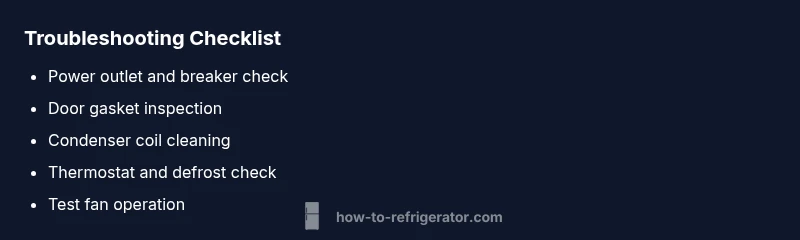
A practical diagnostic flow starts with simple power checks and progresses to component inspections. The flow keeps you from guessing and speeds up a repair. Start by confirming power: is the outlet delivering voltage? Next, inspect the door gasket for leaks, then verify the condenser coils are clean. If cooling remains poor, you may be facing a failing thermostat, compressor, or defrost issue. Each step should be done safely and unplugged before touching electrical parts.
Safety First: When to Call a Pro
Some fridge repairs involve high voltage, refrigerant handling, or lifting heavy components. If you notice burning smells, oil leaks near the motor, frost on the outside of the cabinet that indicates refrigerant issues, or if your unit is under warranty, contact a licensed appliance technician. When in doubt, prioritize safety: unplug before inspecting any internal parts, avoid sharp edges, and use insulated tools. A professional visit can prevent further damage and ensure codes and refrigerant recovery requirements are followed.
Practical Fixes You Can Try Now (Not a Replacement for Professional Service)
These fixes cover the most common, low-cost issues that can cause a refrigerator not working. Try them in order and stop if your unit starts cooling again. Always unplug before handling electrical components and avoid touching refrigerant lines.
- Check the power: verify the outlet has power using a second working device.
- Reset the breaker: flip the kitchen circuit or dedicated fridge breaker off and on.
- Inspect the door seal: clean the gasket and replace if cracked.
- Clean condenser coils: unplug, locate coils (back or under), and gently brush away dust.
- Set the temperature correctly: the freezer should be at 0°F (-18°C) and the fridge around 37°F (3°C).
- Check for frost buildup: if frost blocks vents, clear it gently with a hair dryer on low heat at a safe distance.
- Listen for the evaporator fan: if you hear no fan or unusual noises, there may be a motor issue.
- Drain and defrost if needed: if you see a heavy ice buildup, perform a careful manual defrost according to your model manual.
- Check the drip pan and drainage: ensure there are no blockages or leaks.
If none of these steps restore cooling, or if you detect refrigerant signs or refrigerant smells, stop and call a professional. DIY refrigerant work is dangerous and often illegal in many areas.
When to Replace Components or the Entire Unit
Sometimes a single failing component is not worth replacing given age and cost. If the compressor is failing, the defrost timer is stuck, or you’re facing multiple recurring issues within a short period, replacement might be more economical than ongoing repairs. Use a cost vs. value approach: if a repair estimate exceeds half the price of a new model, or if energy efficiency improvements are significant, replacement may be best. Consider warranty coverage and the age of the unit when weighing options.
Maintenance Tips to Prevent Future Breakdowns
Regular maintenance reduces the chance that a refrigerator not working becomes a long-term problem. Clean condenser coils every 6-12 months, ensure door seals are intact, keep the fridge at proper temperatures, check defrost drains, replace water filters if applicable, and schedule professional checkups after major holidays or periods of heavy use. Address small issues promptly to avoid expensive repairs later.
How to Decide Between Repair and Replacement (A Quick Guide)
A quick decision framework helps you act fast without overthinking. If the repair is minor, inexpensive, and the appliance is under warranty, repair it. If the appliance is older than 10-12 years, exhibits repeated failures, or repair costs approach or exceed the cost of a new unit, replacement is usually more economical. Always compare energy usage, projected lifetime, and your budget before deciding.
Steps
Estimated time: 30-60 minutes
- 1
Check Power and Outlet
Unplug the fridge and inspect the power cord for damage. Plug into a known-good outlet and verify it provides voltage using a tester or a working device. If the outlet is dead, address the wall outlet or circuit breaker before continuing.
Tip: Never plug a damaged cord into an outlet; replace the cord first. - 2
Reset the Circuit Breaker
Locate your home’s main panel and identify the fridge’s dedicated breaker. Flip it fully off, wait 10 seconds, then back on. If the breaker trips again, stop and call a professional—there may be a larger electrical issue.
Tip: Keep a clear panel area and avoid touching live wires. - 3
Inspect Door Seals
Close the door on a dollar bill or piece of paper: if you can pull it out with little resistance, the gasket may be worn. Clean the gasket with mild soap and water, then replace if cracked or bent.
Tip: A good seal prevents warm air from entering and saves energy. - 4
Clean Condenser Coils
Unplug the unit. Locate the condenser coils (often at the back or beneath the fridge). Use a brush or vacuum to remove dust. Excess buildup forces the compressor to work harder and can reduce cooling.
Tip: Do not use water directly on electrical components. - 5
Check Thermostat and Start Relay
If your fridge has a visible start relay, reseat or replace it if you suspect a fault. Test thermostat settings to ensure the compressor follows the set temperatures.
Tip: If you’re unsure, consult the model’s manual before touching electrical parts. - 6
Defrost and Drain if Needed
If you see heavy frost buildup, perform a manual defrost per the user manual. Ensure the drain is clear to prevent standing water.
Tip: Use towels to catch water and avoid electrical parts.
Diagnosis: Refrigerator not working
Possible Causes
- highPower supply issue (outlet or circuit breaker)
- mediumFaulty thermostat or start relay
- mediumDirty condenser coils
- lowDoor gasket leak or misalignment
- lowDefrost frost buildup or drainage problem
Fixes
- easyCheck outlet and test power with another device
- easyReset/replace circuit breaker if tripped
- easyInspect and replace door gasket if damaged
- easyClean condenser coils to restore airflow
- mediumTest thermostat and replace if faulty
- mediumDefrost or replace defrost components if frost blocks vents
FAQ
What should I do first when my refrigerator stops cooling?
Begin with power, outlet, and breaker checks to rule out simple issues. Then inspect door seals and consider coil cleanliness. If cooling doesn’t restore, follow the diagnostic flow for next steps.
First check the power and outlet, then inspect the door seals and coils before moving on to more advanced checks.
Why is my fridge running but not cooling the food inside?
This usually points to thermostat problems, a faulty start relay, or blocked vents from frost or dirt. Inspect these components and test temperatures to confirm.
If it’s running but warm inside, check the thermostat and defrost system first.
Can a dirty condenser coil cause a not-cooling fridge?
Yes. When coils are dirty, heat cannot dissipate properly, causing poor cooling. Clean coils and verify airflow.
Dirty coils can prevent cooling—clean them and recheck performance.
Is it safe to repair a fridge on my own?
Many fixes are safe with basic tools, but dangerous tasks (refrigerant handling, high voltage parts) require a pro. Always unplug before working and follow the model manual.
You can do safe, basic fixes, but avoid refrigerant work and risky repairs.
How do I know when to replace my refrigerator instead of repair?
If repair costs approach or exceed half the price of a new unit, or the fridge is old and failing repeatedly, replacement is often wiser.
When repairs get pricey or the appliance is old, replacing may be best.
What safety steps should I follow before inspecting my fridge?
Unplug the unit, wear gloves, and avoid contact with sharp edges or refrigerant lines. If you smell gas or see oil, stop and call a pro.
Unplug first, wear protection, and don’t touch refrigerant lines.
Top Takeaways
- Check power and outlet first
- Clean condenser coils to restore efficiency
- Inspect door seals to prevent leaks
- Know when to call a pro or consider replacement