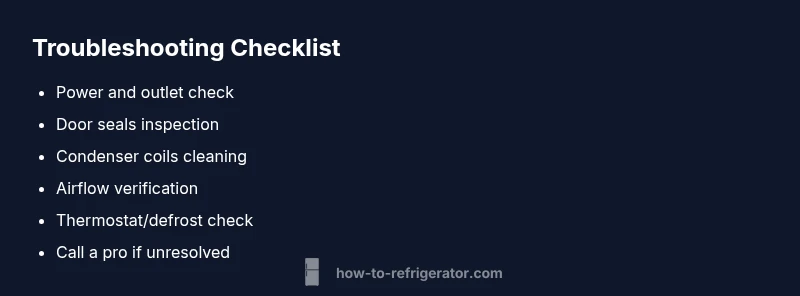
Refrigerator Won’t Cool: Quick Troubleshooting Guide
A practical, urgent troubleshooting guide for homeowners. Learn common causes, step-by-step fixes, safety tips, and when to call a pro for a refrigerator that won’t cool.


Most likely a simple issue you can fix now. Check that the fridge is powered, the door seals are airtight, and the condenser coils aren’t dusty. If basics pass, move to a deeper diagnostic flow. This fast check buys time and reduces unnecessary service calls. Document any unusual noises or frost buildup as you go. Safety note: unplug power before touching interior components.
Why a refrigerator will not cool
If your refrigerator will not cool, start with the basics. According to How To Refrigerator, many not-cooling problems are caused by simple setup or cleanliness issues rather than failed parts. A quick surface check can save you time and money. Look for a plugged-in power cord, a tripped circuit breaker, or a door that isn't sealing properly. Dusty condenser coils can overheat the system and reduce cooling performance. Frost buildup on the evaporator can indicate a defrost problem. Document any unusual noises or frost pattern as you go. Safety note: never work on live electrical components. Always unplug the unit before touching interior parts. This approach aligns with expert guidance from How To Refrigerator and helps homeowners quickly separate simple fixes from costly repairs.
Safety and Quick Checks You Can Do Now
Before diving deeper, perform safe, simple checks that won’t void your warranty. Ensure the fridge is plugged into a live outlet, test the outlet with another device, and confirm the circuit breaker is not tripped. Verify the temperature control is set properly and not in a mode that delays cooling. Inspect the door gasket for cracks or gaps; a poor seal lets warm air in and can prevent proper cooling. Finally, give the condenser coils a quick vacuum to remove dust—clean heat exchange improves cooling efficiency. These steps reflect practical guidelines from How To Refrigerator and are safe for most homeowners to perform without tools beyond a vacuum and familiar safety practices.
Common Causes If Not Cooling
There are several frequent culprits when a refrigerator fails to cool. The top offenders, in order of how often they appear in real-world troubleshooting, include power supply problems or a tripped breaker, followed by dirty condenser coils or blocked airflow. A malfunctioning thermostat, defrost timer, or control board can also keep cooling from occurring, as can leaky door seals or improper door alignment. While these issues are common, many are addressable by homeowners with careful, step-by-step checks. As you investigate, keep notes of symptoms (unusual noises, frost patterns, or temperature swings) to share with a technician if needed. Based on How To Refrigerator research, most not-cooling cases improve after the basics are addressed, reserving professional service for component failures.
Diagnostic Flow: Symptom to Solution
When the symptom is “refrigerator not cooling,” start with the simplest explanations first. Power supply and door seals are checked before moving to airflow and heat exchange components. If airflow is restricted or the condenser is dirty, cleaning often restores cooling. If checks reveal no obvious cause, suspect the thermostat or defrost system, then the compressor or fan as a last resort. This logical diagnostic flow helps homeowners avoid unnecessary parts replacements and aligns with How To Refrigerator guidance. If you reach the point where the compressor seems strangled or electrical components show signs of failure, it’s time to call a professional. For safety, never bypass safety interlocks or voltage protections.
Step-by-Step Fixes for the Most Common Cause
Below is a concise plan to address the most common cause first: cleaning and restoring airflow. Follow these steps in order, and only proceed to the next step if the previous one did not resolve the issue:
- Check power and thermostat settings to ensure the unit is on and set correctly.
- Inspect and replace any damaged door seals; make sure doors close fully.
- Unplug the unit, then vacuum and wipe down condenser coils and fans.
- Verify that air can circulate from the freezer to the refrigerator compartment; rearrange items if the airflow is blocked.
- Test the defrost timer and thermostat if frost or ice is accumulating.
- If the unit still won’t cool, schedule a professional inspection for the compressor or control board. Tip: keep the unit level and ensure the vents aren’t blocked by stored items. Estimated total time: 60-90 minutes.
Prevention and Safety Warnings
To prevent future not-cooling issues, perform regular, light maintenance—vacuum the condenser coils every 6–12 months and check door seals seasonally. Avoid placing hot items directly in the fridge and don’t overfill shelves, which can obstruct airflow. Always unplug the unit before cleaning interior components, and never bypass electrical safety features. If you hear continuous buzzing or grinding, or if the compressor becomes unusually warm, stop troubleshooting and call a professional. These precautions help prevent shocks, fires, and expensive repairs.
How to Know When to Call a Professional
Some problems require professional service, including suspected compressor failures, refrigerant leaks, or a failed defrost system that triggers ice buildup. If basic steps don’t restore cooling, or if you notice burning smells, leaking fluids, or unusual noises persisting after cleaning and airflow checks, contact a licensed technician. According to How To Refrigerator, professional diagnosis is recommended when internal electrical components or refrigerant handling is involved.
Steps
Estimated time: 60-90 minutes
- 1
Verify power and thermostat settings
Confirm the fridge is plugged in and the outlet is live. Check that the thermostat is not set to a non-cooling mode (such as a vacation or energy-saver setting). If the outlet is dead, reset the breaker or replace the fuse.
Tip: If you notice a tripped breaker, reset it and monitor for re-tripping. - 2
Inspect door seals and airflow
Close the doors firmly and inspect gaskets for cracks or warping. Ensure doors seal completely and that no cold air escapes. Avoid overloading the shelves near vents that supply cold air to the fridge.
Tip: A small air gap around the door makes a big impact on cooling efficiency. - 3
Clean condenser coils and fan
Disconnect power and use a brush or vacuum to remove dust on condenser coils. Clean the condenser fan blades if accessible. Proper airflow is critical to heat exchange and cooling performance.
Tip: Clean coils every 6–12 months or sooner in dusty environments. - 4
Check evaporator fan and damper
Listen for the evaporator fan running when the door is open or during a cooling cycle. If you don’t hear it, the fan or damper may be blocked or faulty and require service.
Tip: A silent evaporator fan almost always means a fault in the fan circuit. - 5
Test thermostat and defrost system
Use the appliance’s manual to locate the thermostat and defrost timer. If frost accumulates or there is evidence of a defrost failure, testing or replacement may be necessary.
Tip: Defrost issues can masquerade as not-cooling problems. - 6
Call a professional if unresolved
If basic checks and maintenance don’t restore cooling, professional diagnosis is advised. An expert can test the compressor, refrigerant pressure, and electronics.
Tip: Don’t risk refrigerant exposure or electrical shocks by attempting advanced repairs.
Diagnosis: Machine won’t start cooling or the temp never drops
Possible Causes
- highPower issue or tripped breaker
- highDirty condenser coils or blocked airflow
- mediumFaulty thermostat/defrost timer or control board
- mediumLeaky door seals or improper door alignment
Fixes
- easyCheck outlet, circuit breaker, and ensure the fridge is plugged in
- easyVacuum condenser coils and ensure clearance for airflow
- mediumTest and replace faulty thermostat/defrost timer or control board
- easyReplace door seals and realign doors to prevent warm air ingress
FAQ
What should I check first if my refrigerator will not cool?
Start with power, door seals, and airflow. Confirm the unit is plugged in and the outlet works, doors seal tightly, and coils are clean. These basics solve the majority of not-cooling issues.
First check power, seals, and airflow. If those basics don’t help, you’ll know to move to more involved checks.
Can a dirty condenser coil cause not cooling?
Yes. A dusty condenser coil reduces heat transfer and can prevent proper cooling. Cleaning the coils often resolves the problem.
Dirty coils can stop cooling; cleaning them usually fixes it.
Is a faulty thermostat common in not-cooling problems?
Thermostat or defrost timer failures are common not-cooling causes. Testing and replacing faulty components can restore cooling.
A faulty thermostat is a frequent culprit; testing it helps determine if replacement is needed.
When is it safe to clean the coils myself?
Cleaning coils is generally safe for most homeowners as long as you unplug the unit and avoid touching live parts.
Yes, you can clean coils after unplugging the fridge.
Should I call a professional for defrost timer issues?
If frost buildup is ongoing and you suspect a defrost timer issue, a professional should assess and replace components if needed.
Defrost timer issues often need a technician to replace faulty parts.
How long does it take for a fridge to cool after a repair?
Cooling time varies with model and environment, but expect several hours for a full recovery after a repair or coil cleaning.
It can take a few hours for the fridge to reach the proper temperature after repairs.
Watch Video
Top Takeaways
- Check power first and reset breakers.
- Clean condenser coils to restore airflow.
- Inspect door seals to prevent warm air ingress.
- Call a pro if the compressor or refrigerant is involved.