How to Troubleshoot a Refrigerator That Won't Cool
Diagnose and fix common fridge cooling problems fast with a clear diagnostic flow, practical steps, and safety tips. Learn when to DIY and when to call a professional in 2026.


Most likely your refrigerator isn't cooling due to airflow restriction or a failed component like the condenser fan. Quick checks: unplug, inspect door gaskets, and clean condenser coils. If the compressor hums but the back coils are warm, the thermostat or defrost timer may be stuck. For safety, call a pro if you’re unsure.
Problem overview: how come my refrigerator is not cold
If you're asking how come my refrigerator is not cold, you're not alone. Not cooling is one of the most common fridge problems homeowners face, and it can be caused by simple, fixable issues. According to How To Refrigerator, the most frequent culprits are airflow restrictions and dirty condenser coils, which reduce the system's ability to remove heat. The How To Refrigerator team found that even small things like a blocking item inside the fridge, a door that doesn't seal properly, or a faulty thermostat can prevent proper cooling. In 2026, many modern refrigerators rely on sensors and electronic controls, but they still depend on good airflow and clean coils to maintain temperatures. Start with the basics: confirm the unit is plugged in, the outlet is live, and the door is sealing. Then inspect the back of the fridge for dust and grime that blocks heat exchange. If you find frost buildup on the evaporator coil, that points to a defrost problem or improper cycle, which needs attention before you run the compressor longer.
Quick checks you can do before calling a tech
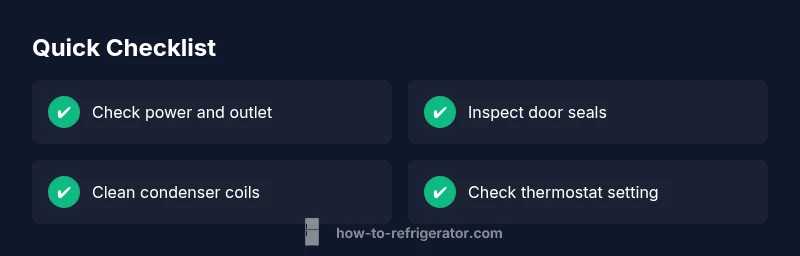
Before you schedule service, run through these fast checks. They are designed for homeowners who want an urgent fix and a clear path forward. First, confirm the fridge is powered on and the outlet is functioning; even a tripped breaker can make a cold appliance feel warm. Next, inspect door gaskets for cracks or gaps; a faulty seal lets warm room air in and cold air out, especially if the door is often open. Don’t overfill the shelves; poor airflow blocks cooling, and a mounded load can jam the vents. Then, look at the condenser coils (the metal fins on the back or underneath) and clean any dust, pet hair, or lint. Dirty coils waste energy and reduce cooling. Finally, check the thermostat setting and the fan inside the freezer if you hear a buzzing or rattling; if the fan isn’t running, air won’t circulate properly.
Diagnostic flow: symptom to diagnosis
Symptoms: the fridge feels warm to the touch, the evaporator frost, or the compressor runs continuously. Start by ruling out obvious causes (power, door seal, airflow). If the compressor hums and warm air exits the vents, the issue is likely airflow or a stuck defrost cycle. If the back coils are cold and the freezer is cold but the fridge is warm, the thermostat or fan path is the likely culprit. If you see heavy frost on the evaporator, the defrost timer or heater may be failed. How To Refrigerator analysis shows that airflow restrictions and dirty coils account for the majority of not-cooling cases, especially in older models. If after checking these you still have no cold air, move to the next steps and consider professional service for refrigerant or compressor problems.
Step-by-step: Detailed fixes for common causes
- Power and outlet reset
- description: Unplug the fridge for 30 seconds, then plug back in. This can reset electronics that may be stuck. Ensure the outlet is live using a tester.
- tip: A simple reset fixes many startup glitches without tools.
- Check door seals and alignment
- description: Inspect gaskets for cracks or missing sections. Clean with warm, soapy water and dry thoroughly. If the seal is torn, replace the gasket.
- tip: Close the door with a gentle push to ensure uniform seal.
- Clean condenser coils
- description: Locate the coils on the back or beneath the unit. Use a coil brush or vacuum to remove dust and lint until the fins are visible.
- tip: Do this every 6-12 months to maintain efficiency.
- Verify thermostat setting
- description: Make sure the thermostat is set to a mid-range temperature. If the thermostat is faulty, replace it following the manufacturer’s instructions.
- tip: Avoid drastic changes; test over a 24-hour period.
- Defrost system check
- description: If you see frost buildup on the evaporator, perform a manual defrost. Unplug, remove food, and thaw; check for frost-free operation after reconnecting.
- tip: A blocked defrost heater or timer will cause ice buildup and warm compartments.
- When to call a professional
- description: If the refrigerant is leaking, if you hear a constantly running compressor, or if the fridge still isn’t cooling after all checks, a licensed technician should diagnose and repair.
- tip: Refrigerant work requires specialized tools and safety precautions.
EstimatedTime: 60-90 minutes
Steps
Estimated time: 60-90 minutes
- 1
Verify power and outlet
Unplug the fridge for 30 seconds and plug back in. Confirm the outlet is live by testing with another device, and check the circuit breaker. If the unit still doesn’t start, move to the next check.
Tip: A quick power reset fixes many electronics glitches without tools. - 2
Check door seals
Inspect the door gaskets for cracks or gaps. Clean with a mild soap solution and dry thoroughly. If the seal is damaged, replace it to restore airtight closure.
Tip: Close the door firmly; listen for a subtle click indicating a proper seal. - 3
Clean condenser coils
Locate coils on the back or beneath the fridge. Remove dust and lint with a coil brush or vacuum until fins are clearly visible. Reconnect and monitor cooling.
Tip: Do this every 6–12 months to maximize efficiency. - 4
Check thermostat setting
Ensure the thermostat is set to a mid-range temperature. If readings are erratic, replace the thermostat following the manufacturer’s instructions.
Tip: Make small adjustments and observe changes over 24 hours. - 5
Assess defrost system
If heavy frost is present on the evaporator, perform a manual defrost by unplugging, removing food, and thawing. Check for smooth defrost operation after reconnecting.
Tip: A persistent frost issue often signals a defective defrost timer or heater. - 6
Call a professional if needed
If you detect a refrigerant leak, hear unusual noises, or still cannot get cold after checks, contact a licensed technician.
Tip: Avoid trying to repair refrigerant systems yourself; it is dangerous and illegal in many areas.
Diagnosis: Fridge not cooling
Possible Causes
- highPower issue (outlet or breaker)
- highDirty condenser coils
- highBlocked airflow due to overpacking or vents blocked
- mediumFaulty door gasket
- mediumThermostat failure
- mediumDefrost timer or heater failure
- lowRefrigerant leak or compressor issue
Fixes
- easyCheck power outlet/breaker and reset if needed
- easyVacuum or brush condenser coils cleanly
- easyRearrange items to restore airflow and clear vents
- easyReplace torn door gaskets and ensure proper seal
- mediumTest or replace thermostat; calibrate to mid-range
- mediumDefrost evaporator; test defrost timer/heater if frost persists
- hardCall a professional for refrigerant leaks or compressor issues
FAQ
What is the first thing I should check when my fridge isn't cooling?
Begin with the power source, door gasket, and coils. A quick reset and seal test often restores cooling.
First check power, door seals, and coils; a quick reset and seal test often brings cooling back.
Why is the fridge running but not cooling?
The issue is usually airflow, thermostat, or defrost-related. Check seals, coils, and defrost components next.
If it runs but won't cool, check airflow, thermostat, and defrost components.
Can a dirty condenser stop cooling?
Yes. Dirty condenser coils hinder heat exchange and reduce cooling efficiency. Cleaning them often fixes the problem.
Yes, dirty coils can stop cooling by hampering heat removal.
When should I call a professional?
If you detect refrigerant leaks, unusual noises, or if cooling doesn’t improve after all checks, a licensed technician is needed.
Call a professional if you suspect leaks, noises, or persistent cooling failure.
Is frost on the evaporator always a defrost problem?
Heavy frost often signals defrost timer or heater failure. A manual defrost can help, but follow up with professional inspection if it recurs.
Frost usually hints at a defrost issue; manual defrost helps temporarily, but fix it long-term if it returns.
Will replacing the thermostat fix all fridge cooling problems?
Only if the thermostat is faulty. Other causes like airflow and coils can still be the culprit.
A thermostat replacement helps only if that component is the actual issue.
Watch Video
Top Takeaways
- Start with power, seals, and coils.
- Use a diagnostic flow before replacing parts.
- Defrost issues may require professional help.
- Schedule annual maintenance to prevent future failures.