What Causes Refrigerator Not to Get Cold: Quick Fixes and Troubleshooting
Urgent, action-oriented guide to diagnose why your fridge isn’t cooling, with a step-by-step flow, common causes, safety tips, and when to call a professional.


Most likely, your refrigerator isn’t cooling due to a simple, common issue you can verify quickly. Start by checking the door seal, condenser coils, and the thermostat setting. If the unit runs continuously or feels warm inside, move through the diagnostic flow to identify the culprit. If these quick checks don’t restore cooling, there are systematic fixes you can safely perform or escalate to a professional.
Symptoms and Why Cooling Fails
In many homes, a fridge that won’t get cold shows clear signs: the interior feels warm, the ice cream is liquid, or frost forms in unusual places. Understanding what causes refrigerator not to get cold helps you act quickly. According to How To Refrigerator, start with the door seal, then inspect the condenser coils and thermostat settings. If the compressor runs constantly or you notice heat on the back, you’re likely dealing with a heat exchange or airflow issue. The goal is to identify symptoms early and follow a logical sequence to avoid unnecessary disassembly. This middle section expands on those ideas with practical checks you can perform safely before calling a pro.
What you’re really diagnosing is a failure in cooling pathways—airflow, heat rejection, and refrigeration cycle. By watching for telltale signs like warm vents, unusual frost, or buzzing noises, you can narrow down the culprit. Each symptom guides you toward a specific fix, from simple adjustments to more involved maintenance. The emphasis is on safety, efficiency, and avoiding false starts that waste time and money.
Quick Diagnostic Approach
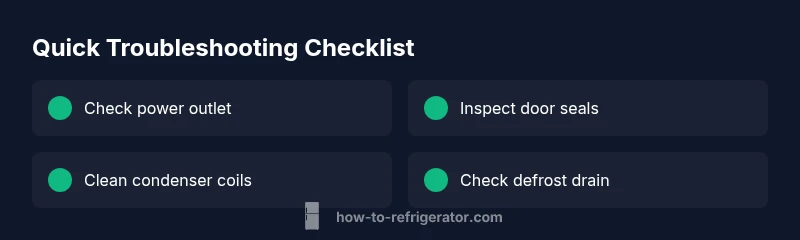
A rapid triage helps you distinguish between easy DIY fixes and problems that need professional attention. Begin by confirming the fridge is plugged in and drawing power from a live outlet. Next, inspect the door gasket for folds, cracks, or gaps that let cold air escape, then ensure the door closes fully. If these basic checks pass, move to thermostat verification and airflow checks. If the unit is running constantly, or you hear unusual noises, you’ll proceed to more targeted checks. This approach minimizes guesswork and speeds up restoration of cooling. Remember, safety first: unplug before any interior inspection or coil cleaning. With the basics out of the way, you’ll be better prepared to decide whether you can DIY safely or should contact a professional.
Where you start matters. If the problem stems from airflow, the path to a solution is different from a defrost system issue or a refrigerant problem. Document what you observe—temperatures, door status, frost lines, and noise patterns—so you can relay precise information to a technician if needed.
Common Causes at a Glance
Common failures fall into a few buckets. A door that doesn’t seal properly leaks cold air and reduces cooling efficiency. Dirty condenser coils hamper heat rejection, making the fridge work harder and run longer. An incorrect thermostat setting or a faulty temperature control can keep the interior too warm. Frost buildup from a failing defrost system can block airflow. In rare cases, a compressor issue or refrigerant leak is involved and requires professional service. Each cause has practical, testable symptoms you can verify in seconds.
- Door seals that aren’t sealing: A quick test with a dollar bill can reveal gaps; if you can pull the bill out easily, replace the gasket.
- Dirty condenser coils: Coils under or behind the fridge collect dust; cleaning improves airflow.
- Incorrect thermostat settings: A too-warm setting or a failed control can keep the interior warm.
- Defrost system failure: Frost in the freezer can migrate and clog the evaporator.
- Compressor or refrigerant problems: Often loud, warm, or leaking systems; typically require a technician.
Diagnostic Flow You Can Follow
To methodically identify the root cause, follow this flow:
- Confirm power and outlet function. If the outlet is dead, address wiring or circuit issues first.
- Check door seals and door alignment. A leaky seal lets cold air escape; replace seals if needed.
- Verify the thermostat or temperature control. If the range is off or controls don’t respond, the control may be faulty.
- Inspect condenser coils and airflow. Debris or dust reduces cooling efficiency; clean with a brush or vacuum.
- Inspect the evaporator and defrost system. Frost buildup indicates a defrost timer/ heater problem.
- Listen for unusual noises and check for frost patterns. A humming or buzzing sound can signal compressor issues or refrigerant leaks.
- Decide on fixes or professional service. If in doubt or if refrigerant is involved, call a pro.
This flow is designed to be followed sequentially, but you can jump forward if a clear issue is readily apparent. Always prioritize safety and disconnect power before touching electrical components or coils.
Fixes for the Most Common Cause: Dirty Coils
Dirty condenser coils are a frequent culprit because they impede heat rejection. This fix is accessible to most homeowners and can restore cooling without specialized tools. Unplug the fridge, locate the coils (usually at the back or beneath the unit), and gently brush away dust and hair. Use a vacuum with a brush attachment to remove stubborn debris. After cleaning, allow a few minutes for airflow to normalize and monitor interior temperatures over the next few hours. If the fridge continues to run constantly, you may have another issue to address, such as thermostat settings or defrost system defects. Reconnect power and confirm cooling improves. If you notice a rattling or grinding sound, stop and reassess—don’t force the machine to work harder.
Safety note: Never use water to clean electrical components, and avoid disassembly beyond your comfort level. If coils are damaged or you see signs of refrigerant exposure, contact a professional right away.
Safety and Warnings When Servicing Your Fridge
Safety should never be optional when working on appliances. Always unplug the fridge before inspecting the interior or access panels. Wear gloves to protect your hands from sharp edges, and avoid using water on electrical parts. If you must move the appliance, use proper lifting techniques to prevent injuries. Do not attempt refrigerant work unless you are a trained technician with proper certification; refrigerant leaks are hazardous and illegal to handle in some regions. When in doubt, consult a professional.
If the defrost system is the suspected cause, some components (timers, heaters) can be delicate. Handle connectors and wiring with care and avoid tugging on cables. Return power and test in short intervals to confirm cooling returns after each step. Keeping a safety-first mindset reduces risk and helps you fix the issue more quickly.
Maintenance to Prevent Future Cooling Issues
Preventive maintenance reduces the chance of future cooling problems. Schedule a quarterly quick check: verify door seals hold a tight seal, clean coils, and ensure airflow around the condenser is unobstructed. Keep the interior organized so vents aren’t blocked and avoid placing hot items inside when the door is opened. Clean the defrost drain periodically to prevent clogs, and replace the thermostat battery if your model uses one. By integrating these steps into your routine, you can extend your fridge’s life and ensure consistent cooling performance over time.
Also monitor the freezer’s frost level. If frost forms excessively, the defrost cycle may be failing—addressing that issue early prevents ice buildup and maintains efficient cooling.
When to Call a Professional
Knowing when to call a professional saves time and protects your appliance. If the issue involves refrigerant leaks, a suspected failed compressor, unusual buzzing or grinding noises, or if you cannot safely access internal components, contact a licensed technician. If you recently attempted DIY fixes without improving cooling, a pro can diagnose more complex problems and perform specialized tests. The troubleshooting steps you followed, along with observed symptoms, will help the technician identify the underlying issue faster and protect your warranty where applicable.
Quick Reference Troubleshooting Recap
Keep this simple recap handy for future issues:
- Confirm power, then verify door seals and door closure.
- Check thermostat/temperature control and airflow around coils.
- Clean condenser coils and inspect the defrost system if frost is present.
- If cooling returns only after a partial fix, monitor for 24 hours to confirm stability.
- When in doubt, or if refrigerant work is needed, contact a professional.
This quick recap reinforces the most actionable steps and helps you act decisively without getting stuck on minor details.
Steps
Estimated time: 60-90 minutes
- 1
Check power and outlets
Confirm the fridge is plugged in and that the outlet is supplying power. Test the outlet with another device to rule out a tripped circuit. If power is the issue, restore it and recheck cooling.
Tip: If the outlet is controlled by a switch, ensure the switch is ON. - 2
Inspect door seals and alignment
Close the door firmly and inspect the gasket for cracks or gaps. A leaky seal lets warm room air creep in and harms cooling efficiency. If needed, replace the gasket.
Tip: A simple door-seal test uses a dollar bill; if you can pull the bill out without resistance, the seal may be compromised. - 3
Verify thermostat settings
Check the temperature control. For most models, a setpoint around 3-5°C (37-40°F) in the fridge and 0°C (32°F) in the freezer is typical. After adjusting, wait 10-15 minutes to assess changes.
Tip: If your fridge has a digital control, restart the display after setting. - 4
Clean condenser coils
Locate coils (rear or beneath the unit). Gently vacuum, then brush away dust and debris. Reconnect power and monitor cooling over several hours.
Tip: Don’t use metal tools that could damage coils. - 5
Check for frost buildup
Look for frost on the evaporator or frost in the freezer compartment. Frost can block airflow and reduce cooling. If present, follow defrost procedure or call a pro if unsure.
Tip: Defrosting improves efficiency but ensure you collect melting ice with towels. - 6
Inspect defrost drain
If you notice water pooling inside the fridge, the defrost drain may be clogged. Flush with warm water and a little baking soda to clear.
Tip: Pour slowly to avoid splashing and unplug before handling any drainage components. - 7
Test the evaporator fan
Listen for the evaporator fan running when the door is closed. If you don’t hear it, the fan or its wiring could be the issue.
Tip: A non-functioning fan means poor air distribution and can cause uneven cooling. - 8
Check for unusual noises
Buzzing or grinding noises can signal a failing compressor or motor. Note the sound and its duration to share with a technician.
Tip: Don’t ignore persistent noises; they’re early signs of potential breakdowns. - 9
Decide on next steps
If cooling has improved after the above steps, continue to monitor. If not, prepare to call a professional with documented symptoms.
Tip: Having a log of temperatures and observations speeds up diagnosis. - 10
Call a professional when needed
If you suspect refrigerant leaks, compressor failure, or if you’re unsure about any step, contact a licensed technician. They can perform deeper diagnostics safely.
Tip: Do not attempt refrigerant handling yourself.
Diagnosis: Fridge not cooling adequately or not cold
Possible Causes
- highDirty condenser coils
- highIncorrect thermostat or temperature control setting
- mediumDefrost system failure causing frost buildup
- mediumDoor gasket leak or poor door seal
- lowCompressor issues or refrigerant leak
Fixes
- easyUnplug and vacuum/brush condenser coils; ensure vents are clear
- easyAdjust thermostat to recommended range
- easyReplace door gasket or fix door seal alignment
- mediumRun a manual defrost if frost buildup is present; check defrost timer/heater
- hardIf compressor or refrigerant issue is suspected, call a professional
FAQ
What is the most common cause of a refrigerator not cooling?
Dirty condenser coils and incorrect thermostat settings are frequent culprits and often fixable without tools. Start with these checks before exploring deeper issues.
The most common causes are dirty coils or a bad thermostat. Start there before calling a technician.
How do I know if my defrost timer is failing?
Frost buildup in the freezer that doesn’t melt during normal defrost cycles suggests a defrost timer or heater problem. A technician can test the timer and heater.
Frost that won’t melt is often a defrost timer issue.
Can a fridge run without a compressor?
The compressor is essential for cooling. If it fails, professional diagnosis and replacement are typically required.
Without a functioning compressor, cooling stops and a pro is needed.
Is it safe to unplug and manually defrost?
Yes, unplugging and manually defrosting is safe if you follow steps and keep areas dry. Ensure the unit is fully dry before replugging.
Unplug and defrost safely, then recap to normal operation.
When should I replace door seals?
If a seal is cracked or loose, replace it to restore efficiency. Test with a dollar bill or light to confirm a proper seal.
Cracked seals should be replaced to keep cold air in.
What if I smell refrigerant or see oil near the fridge?
A refrigerant leak is hazardous and requires a licensed professional. Do not attempt to repair refrigerant lines yourself.
If you smell refrigerant or see oil, call a pro immediately.
Watch Video
Top Takeaways
- Identify the most common causes first: door seals, coils, and thermostat.
- Follow a logical diagnostic flow before replacing parts.
- Defrost issues and refrigerant leaks require professional help.
- Regular maintenance prevents future cooling problems.
- Know when to call a pro to avoid further damage.