Why Would a Refrigerator Freeze Food? A Homeowner's Troubleshooting Guide
Urgent, step-by-step troubleshooting to stop your fridge from freezing food. Learn common causes, safe checks, and when to call a pro, with actionable tips for homeowners.


Most refrigerators freeze food when the temperature is set too low or airflow is blocked. Start by checking the thermostat setting to 35–38°F (1.7–3.3°C) and inspect the door seals. If the issue persists, test the damper and defrost system, then clear vents and rearrange items for proper airflow. If unsure, consult How To Refrigerator for step-by-step guidance.
Why would a refrigerator freeze food
If you're wondering why would a refrigerator freeze food, the short answer is usually overcooling or airflow issues. When the fridge runs too cold or cold air is directed toward the shelves too aggressively, exposed foods can freeze or develop frost. According to How To Refrigerator, many freezing problems stem from simple settings rather than broken parts. Start by confirming the refrigerator temperature is set within the recommended range and that the door seals are intact. A thorough check often reveals the culprit without needing tools.
Common Causes of Freezing in Refrigerators
There are several frequent culprits behind a fridge that freezes food. A thermostat set too low is by far the most common. Damper control problems can let too much cold air into the fridge, while a failing defrost system can create frost that blocks airflow. Finally, simply overpacking the fridge with items that block vents can disrupt airflow and cause uneven cooling. How To Refrigerator team notes that diagnosing these issues often requires only a few quick checks and one or two replacements or adjustments.
How Temperature and Airflow Interact in Your Fridge
Temperature and airflow are the twin levers controlling how evenly your refrigerator cools. If the thermostat is overly aggressive or the air damper is stuck, cold air can flood shelves near the back or bottom, freezing items that sit directly in its path. Frost development on the evaporator coil from a faulty defrost cycle can also reduce airflow, making other zones colder than intended. Regular maintenance and mindful placement of foods help preserve consistent temperatures. As the How To Refrigerator team explains, stable airflow is as important as a precise setting.
Safe, At-Home Checks You Can Perform Today
Before calling a technician, you can perform several safe checks. Confirm the thermostat setting is in the 35–38°F range and use a fridge thermometer to verify. Inspect door seals for gaps and clean them; replace damaged seals. Rearrange items to keep vents clear and avoid blocking the return air path. If frost is visible on the evaporator or if you hear unusual noises, note these as potential defrost or damper issues for the pros. How To Refrigerator emphasizes keeping safety in mind and never bypassing safety features.
When to Call a Professional and What to Expect
If simple adjustments do not resolve the freezing, a professional diagnosis is warranted. Issues like a failed defrost timer, defective heater, or a damaged damper require specialized tools and parts. When you contact a repair service, provide recent observations (thermostat setting, frost on coils, door seal condition) to speed up the process. The How To Refrigerator team recommends outlining the symptoms and the steps you’ve already taken to avoid duplicate work and reduce downtime.
Prevention: Keeping Your Refrigerator from Freezing Your Food
Prevention focuses on consistent temperatures and clear airflow. Keep the condenser coils clean and unblocked, and ensure there is space around the back of the unit for heat dissipation. Use a thermometer to monitor temperatures regularly and avoid placing hot foods directly into the fridge, which can temporarily disrupt cooling. Periodically inspect seals and gaskets for wear, replace as needed, and do a quick vent check weekly. How To Refrigerator highlights that proactive maintenance saves time and money.
Real-World Scenarios and Safe Habits
In many households, freezing happens after a weekend of grocery loading or unusually hot weather. In such cases, reset the thermostat, ensure vents are open, and avoid crowding the shelves. If you notice frost building up after a defrost cycle, it may indicate a defrost fault or a control issue. Safe habits include unplugging only when necessary, using a thermometer, and never attempting high-voltage repairs without proper training. The How To Refrigerator team consistently reminds homeowners that safe, incremental steps are the strongest approach to persistent freezing problems.
Steps
Estimated time: 60-90 minutes
- 1
Check the fridge temperature setting
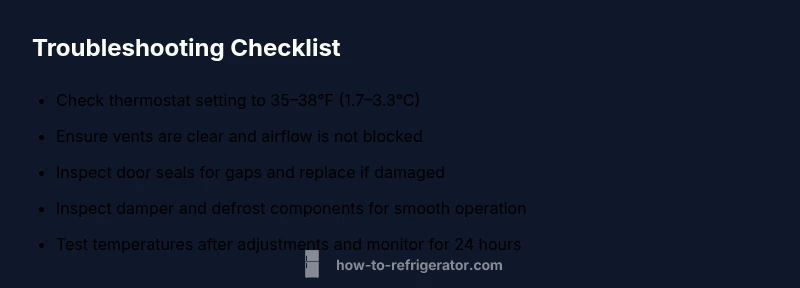
Locate the temperature control inside the fridge and set it to the mid-range of the scale (35–38°F / 1.7–3.3°C). Use a dedicated thermometer to verify the actual temperature after a full cycle, typically 24 hours.
Tip: Keep a thermometer in the fridge for accurate readings. - 2
Inspect door seals and gaskets
Close the door and look for visible gaps, cracks, or looseness in the seal. Clean the seals with a mild detergent and ensure they snap shut cleanly. Replace cracked or warped seals.
Tip: Even tiny leaks can disrupt cooling and cause frost. - 3
Check vents and airflow
Make sure air vents inside the fridge aren’t blocked by food or containers. Reorganize shelves to keep air moving freely between zones.
Tip: Avoid overpacking—air needs space to circulate. - 4
Evaluate the damper and defrost components
If accessible, test the damper to ensure it opens and closes smoothly. Inspect for frost accumulation around the evaporator and listen for signs of defrost heater operation.
Tip: Don’t force stiff parts; consult a pro if movement is abnormal. - 5
Observe results after adjustments
Allow the fridge to stabilize after changes and re-check temperatures over a full cycle. If freezing persists, proceed to professional service.
Tip: Document changes to share with a technician.
Diagnosis: Food in the refrigerator is freezing or frost buildup is observed in the fridge compartment
Possible Causes
- highThermostat setting too low or inaccurate temperature reading
- mediumDamper control malfunction causing excessive cold air into the fridge
- mediumDefrost system failure leading to frost buildup and restricted airflow
- lowBlocked vents or overpacked shelves restricting airflow
Fixes
- easyAdjust the thermostat to the recommended range (35–38°F / 1.7–3.3°C) and recheck with a thermometer
- easyUnblock vents and reorganize shelves to restore airflow
- easyInspect door seals for gaps; replace damaged seals to maintain proper sealing
- mediumIf damper or defrost system appears faulty, arrange professional service
FAQ
Why is my refrigerator freezing food?
Common causes include an overly cold thermostat, blocked airflow, or a faulty defrost system. Start with thermostat checks, vent clearance, and door seals.
Most freezing starts with the thermostat or airflow. Begin with those checks and inspect the defrost system if frost is present.
How can I safely adjust the thermostat on most models?
Find the control inside the fridge, usually near the top. Set to mid-range and wait 24 hours to confirm with a thermometer.
Locate the thermostat, set it to mid-range, and recheck after a day with a thermometer.
Can a door seal cause freezing?
A damaged seal can cause temperature fluctuations and frost formation near the door area. Replace worn seals.
Yes, a worn door seal can let warm air in and cause frost around the door area.
When should I call a professional?
If adjustments don’t fix the issue or you hear unusual noises or see frost buildup, schedule service.
If the issue persists after checks, it's time to get a repair technician.
What maintenance helps prevent freezing?
Regularly clean coils, keep vents clear, and monitor temperatures with a thermometer to prevent freezing.
Keep coils clean and vents clear to prevent freezing in the future.
Watch Video
Top Takeaways
- Set fridge to 35–38°F and verify with a thermometer.
- Keep vents clear and don’t overcrowd shelves.
- Inspect door seals regularly for efficiency and frost control.
- If problems persist, contact a repair professional or How To Refrigerator Team for guidance.