How to Prevent Refrigerator Freezing: A Homeowner's Guide
Learn practical, low-stress steps to stop your refrigerator from freezing foods. Diagnose causes, adjust settings, and maintain airflow with homeowner-friendly fixes.


If your fridge is freezing parts or all of its contents, you can usually fix it by balancing temperature, clearing airflow paths, and addressing the defrost system. Start with simple checks: confirm the thermostat isn’t set too low, inspect door seals, and ensure vents aren’t blocked. With these steps, you’ll learn how to prevent refrigerator freezing while keeping food safely chilled.
Why this happens and how to prevent
A refrigerator that freezes food is often signaling a temperature or airflow imbalance rather than a catastrophic failure. When you ask how to prevent refrigerator from freezing, you’re really seeking ways to restore a stable climate inside the unit and prevent frost buildup. In most homes, the goal is a consistent temperature in the mid-30s Fahrenheit (roughly 2–3°C) for the fridge compartment and slightly colder in the freezer. The How To Refrigerator team finds that freezing is frequently caused by overcooled zones, blocked air vents, or a malfunctioning defrost system. Start with a simple diagnostic, then adjust the thermostat, reorganize shelves for airflow, and perform routine maintenance to rebalance temperatures and improve energy efficiency. Throughout this guide we’ll use practical, home-friendly checks that don’t require specialist tools. The key is to make small, verifiable changes and observe the results over 24–48 hours. How To Refrigerator bases these recommendations on real-world homeowner experience and our ongoing analysis of common appliance issues.
Quick diagnostic checks you can perform today
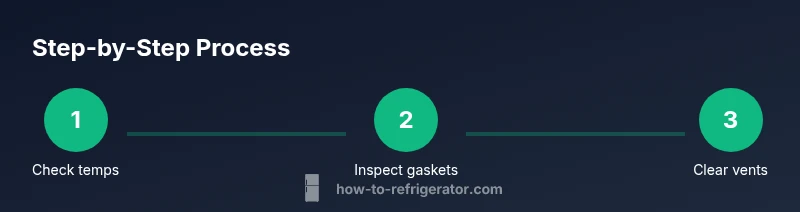
Begin with simple checks you can do without specialized tools. First, verify the temperature setting on the control panel and compare it with the readout on a fridge/freezer thermometer placed inside the main body (not on the door). If the thermometer shows notably different readings than the dial, you may need to calibrate or replace the thermostat. Inspect door seals for cracks or gaps; a leaky gasket is a frequent cause of frost formation and cold pockets. Ensure nothing blocks the internal vents—items stacked along the back wall or tall containers can disrupt airflow and cause localized freezing. Look for frost or ice buildup on the back wall or evaporator area, which signals a defrost or humidity issue. Finally, check the drain hole and drain tube for clogs; a blocked defrost drain can lead to water pooling and frost accumulation. These quick checks lay the groundwork for targeted fixes and indicate whether you should proceed with more involved steps or call a pro.
Common causes of freezer compartments freezing
Freezers and fridges share cooling systems, and problems in one area can manifest as freezing in another. Common culprits include a thermostat set too cold, door seals that leak, and airflow restrictions from overfilled shelves. Frost buildup on the evaporator coil is another frequent sign of defrost system trouble or humidity intrusion. Dirty condenser coils can also reduce cooling efficiency and create temperature gradients that encourage freezing in unexpected places. Finally, improper placement of items near the rear wall or vents can push cold air into zones where you don’t want it, turning a once-balanced fridge into a frost-prone environment. Understanding these causes helps you target corrective actions without unnecessary replacements.
Step-by-step fixes: addressing the most likely causes
To stop freezing, start with the simplest adjustments and monitor results over a day or two. If the thermostat is adjustable, set the fridge to a mid-range temperature and avoid frequent door openings. Reorganize the interior so that vents remain clear and air can circulate; keep items away from the back wall and from airflow grilles. Inspect and replace damaged door seals to restore a tight seal. If frost is present, perform a thorough clean of the interior and back panel to clear ice buildup, then ensure the defrost drain is clear. Finally, clean the condenser coils if they are dusty; clogged coils reduce heat rejection and can create inconsistent temperatures that promote freezing. These steps work together to restore even temperatures and prevent future frost formation.
Maintenance routines to prevent freezing long-term
Prevention is easier than repeated repairs. Create a monthly maintenance habit that includes checking the door seals, verifying temperatures with a fridge thermometer, and ensuring vents are unobstructed. Keep the interior well organized so cold air can circulate around items instead of pooling in one corner. Clean dust from the condenser coils and the exterior grille to maximize heat rejection and efficiency. Periodically inspect the defrost drain for clogs and test the defrost cycle if your model has an auto-defrost feature. By documenting simple observations, you’ll catch subtle changes before they lead to freezing. Remember to adjust for seasonal temperature changes or high-traffic periods when the fridge door is opened more frequently.
Food safety and energy efficiency implications
A fridge that runs too cold wastes energy and can compromise food safety if some items become partially frozen. Balancing temperature not only protects your groceries but also reduces electricity use. Use a thermometer to validate that the fridge sits in the safe zone, and keep the freezer at a stable temperature to prevent frost migration. Energy-efficient operation arises from clean coils, well-sealed doors, and avoiding overpacking the shelves. Following these practices reduces frost risk and keeps your appliance performing at peak efficiency.
Tools & Materials
- Fridge/freezer thermometer(Place in center shelf area away from door to gauge average temperature)
- Screwdriver set (Phillips and flat-head)(For door seal and panel inspections)
- Soft cloth or microfiber towels(For cleaning frost, spills, and gasket check)
- Owner’s manual or model number(Helpful for model-specific defrost or thermostat details)
- Bucket or towel for spills(Contain any water from ice melts or defrost drain checks)
Steps
Estimated time: 60-90 minutes
- 1
Identify the problem
Check the current temperature readings with a fridge thermometer and compare to the dial setting. Look for frost on interior walls or back panel to identify potential defrost issues. Note any frequent door openings or misplacement of items that could disrupt airflow.
Tip: Document measurements and observations; small changes can have meaningful effects over 24–48 hours. - 2
Calibrate or adjust the thermostat
If readings consistently diverge from the dial, gently adjust the thermostat toward a mid-range setting. Avoid drastically lowering the temperature in one step. After changing, give the unit 12–24 hours to settle and recheck temperatures.
Tip: Use the thermometer as the primary guide, not the dial alone. - 3
Inspect and replace door seals
Close the door on a thin piece of paper near the gasket; if you can pull it out easily, the seal likely needs replacement. Clean the gasket with a mild soap solution and inspect for cracks.
Tip: A cracked gasket is a common source of cold air leaks that cause freezing in unintended zones. - 4
Clear airflow paths
Reorganize shelves to keep vents unobstructed and avoid crowding the back of the fridge. Do not place hot or warm items inside as they can lower the overall efficiency and create frost near the back wall.
Tip: Leave some space around items to permit air circulation. - 5
Check and clear the defrost drain
If you notice water under the crisper or a light frost, the defrost drain might be clogged. Use warm water and a flexible wire or pipe cleaner to clear the path. Do not use sharp objects that could damage the tube.
Tip: Always disconnect power before handling any internal components. - 6
Clean condenser coils (if accessible)
With the unit unplugged, vacuum dust from the condenser coils and the surrounding area. Clean coils improve heat rejection and contribute to even temperatures inside the fridge.
Tip: Do not use metal tools to scrub coils; use a brush attachment or gentle vacuum. - 7
Test after adjustments
Restart the appliance and monitor temperature for 24–48 hours. Confirm that the fridge maintains a steady range and that frost does not reappear on interior surfaces.
Tip: Keep a simple log of readings and changes. - 8
Know when to call a professional
If frost continues to form, if you hear unusual noises, or if temperatures remain imbalanced after several adjustments, contact a technician. Complex defrost system repairs often require professional service.
Tip: Document symptoms and your observed changes to help the technician.
FAQ
Why is my fridge freezing even though the temperature isn’t set too low?
Several issues can cause this mismatch, including a leaky door seal, restricted airflow from overcrowding, frost on the evaporator indicating defrost system trouble, or a miscalibrated thermostat. Start with a thermometer check and inspect gaskets and vents before considering more involved fixes.
If your fridge is freezing even with a normal temp, first check the door seal, airflow, and defrost system. Use a thermometer to verify the actual temperature, then adjust as needed.
Can blocked vents really cause freezing in the fridge area?
Yes. Obstructed vents can push cold air into areas you don’t expect, creating frost and freezing pockets. Reorganize shelves and remove items blocking paths to maintain steady airflow.
Blocked vents can cause uneven cooling and freezing. Clear the paths and air vents to let air circulate properly.
What temperature should my fridge and freezer be set to for safe, balanced cooling?
Most guidance suggests keeping the fridge around the mid-30s Fahrenheit and the freezer just below zero Fahrenheit. Use a separate thermometer to confirm, as dial readings alone may be misleading.
Aim for about 37 degrees Fahrenheit in the fridge and 0 Fahrenheit in the freezer, verified with a thermometer.
Is manual defrosting a good idea if the defrost system seems faulty?
Manual defrosting can be a temporary workaround if frost buildup is severe, but do not attempt to repair the defrost system yourself. Unplug the unit, remove food, and allow it to thaw safely before reusing.
If the defrost system is faulty, you can manually defrost after unplugging the unit, but don’t repair refrigerant components yourself.
When should I call a professional for fridge freezing issues?
Call a professional if frost recurs after you’ve tried basic adjustments, if you hear unusual noises, or if the temperatures don’t stabilize after 24–48 hours. A licensed technician can diagnose defrost system issues or refrigerant concerns.
If frost keeps coming back or temperatures won’t stabilize after basic fixes, contact a professional.
Are there safety risks I should be aware of when inspecting a fridge?
Always unplug before inspecting electrical components, avoid melting ice with sharp tools, and never attempt to disassemble refrigerant lines. If you’re unsure, pause and call a pro.
Yes. Unplug before inspecting, avoid sharp tools on ice, and don’t touch refrigerant lines yourself.
Watch Video
Top Takeaways
- Check temperatures with a thermometer, not just the dial
- Keep vents clear and doors sealed to prevent frost
- Address defrost drain issues promptly to avoid frost buildup
- Clean condenser coils to maintain even cooling
- Know when to call a pro for persistent freezing