Fix Refrigerator Freezing Food: Troubleshooting Steps
Struggling with a fridge that freezes food? This How To Refrigerator guide walks you through quick checks, diagnostic flow, and safe fixes to restore proper cooling fast.


Most likely cause is airflow restriction or a stuck defrost cycle making the freezer overly cold. Quick fix: verify the thermostat range (about 35-38°F / 1-3°C), ensure vents aren’t blocked, and inspect the door seals. If frost forms or temperatures stay inconsistent, unplug briefly to reset, then pursue deeper troubleshooting or call a professional.
Why the refrigerator is freezing food
When you notice the refrigerator freezing food, you have a sign that temperature control is off somewhere. In many homes, the culprit is a combination of improper airflow, a faulty defrost system, or a door that doesn't seal properly. According to How To Refrigerator, the most common causes are restricted air vents, frost buildup, and a thermostat that’s set too low. This symptom—refrigerator freezing food in the fresh-food or dairy shelf—can occur even when you haven't touched the temperature dial much. It’s essential to understand that a few simple checks can often restore proper cooling without expensive repairs. In some cases, the problem is intermittent; moisture or humidity can also mislead the thermostat. By systematically testing the major subsystems—airflow, defrost, and seals—you can identify the root cause and prevent waste and food spoilage. The goal is not only to stop freezing but to maintain safe food temperatures consistently.
Quick checks you should perform first
Before you reach for tools, do a quick triage. Start by confirming the thermostat is set within the recommended range, typically around 35-38°F (1-3°C). Then inspect the door seals for cracks or gaps; even a small leak can cause the fridge to cycle more aggressively. Check that air vents inside the cabinet are clear of obstructions—remove stacked containers that press against shelves. Look for frost buildup on the back wall or inside the freezer; light frost can indicate a defrost issue, while heavy frost signals airflow problems. Finally, consider whether the condenser coils at the back or beneath the unit are dusty; dirty coils force the compressor to work harder, which can affect cooling uniformity.
Understanding the diagnostic flow: from symptom to solution
Diagnosing refrigerator freezing issues is about narrowing down the subsystem: temperature control, airflow, defrost, and seals. Start with the simplest causes you can test quickly, then move to more involved checks. If you find frost on the evaporator coil, that points to a defrost problem. If the door seals are intact but the interior is too cold, air circulation or thermostat calibration is likely the culprit. By following a logical flow, you can avoid unnecessary part replacements and focus on fixes that restore stable temperatures. This approach saves time, reduces waste, and lowers the risk of food spoilage during the repair process.
Step-by-step: fix the most common cause (airflow and defrost checks)
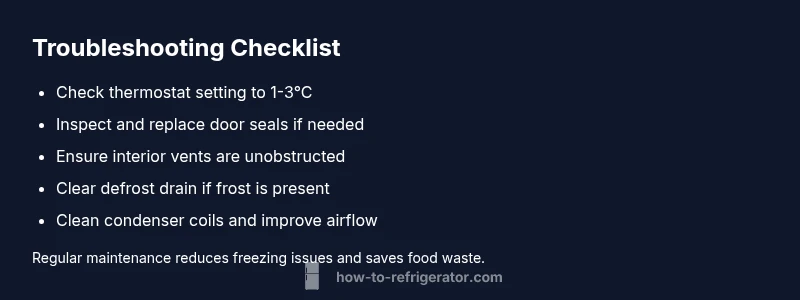
Step 1: Unplug the refrigerator and remove perishable items from the shelves. Step 2: Check the thermostat setting and adjust to 1-3°C (35-38°F). Step 3: Inspect door gaskets; clean and test with a dollar bill or tissue to detect leaks, replacing as needed. Step 4: Reorganize items to ensure vents aren’t blocked; keep foods away from the back of the fridge. Step 5: Inspect and clear the defrost drain if you notice frost buildup in the freezer. Step 6: If the coils are dusty, clean them gently with a brush; ensure the area around the unit is ventilated. Step 7: Reconnect power and monitor temperatures for 24 hours; if problems persist, schedule service.
Safety tips and prevention
Always unplug the unit before performing interior inspections to minimize the risk of electric shock. Keep defrost drains clear and coils clean to prevent frost-related temperature spikes. Avoid overloading shelves that block airflow, and check door seals regularly for cracks or gaps. If you notice persistent frost or unusual noises, don’t delay professional diagnosis—refrigeration systems contain sealed refrigerants that require certified handling. Regular maintenance is your best defense against recurring freezing issues.
Steps
Estimated time: 45-60 minutes
- 1
Power down safely
Unplug the unit and move perishables to a cooler or cooler bag. This reduces the risk of electrical shock during inspection and prevents spoilage while you work.
Tip: Keep a cooler ready with ice packs for perishables. - 2
Check thermostat and set range
Verify the thermostat is set between 1-3°C (35-38°F). If it’s lower, slowly raise it and monitor for 24 hours to see if freezing stops.
Tip: Avoid extreme high or low jumps in one step. - 3
Inspect door seals
Closely examine gaskets for cracks or warping. Run a tissue or dollar bill test at the door edge to detect air leaks and replace if necessary.
Tip: Replace seals in pairs if both doors are involved. - 4
Clear airflow vents
Remove items that block interior vents. Ensure air can circulate from freezer to fresh food compartment and around shelves.
Tip: Keep items away from the back wall to avoid blockages. - 5
Check defrost and frost level
If you see frost buildup on the evaporator, it may indicate a defrost problem. Clear frost with care and check defrost drain for clogs.
Tip: Do not poke at refrigerant lines or metal coils. - 6
Clean condenser coils and test
Inspect coils for dust and debris; clean gently with a brush or vacuum. Ensure the unit has adequate clearance around it for proper heat dissipation.
Tip: Do this every 6-12 months as routine maintenance.
Diagnosis: Food in refrigerator/freezer sections freezing or becoming overly cold
Possible Causes
- highDoor seal damage or misalignment allowing cold air to escape
- highThermostat set too low or malfunctioning
- highFrost buildup from a clogged defrost drain or faulty defrost cycle
- mediumBlocked air vents from overloading or organizing items
- lowDirty condenser coils increasing compressor workload
Fixes
- easyInspect and replace door gaskets for air leaks
- easySet thermostat to 1-3°C and test after 24 hours
- easyUnclog defrost drain and ensure defrost system operates
- easyReorganize interior to unblock vents and improve airflow
- easyClean condenser coils and ensure adequate clearance
- mediumIf temperatures remain erratic, arrange professional service
FAQ
Why is my fridge freezing my food even though the thermostat seems normal?
That usually points to airflow problems or a defrost cycle fault. Check vents, door seals, and defrost operation first before replacing parts. Inconsistent results may require professional testing.
Typically airflow or defrost issues cause freezing despite normal settings. Start with vents and seals, then test the defrost system, and call a pro if it persists.
How can I tell if the defrost drain is clogged?
A clogged defrost drain often leads to frost on the evaporator and excess moisture. Look for visible frost buildup in the freezer and attempt to clear the drain using a flexible pipe cleaner or warm, non-corrosive method recommended by the manufacturer.
Look for frost buildup in the freezer and follow the defrost drain with a flexible cleaner if you see frost.
Is it dangerous to unplug and reset the fridge?
Resetting by unplugging for a few minutes is generally safe and can recalibrate electronics. Avoid frequent resets and ensure food safety during the downtime by keeping items cool elsewhere.
Unplugging briefly can reset electronics. Don’t rely on it as a long-term fix and keep food safe during the downtime.
When should I call a professional for a freezing issue?
If frost persists, temperatures don’t stabilize after adjustments, or you hear unusual noises, contact a qualified technician. Refrigeration systems involve sealed refrigerants and complex components that require expert handling.
Call a professional if frost keeps returning or the temperature won’t stabilize.
Can dirty condenser coils cause freezing problems?
Dirty coils can impair cooling efficiency and disrupt temperature balance, potentially contributing to freezing in some areas. Clean coils and ensure good airflow around the unit as part of regular maintenance.
Yes, dirty coils can affect cooling. Clean them and check airflow regularly.
Watch Video
Top Takeaways
- Identify whether airflow, defrost, or seal issues cause freezing
- Start with simple thermostat and vent checks
- Defrost drain clearance often restores proper cooling
- Call a professional for persistent or complex faults