What Is Wrong with a Refrigerator That Freezes Everything? A Troubleshooting Guide
Urgent, actionable troubleshooting steps to diagnose and fix a fridge that freezes everything. Quick checks, diagnostic flow, step-by-step fixes, and safety tips from How To Refrigerator.


Most likely the fridge overcools due to a miscalibrated thermostat, a damper stuck open, or a failing defrost timer. For a quick fix, verify the temperature setting is in the normal range, ensure the damper isn’t stuck, and look for ice blocking airflow. If unresolved, unplug briefly to reset and seek professional help.
Overview: Why a Refrigerator Freezes Everything
What is wrong with a refrigerator that freezes everything is a question homeowners ask when they see items in the fridge turning chilly at the wrong time. The cause is usually a miscommunication between the thermostat, air damper, and defrost system that governs how cold air moves from the freezer to the fresh-food compartment. In this How To Refrigerator guide, we cut through the noise with a practical, home-friendly diagnostic path and clear step-by-step fixes. Always unplug before poking around electrical components and contact a professional if you feel unsure about electrical safety.
Common Culprits Behind Over-Freezing
-
Thermostat miscalibration: If the sensor or dial is off, the control can command more cooling than the unit needs, chilling the fridge well beyond the desired range.
-
Damper control stuck open: The air damper controls how much cold air from the freezer enters the fridge. If it's stuck, too much cold air can rush into the fresh-food compartment, freezing foods.
-
Defrost system issues: A failing defrost timer or heater can allow frost to accumulate on coils, which disrupts airflow and drives temperatures down in unexpected spots.
-
Frost buildup and blocked vents: Ice can block vents or narrow passages, making the fridge work harder and push cold air where it should not.
-
Door seals and air leaks: Gaps around doors or a misaligned seal let in warm air, which drives the compressor to run longer and can cause frost to form in undesired areas.
-
Placement and load: Heavy or warm items near vents can disrupt flow; avoid blocking shelves or vents as you troubleshoot.
How Thermostats and Defrost Systems Influence Freezing
The thermostat is the primary temperature sensor. When it reads a value too low, the fridge may keep sending cooling signals, leading to an overly cold environment. In many frost-free models, the defrost system periodically melts frost from coils; if this cycle fails, frost can accumulate and interfere with airflow, causing the fridge to become too cold. Understanding the relationship helps you pinpoint whether the issue is sensor-based, air-flow based, or defrost related. If the sensor is stuck or the wiring is loose, you’ll notice inconsistent temperatures across shelves. If the defrost timer doesn’t advance, ice can form where it shouldn’t. The goal is to restore proper airflow and temperature sensing so that the fresh-food compartment stays within a safe, consistent range while the freezer maintains its own balance.
Simple Home Checks You Can Do Safely
-
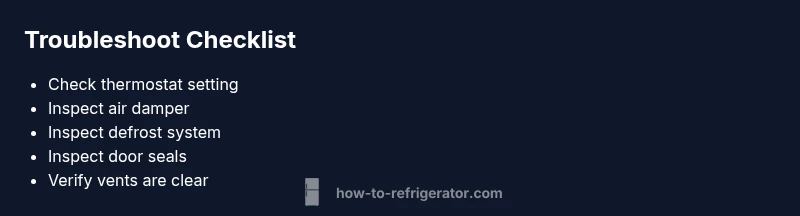
Start with the thermostat: locate the control and set it to a moderate level. Avoid extreme settings until you verify other components.
-
Inspect the air damper: listen for a loose or jammed damper, and feel if the air seems to be blowing from vents when you adjust the fridge.
-
Look for frost build-up: if you see ice around coils, you may have a defrost problem; defrosting by unplugging and allowing to melt is sometimes recommended, but only if you follow safety guidelines.
-
Check door seals: inspect for cracks or gaps; clean the gasket groove and ensure doors seal fully when closed.
-
Clear vents and reorganize: keep these areas clear so air can circulate; avoid stacking items directly in front of vents.
-
Inspect condenser coils: dirty coils make the fridge work harder and can indirectly affect temperatures; carefully vacuum or brush off dust.
Practical Fix Workflow for Homeowners
This section outlines a safe, progressive approach you can follow without specialized tools. Start with the simplest checks and move toward the more involved components. Document what you test and the results to help you decide whether professional service is needed. If any step feels uncertain or involves refrigerant or sealed components, stop and contact a repair service.
Prevention and Maintenance to Avoid Future Freezing Issues
Regular maintenance is the best defense against repeat freezing problems. Clean the condenser coils a few times a year, check and replace worn door seals, avoid blocking vents, and position items so air can circulate. Keep the thermostat in an appropriate range, and run the defrost cycle as intended by your model. By staying proactive, you reduce the likelihood of uncomfortable surprises.
Quick Post-Fix Validation
After performing the above checks and repairs, monitor temperatures for a full day. Verify that the fridge remains cool without freezing food, that frost buildup does not reappear, and that the freezer maintains proper frost-free operation. If temperatures drift again, revisit the diagnostic flow and consider professional service if needed.
Steps
Estimated time: 60-90 minutes
- 1
Power down and access controls
Unplug the refrigerator and locate the thermostat and damper access panels. This safety step prevents shocks and allows you to inspect visible components without risk.
Tip: Keep a photo of the original wiring in case you need to reverse any adjustments. - 2
Verify the thermostat setting
Set the thermostat to a normal, mid-range position using the model’s controls. If digital, confirm the reading corresponds to a safe cooling level; avoid extreme values during testing.
Tip: If the display shows inconsistent readings, note them for later checks or professional review. - 3
Inspect the air damper and airflow
Check the damper for sticking or binding. Manually move it if safe and observe whether cold air continues to flow into the fridge when the door is closed.
Tip: Gently tap damper components to free any minor sticking if the design allows it. - 4
Check for frost and defrost symptoms
Look for frost around coils or vents. If frost is present, the defrost cycle may be failing; consider a controlled defrost procedure per manufacturer instructions.
Tip: Avoid using heat sources to melt frost; use the manufacturer recommended method. - 5
Inspect door seals and seals alignment
Unlock and inspect door gaskets for cracks or misalignment. A poor seal can cause freezer temperatures to migrate unexpectedly.
Tip: Clean the gasket and ensure doors close fully with a gentle shut. - 6
Test after fixes and reseal
Reconnect power and run the unit. Monitor temperatures for several hours and observe whether the freezing issue returns.
Tip: If temperatures drift again, document symptoms and escalate to professional service.
Diagnosis: Fridge freezes everything—food in fridge becomes too cold while freezer seems normal
Possible Causes
- highThermostat miscalibration
- highDamper stuck open
- mediumDefrost timer/heater failure
- mediumFrost buildup blocking vents
- lowDoor seals leaking or misaligned
Fixes
- easyCalibrate thermostat to a normal range and test after
- mediumInspect and free the damper or replace if faulty
- easyInspect defrost timer/heater and perform a controlled defrost per manual
- easyRemove frost buildup and clear blocked vents
- easyReplace or reseal doors or adjust alignment to eliminate leaks
FAQ
Why does my refrigerator keep freezing everything even when the thermostat is set to a normal level?
This usually points to thermostat miscalibration, a stuck air damper, or a defrost system issue. Check the thermostat setting, inspect the damper for sticking, and test the defrost cycle.
Thermostat, damper, or defrost problem is most likely; check those parts and reset if needed.
Can a dirty door gasket cause freezing in the fridge?
A worn or gapped gasket can alter cooling patterns and promote frost buildup. Inspect and replace the gasket if you feel air leaks when the door is closed.
Door leaks can cause uneven cooling; fix the gasket if you detect gaps.
What should I check first if my fridge is freezing food?
Start with the thermostat setting and the damper. Then inspect for frost and ensure vents are clear. If unresolved, move to the defrost system diagnosis.
Begin with thermostat and damper checks, then look for frost and vent blockages.
Is it safe to unplug and reset my fridge?
Unplugging briefly to reset is generally safe, but avoid frequent resets. If you have a warranty, check terms before service.
Yes, a brief unplug can reset, but don’t rely on it as a long-term fix.
When should I call a professional?
If you suspect refrigerant issues, sealed-system components, or a persistent misbehavior after basic checks, contact a repair service.
Call a pro if you hear hissing sounds or suspect sealed-system problems.
Can a faulty defrost drain cause the refrigerator to freeze?
A clogged defrost drain can lead to ice buildup that affects airflow. Clear the drain according to the manufacturer’s instructions.
Defrost drain blockage can trigger frost issues; clean it following the manual.
Watch Video
Top Takeaways
- Start with thermostat and damper checks.
- Defrost system failures are common causes of over-freezing.
- Unplug safely and test progressively before calling a pro.
- Preventive maintenance reduces future freezing issues.