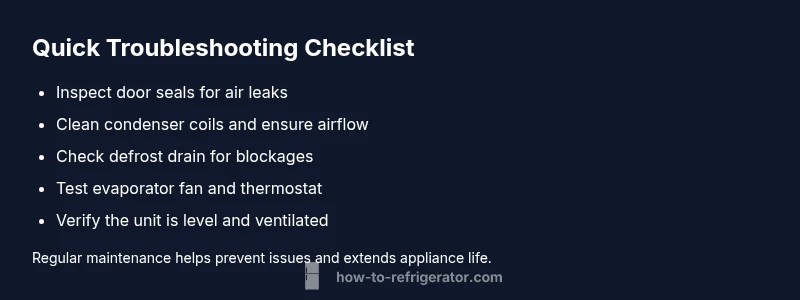
What is wrong with my refrigerator freezer? An Urgent Troubleshooting Guide
A urgent, practical guide to diagnose and fix common fridge-freezer issues. Learn quick checks, a diagnostic flow, step-by-step fixes, safety tips, and prevention to get your freezer cooling again fast.


If your freezer isn’t freezing well while your refrigerator stays cool, the most common culprits are a dirty condenser coil, a blocked defrost drain, or a worn door seal. Start by unplugging the unit, cleaning the coils, checking the door gasket for gaps, and clearing any frost buildup from the drain. If the issue persists, move to testing the evaporator fan and thermostat, as these parts directly control cooling cycles. For persistent problems, contact a professional before handling refrigerant or major repairs.
Why the problem matters and what homeowners want to know
When a refrigerator freezer stops cooling properly, quick action protects perishables and reduces waste. The question many homeowners ask is straightforward: what is wrong with my refrigerator freezer? In this guide, we break down the most common causes and provide clear, actionable steps so you can narrow down the culprit without guesswork. The goal is to give you a reliable diagnostic framework and practical fixes that you can perform with basic tools. Throughout, we reference best practices from How To Refrigerator to ensure you’re following industry-standard procedures designed for homeowners troubleshooting appliance issues.
Quick checks you can perform before you dive in
Before dismantling panels, run through a few low-effort checks. Confirm the freezer and fridge doors close fully, and inspect door seals for cracks or tears. Listen for unusual noises that may indicate a failing evaporator or condenser fan. Check that the unit is level and has adequate ventilation around the condenser coils. If you notice frost on the back wall of the freezer, frost buildup can impede airflow and reduce cooling efficiency. These quick checks help you decide whether to proceed with more involved diagnostics.
Understanding refrigeration basics to locate the issue faster
A standard refrigerator freezer works by circulating refrigerant through coils and fans to remove heat. When a problem occurs, it’s usually related to airflow, defrosting, or seal integrity. Air leaks around doors let warm room air in, causing frost and struggling to keep temperatures. Poor airflow from a blocked evaporator or a dirty condenser reduces cooling power. By understanding these basics, you can map symptoms (like frost, frost-free failures, or warm compartments) to likely causes and avoid unnecessary parts replacement.
Common symptom-to-cause mapping you can trust
If the freezer is frost-free but the interior isn’t cold enough, the evaporator fan or thermostat is a frequent fault. If you see fresh frost forming on the freezer walls after a defrost cycle, the defrost system (drain or heater) might be malfunctioning. A constant buzzing or hot coils indicate electric or mechanical faults in the compressor or fan circuits. Mapping symptoms this way accelerates your path to a safe, effective fix and reduces the risk of unnecessary service calls.
Step-by-step approach to the most common fix: clean, seal, and verify airflow
Begin with cleaning the condenser coils to restore proper heat exchange. Inspect and replace damaged door seals to stop warm air from leaking in. Clear the defrost drain and ensure the freezer drain tube is unobstructed to prevent frost buildup. After these steps, reassemble, plug in, and monitor for changes in temperature stability. This sequence addresses the three most frequent culprits and often restores normal cooling without professional service.
Safety-first tips and common missteps you must avoid
Always unplug the unit before exploring internal components. Use the right tools, avoid sharp edges, and never puncture refrigerant lines. Don’t run the compressor with panels open for extended periods. If the compressor or sealed system shows signs of refrigerant oil, hissing, or burning smells, stop and call a licensed technician. Rushing major repairs can create safety hazards and further damage.
Preventing future fridge-freezer issues with simple habits
Keep coils clean and ensure proper clearance around the unit for efficient airflow. Schedule periodic gasket inspections and replace worn seals promptly. When replacing shelves, ensure proper alignment to avoid blocks in airflow. Regular defrost drain checks prevent blockages that lead to frost buildup. Small, consistent maintenance reduces the likelihood of major failures.
Real-world scenarios: quick references you can bookmark
For a freezer that won’t reach the correct temperature but the fridge feels fine, suspect the evaporator fan or thermostat, or a defrost issue. If frost appears on the back wall and grows over time, defrost or drainage blockages are likely culprits. If both chambers warm, look at the compressor or refrigerant flow, and consider a professional evaluation. Use this guide as a quick reference when you start diagnosing.
Common mistakes that waste time and money
Skipping safety steps, neglecting to unplug, or attempting refrigerant-related work without credentials can be dangerous. Replacing parts without properly diagnosing can drain your budget and leave you with the same symptoms. Rely on methodical checks and documented symptoms to guide your repairs rather than guesswork.
Steps
Estimated time: 60-90 minutes
- 1
Power down and prepare for safe access
Unplug the refrigerator, pull it out, and remove the back panel if accessible. This reduces the risk of electric shock and lets you inspect components safely.
Tip: Use a flashlight and take photos of connections before unplugging to aid reassembly - 2
Check and reseal doors
Examine door gaskets for cracks or warping. Clean with mild detergent and replace if gaps are visible. A tight seal prevents warm air from entering the fridge and freezer compartments.
Tip: Close doors gently and verify a tight seal with a dollar bill test (insert and pull; if it slides out easily, seal might be compromised) - 3
Clean condenser coils
Locate coils (usually at the back or underside) and remove dust with a coil brush or vacuum attachment. Clean debris to restore heat rejection efficiency.
Tip: Do not bend coils; use gentle strokes to maximize contact with dust - 4
Inspect defrost drain and frost buildup
Look for ice blocks near the drain in the freezer. If blocked, gently melt ice with warm water and clear the tube. Ensure drainage path is open.
Tip: Avoid using hot water directly on plastics to prevent cracking - 5
Test evaporator fan and air flow
Listen for the evaporator fan when the thermostat cycles. If you don’t hear it or feel air movement, the fan motor or wiring may be faulty.
Tip: If the fan is faulty, consult a professional to handle motor replacement - 6
Verify thermostat and power supply
Ensure the thermostat is set correctly and the unit is receiving power. Check outlet and cord for damage; test with another appliance if needed.
Tip: Do not bypass the thermostat; improper settings can cause overheating or frost
Diagnosis: Freezer not freezing adequately or frost buildup interfering with airflow
Possible Causes
- highDoor seals worn or misaligned causing warm air intrusion
- highDefrost drain clogged leading to frost buildup and cooling inefficiency
- mediumCondenser coils dirty reducing heat rejection
- mediumEvaporator fan or relay failure disrupting airflow
Fixes
- easyInspect and replace door seals if torn; ensure doors seal tightly when closed
- mediumFlush defrost drain and clear ice build-up; verify proper drainage
- easyVacuum or brush condenser coils to remove dust and debris
- hardTest evaporator fan operation and replace faulty motor/relay as needed
- easyVerify thermostat settings and ensure proper power supply to unit
FAQ
Why is my freezer not freezing even though the fridge is cold?
This can happen if the evaporator fan or thermostat is failing, or if defrosting issues block cold air from circulating. Start by checking the fan, thermostat, and defrost drain before considering more complex problems.
If the freezer isn't freezing but the fridge is cold, inspect the evaporator fan and thermostat first, and check the defrost drain for blockages.
What should I check first when frost appears in the freezer?
Frost buildup commonly points to a defrost system problem or door seal leaks. Check gaskets, clear the drain, and ensure proper airflow before replacing major components.
Frost usually means defrost or seal problems. Inspect seals, drain, and airflow before deciding on bigger repairs.
How long should I wait after a fix to verify cooling?
After performing fixes like sealing doors or cleaning coils, allow the unit to run for several hours and monitor temperatures to confirm stabilization. If temperatures don’t improve, re-check components.
Give it a few hours to stabilize after fixes, and keep an eye on the temperature settings.
Is it safe to operate the fridge while diagnosing?
Yes, but avoid risky maneuvers. Do not bypass safety switches or work on live electrical parts. If you’re uncomfortable, pause and call a professional.
You can operate it, but stay safe and avoid touching live parts. If unsure, contact a pro.
When should I call a professional?
If you hear refrigerant hisses, notice oil around joints, or cannot locate a simple fix, it’s time to consult a licensed technician. Sealed-system work requires expertise.
Call a professional if you smell refrigerant, see oil, or can’t fix the problem with basic checks.
What tools do I need for DIY fixes?
Common tools include a screwdriver set, multimeter, flashlight, brush or vacuum for coils, and a non-abrasive cleaning cloth. Avoid using metal tools on cooling coils.
Basic tools are enough for many fixes, but avoid risky disassembly of sealed parts.
Watch Video
Top Takeaways
- Start with door seals and defrost drain checks
- Condenser coils should be clean for efficient cooling
- Test the evaporator fan before replacing major parts
- Unplug safely and call a pro for sealed-system issues
- Preventive maintenance reduces future breakdowns