Why Is My Refrigerator Not Cooling? A Quick Troubleshooting Guide
Urgent guide to diagnose why your fridge isn’t cooling, with safe DIY steps and when to call a pro. Learn common causes and actionable fixes.


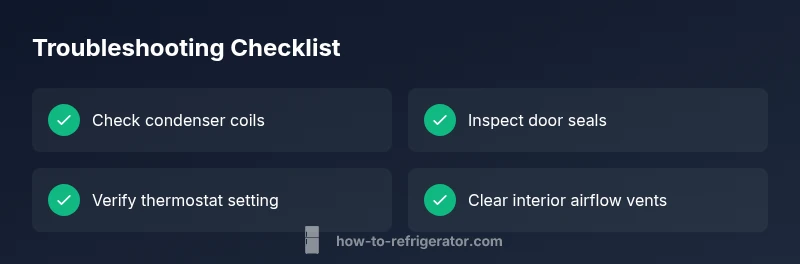
The most likely causes are a dirty condenser coil, a failed defrost system, or a faulty thermostat. Quick fix: unplug and clean the coils, inspect the door seals, and verify the thermostat setting. If cooling doesn’t return, follow the diagnostic flow for deeper causes and fixes.
Common Causes of a Refrigerator Not Cooling
If your refrigerator isn't cooling, start by thinking through the most likely culprits. The top offenders are dirty condenser coils, a failed defrost system, or a compromised door seal. A dusty coil can't dissipate heat efficiently, so the fridge stalls at higher temperatures. The defrost system periodically thaws frost from the evaporator coil; if that system fails, frost can block airflow. A worn or damaged gasket lets warm room air seep in, forcing the compressor to work overtime. Less common but important: a faulty thermostat or temperature sensor can misread the inside temperature, causing the unit to run too warm. Finally, airflow problems—such as items blocking the vent path inside the fridge or improper stacking—can prevent cold air from circulating. In some cases, a failing compressor or condenser fan reduces cooling capacity, but these are typically more complex issues. If you're asking, “why is my refrigerator not cooling,” these categories cover the vast majority of home appliance calls. Prioritize checks on coils, seals, and airflow before moving to more involved diagnostics.
Safety First: What to Do Before You Begin
Before poking around the back or inside your fridge, take safety precautions. Unplug the unit to avoid electric shock, and if you must power off, switch off the circuit breaker for extra safety. Do not attempt to repair refrigerant leaks or replace sealed-system components yourself. Wear protective gloves and use a flashlight to inspect hard-to-reach areas. If your fridge is under warranty or you’re unsure about handling electrical components, skip DIY steps and call a professional. Keep children and pets away from the appliance during troubleshooting. Finally, if you notice burning smells, buzzing sounds, or obvious refrigerant fumes, evacuate the area and contact a professional immediately.
Check the Easy Fixes You Can Do in Minutes
These quick checks can recover cooling in many cases. First, confirm the thermostat is set to 35-38°F (1.6-3°C) inside and the freezer around 0°F (-18°C). Next, inspect the door gaskets: close the door on a dollar bill or piece of paper; if you can pull it out easily, the seal is weak. Remove obstructions in the fridge, especially near the vents and the evaporator; items blocking airflow cause warm pockets. Clean any visible dust from the condenser coils if accessible (the coil behind the back panel or below the unit). If the coils are coated in dust, vacuum them gently from a safe distance. Finally, ensure there’s adequate clearance around the appliance for airflow—avoid built-in or tight spaces that trap heat. If these steps don’t restore cooling, proceed to coil/fan inspection, defrost assessment, and thermostat checks described in later sections.
How to Inspect the Condenser Coils and Fan
Condenser coils shed heat from the refrigerant. When dirty, they force the compressor to run longer, reducing cooling efficiency. Start by locating the coils: many models have coils on the back or underneath the fridge. With the unit unplugged, use a soft brush or a vacuum with a brush attachment to remove dust. Do not use water or immerse components. After cleaning, reattach any panels and plug the unit back in. Listen for the evaporator fan in the freezer compartment; you should hear a consistent hum when doors are closed and the compressor is running. If you don’t hear the fan or if it runs intermittently, the fan motor or control board may need inspection by a tech.
Diagnosing the Defrost System and Thermostat
A faulty defrost system can cause frost buildup on the evaporator coil, starving airflow. Look for excessive frost on the back wall of the freezer or unusual ice buildup. If frost is present, defrost the unit manually by unplugging and letting it melt or run the defrost cycle if your model has one. If frosting returns quickly after defrosting, the defrost heater or defrost timer/thermostat may be defective. These parts are not typically user-serviceable and often require a service call. A malfunctioning temperature sensor can also tell the control board the fridge is cold enough, stopping the compressor, which leads to poor cooling.
When to Inspect Gaskets, Seals, and Airflow
Door gaskets provide the seal against warm room air. If you notice condensation or fogging around the door, the gasket may be worn or warped. Perform the simple test by closing the door on a piece of tissue or a dollar bill to see if it holds firmly at multiple points. If you can pull it out easily, replace the gasket. Ensure vents inside the fridge (and freezer) are clear of obstructions such as tall jars or stacked containers. Blocked vents disrupt airflow, making parts of the fridge warm. Inspect the evaporator fan in the freezer (side-by-side or French-door models) to ensure it spins freely when doors are closed and the compressor is running.
Diagnostic Flow: A Logical Path to Diagnosis
Start with the simplest checks and move to more complex tests in a logical order. Step 1: Is the appliance receiving power? Step 2: Is the compressor cycling and is the condenser fan running? Step 3: Are the condenser coils clean and unobstructed? Step 4: Are interior vents clear and is airflow unblocked? Step 5: Is frost building on evaporator coils? Step 6: Are door gaskets sealing properly? If you still can’t determine the cause, consult a professional for refrigerant or sealed-system issues. This flow helps you prioritize safe, actionable steps without guessing at the compressor failure.
Long-Term Prevention and Maintenance
Preventing problems is easier than fixing them. Schedule annual or semi-annual maintenance: vacuum the condenser coils, clean the drain pan and interior, and inspect door gaskets for wear. Keep the fridge level and ensure at least a few inches of clearance around the sides and back. Avoid placing hot foods inside, and do not overload shelves, which can impede airflow. Monitor temperatures: interior fridge should stay around 37°F (3°C) and freezer at 0°F (-18°C). A quick log of daily temperatures helps you spot drift before it becomes a problem. Finally, know when to call a pro: if you hear unusual noises, notice refrigerant odors, or the unit remains warm after safe DIY steps, professional service is warranted.
Common Mistakes to Avoid
Avoid defrosting by repeatedly unplugging on and off; this can stress components. Do not use water to clean electrical components or wipe condensation into electronics. Relying on guesswork instead of following a flow can waste time and money. If you’re uncertain about handling electrical parts or refrigerant, stop DIY steps and contact a qualified technician.
Steps
Estimated time: 60-90 minutes
- 1
Check Power and Basic Settings
Ensure the fridge is plugged in and the outlet is working. Verify the temperature settings: fridge around 37°F (3°C) and freezer around 0°F (-18°C). If the unit has a lock or child-safety feature, disable it to allow normal operation. Confirm the door isn’t wedged open by accidental packing.
Tip: Use a separate thermometer to cross-check internal temps for accuracy. - 2
Inspect Condenser Coils
Locate the coils (back or under the unit). With the power off, use a soft brush or a vacuum to remove dust. Reconnect power and listen for normal fan operation; a clogged coil can keep cooling components overloaded.
Tip: Clean from a distance to avoid bending delicate fins. - 3
Test Door Seals
Close the door on a dollar bill or folded paper; resistance should be felt along most of the seal. If it slides out easily, replace the gasket to restore an airtight seal.
Tip: Test both fridge and freezer doors if applicable. - 4
Verify Thermostat and Sensor
Check that the thermostat is set within the recommended range. If the unit still won’t cool after adjusting, the sensor or control board may be faulty and require testing by a professional.
Tip: If you have a model with a separate fridge sensor, test with a multimeter if you can safely access it. - 5
Check Airflow and Vents
Ensure internal vents are unobstructed by groceries or containers. Rearrange items to allow cold air to circulate from the freezer to the fridge.
Tip: Avoid stacking items directly in front of vents. - 6
Assess Defrost System
Look for frost buildup on the evaporator; if present, the defrost cycle may be failing. Defrost manually if needed and note whether frost returns after defrosting.
Tip: If frost recurs quickly, a professional check is advised.
Diagnosis: Fridge not cooling properly
Possible Causes
- highDirty condenser coils
- mediumDefrost system failure
- mediumDoor gasket leaks
- lowThermostat/sensor fault
- lowCompressor or condenser fan failure
Fixes
- easyUnplug and clean condenser coils; ensure airflow around unit
- easyInspect/replace door gaskets to restore seal
- easyTest and adjust thermostat or sensor, replace if faulty
- mediumInspect evaporator fan and defrost system; replace components if needed
- hardCall a professional for sealed-system or compressor issues
FAQ
Why is my refrigerator not cooling even though the light is on?
A powered light doesn’t guarantee cooling. Check thermostat settings, door seals, and potential frost buildup or defrost faults. If these basics don’t resolve it, there may be a relay, sensor, or compressor issue requiring professional help.
If the light is on but it won't cool, start with the thermostat, door seals, and frost checks. If it still won’t work, a pro may be needed for sensors or the compressor.
What should I check first when my fridge isn't cooling?
First confirm power, verify thermostat settings, and inspect door seals for leaks. Then check for airflow obstructions and clean coils if accessible.
Start with power, thermostat, and door seals, then look for airflow and coil cleanliness.
Can a dirty condenser coil cause no cooling?
Yes. Dirt on condenser coils reduces heat transfer, causing the compressor to work harder and cooling to suffer. Cleaning coils often restores cooling in many cases.
Dirty condenser coils can stop your fridge from cooling well, which cleaning can fix in many cases.
Is it safe to unplug the fridge overnight to reset it?
Yes, a short power reset can recalibrate some controls. However, avoid leaving perishable food unrefrigerated for too long. If the problem persists after reset, continue with the diagnostic flow.
You can reset it by unplugging, but don’t leave food unsafe. If it remains not cooling, keep troubleshooting.
When should I call a technician for cooling issues?
Call a technician if DIY steps don’t restore cooling, if you hear unusual noises, or if you suspect a sealed-system issue like refrigerant leaks or compressor faults.
If DIY fixes don’t help or you suspect sealed-system problems, call a professional.
Why does my fridge make buzzing noises?
A buzzing or humming noise usually indicates the compressor or a fan operating. If the sound is loud or unusual, it may signal worn bearings or a failing motor that needs inspection.
Buzzing is usually the compressor or fan; if it's loud, a pro should check it.
Watch Video
Top Takeaways
- Start with simple checks before complex repairs
- Clean condenser coils and inspect door seals
- Call a professional for sealed-system issues
- Maintain regular maintenance to prevent future problems