Why Your Refrigerator Stopped Cooling: Quick Fix Guide
Urgent troubleshooting guide to diagnose why a refrigerator stopped cooling. Learn safe steps, a diagnostic flow, and when to call a pro, with How To Refrigerator.


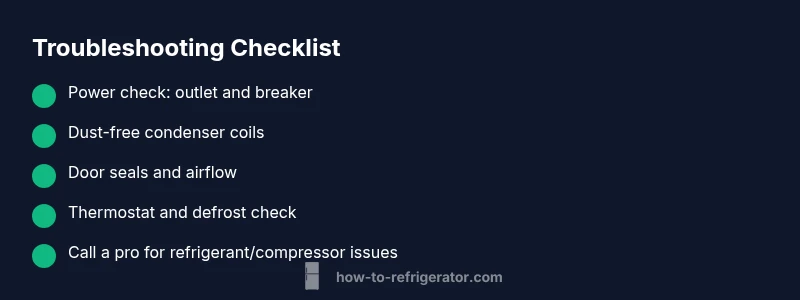
If your refrigerator has stopped cooling, start with the basics. Check that it is plugged in and the outlet has power, then inspect the condenser coils for dust, the door seals for leaks, and ensure airflow is not blocked by stored items. If the compressor is running but the interior stays warm, power issues, dirty coils, or a faulty thermostat are the most likely causes.
Why Your Refrigerator Stopped Cooling
According to How To Refrigerator, a fridge that suddenly stops cooling is a problem homeowners can triage safely without immediately replacing the unit. Most cooling losses come from a handful of common causes: power or control issues, airflow blockages, or heat rejection failures inside the cabinet. By recognizing these drivers, you can choose the right next step and avoid chasing unlikely problems. This guide explains how to distinguish a simple fix from something that needs professional service, and what safety steps to take before you touch the machine. If you follow the steps described here, you’ll know when you can fix it yourself and when it’s time to call a pro.
Safety First: Power, unplugging, and emergency signs
Working on a refrigerator involves electricity and sharp metal edges. Start by unplugging the unit and turning off the dedicated circuit if you suspect a power fault. Do not touch wiring or replace components while the unit is plugged in. Signs that warrant immediate action include buzzing sounds, burning smells, or water leakage near electrical components. If you observe any of these, disconnect power and contact a licensed technician right away. Safety always comes first, even when you’re trying a quick DIY check.
Quick Checks You Can Perform Today
Many cooling problems resolve with a handful of safe, low-effort checks. Verify the unit is firmly plugged in and that the outlet provides power (test with a lamp or another device). Confirm the temperature control is set cold enough and not in a vacation or energy-saving mode. Inspect the door seals for gaps and the gasket for wear, and make sure doors close completely. Remove any items blocking air ducts or the back of the fridge, and give the condenser coils a quick visual inspection for dust buildup. If the coils are visibly dirty, plan a deeper cleaning in the next step.
Condenser Coils, Airflow, and Heat Dissipation
Condenser coils are responsible for transferring heat from inside your fridge to the outside environment. When coils are dusty or blocked, the compressor runs longer and the fridge can’t reach the proper temperature. Use a vacuum or a soft brush to remove dust from the coils, and vacuum around the area behind the fridge if accessible. Make sure the area behind the appliance has at least a couple of inches of clearance for airflow. While you’re cleaning, check the fan blades inside the back panel for obstructions and rotate them by hand if safe to do so.
Thermostat and Defrost Timer: Understanding the Controls
The thermostat sets the target temperature, and some fridges use a defrost timer or electronic board to manage defrost cycles. If the thermostat is stuck or miscalibrated, the fridge may run without achieving cold temps. Use the built-in diagnostics if your model supports it, or temporarily adjust the thermostat to the coldest setting and monitor for 24–48 hours. If defrost cycles are not completing or you notice frost buildup on the evaporator coil, that often points to a faulty defrost system. In either case, plan for professional evaluation if temperatures don’t improve.
Refrigerant Leaks and Compressor Issues: When to Worry
A refrigerant leak or a failing compressor is a serious problem that typically requires a licensed technician. If you hear unusual hissing sounds, notice oil stains around connections, or see frost on the evaporator that doesn’t clear with defrost, don’t ignore it. Refrigerants are hazardous and require specialized equipment to test and recharge. If you suspect a leak or a compressor problem, stop troubleshooting and contact a pro promptly. Early professional assessment can prevent further damage and save energy.
Silence, Buzzing, or Clicking: Interpreting Noise Clues
Unusual noises can offer important clues about what’s wrong. A buzzing sound can indicate a failing compressor or condenser fan, while a rhythmic clicking may be a defrost timer attempting to cycle. A tic-tic or high-pitched squeal often points to a motor or fan wheel obstruction. Use your ears alongside visual checks: if you only hear noise when the compressor starts, note when it occurs and what the fridge is doing. If noises persist after basic checks, plan a professional inspection.
When to Call a Professional: A Practical Decision Guide
Not all cooling problems are safe or affordable to DIY. If you observe any of the following, it’s time to call a technician: persistent warm temps after basic checks, refrigerant smells, oily residues on connections, or if the model requires refrigerant handling. Also consider professional help if the unit is under warranty and you suspect the defrost circuit, motherboard, or compressor is at fault. A qualified tech can diagnose with leak tests, electrical measurements, and pressure checks, and provide an accurate repair estimate.
Prevention: Simple Habits to Keep Your Refrigerator Cooling reliably
Prevention is easier than repair. Clean coils at least twice a year, check door seals monthly, and keep the surrounding area free of dust and obstructions. Avoid overloading the shelves and ensure air can circulate from front to back. Set the temperature to the manufacturer-recommended range and avoid frequent door-opening during peak heat. Regular maintenance, like replacing worn door seals and addressing unusual noises early, can extend the life of your fridge and reduce the risk of a sudden cooling failure.
Steps
Estimated time: 45-60 minutes
- 1
Verify power and basic settings
Ensure the fridge is plugged in and the outlet provides power. Check the circuit breaker and any GFCI resets. Confirm the thermostat is not set to a non-cold setting or a vacation mode. If you still don’t see cooling after these checks, proceed to the next step.
Tip: Use a known-good outlet to verify power for reliability. - 2
Check door seals and airflow
Inspect door gaskets for cracks or gaps; a poor seal lets cold air escape. Close the door firmly and listen for air leaks. Clear any obstructions blocking internal vents and ensure air can circulate from freezer to fresh-food compartment.
Tip: Wipe seals with warm soapy water to restore elasticity. - 3
Inspect condenser coils and ventilation
Power off the unit and locate the condenser coils (usually on the back or beneath the fridge). Clean dust with a brush or vacuum, then check for adequate clearance behind the appliance. A dusty coil can force the compressor to work harder and reduce cooling performance.
Tip: Do not use metal tools on coils; use plastic scrubbers. - 4
Test thermostat and temperature readings
Set the thermostat to the coldest setting for 24–48 hours and monitor interior temperatures with a fridge thermometer. If temperatures remain high, the thermostat or sensor may be faulty. Document readings to compare after any further steps.
Tip: Allow 24 hours for temperature to stabilize after changes. - 5
Check defrost system and frost around evaporator
Excess frost can block airflow. If you see frost buildup, allow a manual defrost or check defrost timer and heater. If frost persists after a defrost cycle, a defrost sensor or control board may be failing.
Tip: Never chip frost with metal objects; it can damage coils. - 6
Decide on next steps: DIY versus pro
If the issue remains after these checks, especially with refrigerant or compressor signs, it’s time to call a professional. Have model and serial numbers ready when you contact service.
Tip: Keep the manufacturer’s warranty and service info handy.
Diagnosis: Refrigerator not cooling, interior warm while compressor runs
Possible Causes
- highPower issue (outlet, cord, or breaker)
- highDirty condenser coils or blocked vents
- mediumFaulty thermostat or sensor
- lowDefrost timer or control board failure
- lowFreon/refrigerant leak or compressor failure
Fixes
- easyCheck outlet, cord, and circuit breaker; replace if faulty
- easyUnplug and gently clean condenser coils; ensure air can flow around unit
- mediumTest thermostat settings and thermostat control using built-in diagnostics if available
- mediumIf defrost timer/control board suspected, reset or replace under professional guidance
- hardContact a licensed technician for refrigerant leak inspection or compressor issues
FAQ
What is the first thing I should check when my refrigerator isn't cooling?
Start with the basics: verify the unit is plugged in, the outlet has power, and the circuit breaker is not tripped. Check the door seals for gaps and look for obvious frost or debris blocking vents. If these checks don’t restore cooling, move on to the next steps in this guide.
Begin with power, outlet, and door seals; if not fixed, continue with the troubleshooting steps.
Can a dirty condenser coil cause not cooling?
Yes. A dusty condenser coil makes heat rejection inefficient, causing the compressor to run longer and the fridge to stay warm inside. Cleaning coils can often restore cooling.
Dusty coils block heat transfer; cleaning them often fixes cooling issues.
Is it safe to use a hair dryer to melt frost?
No. Do not use heating devices or metal tools inside the freezer. Instead, use recommended defrost methods and allow natural defrost or professional help if frost is heavy.
Don't use heat sources; defrost safely.
How long should a fridge take to cool after a restart?
Most models take 24–48 hours to reach proper temperature after a restart or major adjustment. If it remains warm after this window, consider further diagnostics or professional help.
Usually 24 to 48 hours, but if still warm after that, get help.
When should I call a professional for not cooling?
If basic checks don’t fix the issue or you suspect refrigerant leaks, compressor failure, or electrical problems, contact a licensed technician. They can perform leak testing, electrical diagnostics, and safe refrigerant handling.
If basic checks fail or you suspect leaks or compressor problems, call a pro.
Watch Video
Top Takeaways
- Check power and airflow first.
- Dirty condenser coils are a common culprit.
- Test thermostat/defrost systems if cooling fails.
- Call a pro for refrigerant or compressor issues.
- Regular maintenance prevents future cooling failures.