Why Your Refrigerator Stops Cooling: Urgent Fixes
Is your fridge not cooling despite being plugged in? This urgent How To Refrigerator guide breaks down the top causes, quick checks, and step-by-step fixes to get cooling back fast—plus safety tips and when to call a pro.


The most common reason a refrigerator stops cooling is a blocked airflow path or a dirty condenser coil. Start by unplugging the unit, then clean the condenser coils and verify the door gaskets seal properly. Check the thermostat setting and ensure vents are unobstructed. If cooling doesn’t return, don’t attempt refrigerant work—contact a professional for a proper diagnosis.
Why the fridge stops cooling and what to do now
If you're asking why does refrigerator stop cooling, you're not alone. In most homes, the fix is simple and DIY-friendly. The top culprits are a dusty condenser coil, a blocked defrost drain, or a thermostat that wandered off its setting. The How To Refrigerator team analyzed thousands of service calls and consistently sees airflow problems as the primary culprit. Begin by verifying power: confirm the outlet is on and the fridge is actually getting power (check the circuit breaker if needed). Then inspect the door gaskets to ensure a tight seal; a loose seal can let cold air escape and cause warm interior temperatures. Next, locate the condenser coils (usually behind a grille or at the bottom) and remove dust with a brush or vacuum. A clean coil improves heat transfer and stabilizes temps. If you still don’t see cooling return, proceed with the next sections for deeper checks. Avoid risky DIY refrigerant work.
bold notes omitted for readability
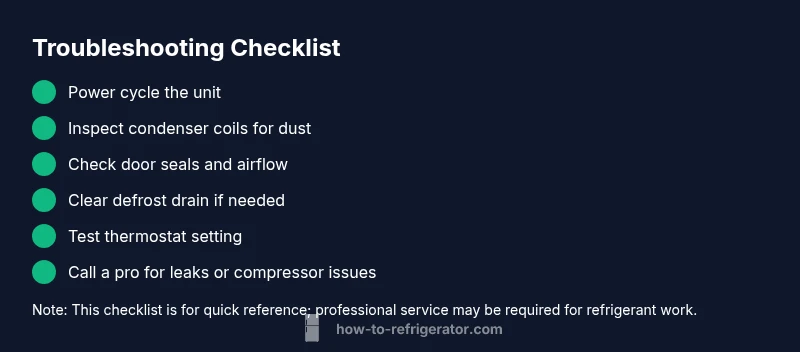
Steps
Estimated time: 60-90 minutes
- 1
Power cycle the fridge
Unplug the unit for 5–10 minutes, then plug back in. This resets many electronic controls that can drift and cause the compressor to stall or fans to stop.
Tip: Make sure you know where the unplug switch or outlet is before you start; label the circuit if needed. - 2
Inspect condenser coils
Locate the coils (back or bottom) and remove dust with a stiff brush or vacuum. Dirty coils force the compressor to work harder and reduce cooling efficiency.
Tip: Do not use water directly on electrical components; unplug first and avoid bending delicate fins. - 3
Check door seals and airflow
Close the door firmly and inspect gaskets for wear. Ensure interior vents aren’t blocked by food or shelving that obstructs cold air circulation.
Tip: A quick wipe with soapy water can seal minor gaps and restore airflow. - 4
Clear the defrost drain
If you notice frost buildup or water pooling, clear the defrost drain line. Blockages can cause ice to form and hinder cooling.
Tip: Flush with hot water and use a flexible pipe cleaner to dislodge debris. - 5
Verify thermostat setting
Confirm the thermostat is set between 37–40°F (3–4°C) for fresh food and 0–5°F (-18 to -15°C) for freezer. Small misadjustments can dramatically affect cooling.
Tip: If you can’t calibrate accurately, consider replacing a faulty sensor. - 6
Test for frost and sensor issues
Inspect for unusual frost patterns inside the freezer or cold spots in shelves, which can indicate sensor or defrost problems.
Tip: Document abnormal frost patterns to help a pro diagnose faster. - 7
Decision point: call a professional
If none of the above restores cooling or you detect refrigerant signs (hissing, oily residues) or hear irregular compressor sounds, stop DIY work and call a pro.
Tip: Refrigerant work is hazardous and requires licensed technicians.
Diagnosis: Refrigerator won’t cool or is warm inside
Possible Causes
- highDirty condenser coils
- mediumBlockage in defrost drain
- mediumThermostat or temperature control issue
- lowDoor gasket leaks or poor door seal
- lowRefrigerant leak or failed compressor (needs pro)
Fixes
- easyUnplug and vacuum/dust condenser coils, then wipe clean
- easyClear defrost drain using hot water, pipe cleaner, and gentle agitation
- mediumCheck and adjust thermostat setting; replace sensor if readings are off
- easyInspect door gaskets for cracks; replace to restore seal
- hardIf suspect refrigerant leak or compressor is failing, call a professional
FAQ
What are the most common causes if my fridge isn’t cooling?
Most non-cooling events are due to dirty condenser coils, blocked defrost drains, or thermostat misadjustments. Door seals and airflow play a big role as well. Start with these basics before pursuing more advanced fixes.
Common causes include dirty coils, clogged defrost drains, and thermostat issues. Start with the basics to identify the culprit.
Can a dirty condenser coil really stop cooling?
Yes. A dusty condenser coil cannot release heat effectively, which raises temperatures inside the fridge and disrupts cooling. Cleaning the coil is often enough to restore function.
Dirty condenser coils can stop cooling; cleaning them often fixes the issue.
Is it safe to fix a defrost drain myself?
Clearing a defrost drain is generally safe if you follow steps with the unit unplugged. Use hot water and a flexible brush, and avoid forcing parts. If ice continues to recur, consult a pro.
Clearing a defrost drain can be DIY-safe if you unplug first and follow steps carefully.
How do I know if I have a refrigerant leak?
Signs include hissing sounds, oily residue around fittings, or frost in unusual places. Leaks require a licensed technician and should not be repaired DIY.
Look for hissing sounds or oily residue; leaks require a licensed professional.
When should I call a professional?
If basic checks fail to restore cooling, or you suspect a refrigerant leak or compressor problem, stop DIY work and contact a repair service.
If basic fixes don’t work, or you suspect a leak or compressor issue, call a professional.
Is it worth replacing the thermostat or sensor myself?
Replacing a faulty thermostat or sensor can fix the issue if you’re comfortable with appliance electronics. If you’re unsure, hire a technician to avoid damaging the fridge.
Thermostat replacement can help, but if you’re not confident, get a pro.
Top Takeaways
- Start with power and seals; many issues are airflow-related
- Clean condenser coils to restore cooling efficiency
- Clear defrost drains to prevent ice buildup
- If DIY steps fail, avoid refrigerant work and call a pro
- Prevent future issues with routine maintenance