Is a Refrigerator Cold? Urgent Troubleshooting Guide
Urgent guide for when your refrigerator isn’t cold. Quick checks, diagnostic flow, step-by-step fixes, and safety tips to restore cooling fast.


Most refrigerators stop cooling due to a dirty condenser, a faulty thermostat, or a blocked defrost drain. Start with quick checks: ensure the door seals are intact, the fan runs when the compressor is on, and the condenser coils are clean. If temps stay high, follow the diagnostic flow and step-by-step fixes below.
How a refrigerator maintains cold temperatures
Refrigerators keep food safe by moving heat out of the cabinet and maintaining a stable cold zone inside. The basic idea is simple: a sealed environment, a compressor, a refrigerant loop, and a heat-exchanging coil that dumps heat to the surrounding air. When someone asks, is a refrigerator cold, the answer depends on the set temperature, airflow, and the health of the cooling cycle. The typical target is around 37°F (3°C) for fresh food and 0°F (-18°C) for frozen items. If any part of this chain isn’t working, temperatures rise and food safety is at risk. At a minimum, you should feel a consistent chill in both compartments and hear the fan run at least intermittently when the door is closed. In many homes, dust and kitchen layout reduce airflow, making the system less efficient. How To Refrigerator's guidance emphasizes quick, safe checks you can perform before calling a technician.
Common causes when a fridge isn’t cold
When a fridge stops cooling, several issues could be at play. The most frequent is dirty condenser coils, which trap heat and force the compressor to work harder. A malfunctioning thermostat or temperature sensor can misread the interior and let the compressor run too long or stop prematurely. Ice buildup from a faulty defrost cycle or a blocked defrost drain can interfere with airflow. The evaporator fan must move air across the coils; if it’s noisy or not turning, cold air won’t circulate. Finally, check door seals—damaged gaskets allow warm room air to creep in, especially if your kitchen is warm or humid. A failing compressor or a bad main control board is less common but still possible. By focusing on the simplest, most likely causes first, you can save time and money while restoring safe cooling.
Quick checks you can do safely now
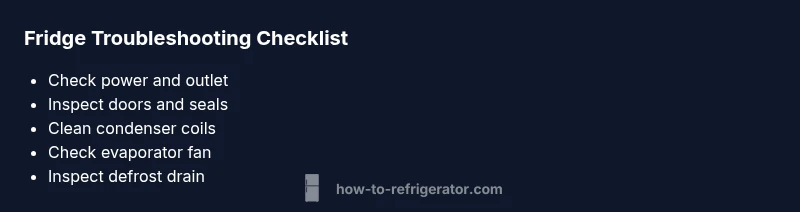
Before you pick up tools or call a repair service, perform these safe checks. First, confirm the fridge is plugged in and the outlet is working; try a different outlet if unsure. Next, inspect the door gasket for cracks or deformation; press along the seal and listen for air leaks. Then, look at the condenser coils on the back or underneath; if dusty or linty, unplug the unit and vacuum gently from the outside. Listen for the evaporator fan when the door is closed; if you don’t hear it and there’s frost on the back wall, defrosting may be needed. Finally, verify the temperature setting aligns with recommendations and that the fridge is not overpacked, which can obstruct airflow. If any of these checks fail or you’re uncomfortable with unplugging the appliance, skip to professional help.
Planning repairs and when to call a professional
If the fridge remains warm after the basic checks, or you hear unusual noises from the compressor, it’s time to escalate. Do not attempt refrigerant work yourself; refrigerant handling requires licensed technicians. Consider professional service for suspected sealed-system issues, a failed compressor, or a malfunctioning main control board. When you contact a pro, provide your model number, the symptoms, how long it has been warm, and any recent power events. Regular maintenance, including cleaning coils and checking door seals, can prevent many common issues and keep temps steady. How To Refrigerator recommends documenting your steps so the technician can diagnose faster and minimize downtime.
A quick safety reminder and wrap-up
Always unplug the appliance before you begin any hands-on inspection beyond surface checks. Never bypass safety protections, and avoid using heating tools around electrical components. If you’re unsure at any point, prioritize safety and call a pro. While the fridge is warming, move perishable items to a cooler or freezer if you have one. With careful steps, most not-cooling issues are resolved without major repairs, but some problems do require professional equipment and expertise.
Steps
Estimated time: 60-90 minutes
- 1
Power off and safety check
Unplug the fridge and confirm there is no power flowing. If you must restore power to perform checks, do so cautiously and use a grounded outlet. This prevents shock and damage when inspecting components.
Tip: If the outlet trips the breaker, stop and call an electrician. - 2
Check temperature settings and door seals
Verify the thermostat is set to a safe range (not at the coldest setting) and inspect gaskets for cracks. A poor seal allows warm room air to enter every time the door opens.
Tip: Close the door gently and ensure it forms a tight seal all around. - 3
Inspect condenser coils and airflow
Locate the condenser coils (usually at the back or beneath the unit). If you see dust or lint, unplug and clean them with a vacuum or brush. Proper airflow improves heat removal and cooling efficiency.
Tip: Do not use metal tools that could bend delicate fins. - 4
Listen for the evaporator fan and compressor
Close the door and listen for the evaporator fan operating. If you hear clicking but feel no air, the fan may be obstructed or failed. The compressor should run periodically; prolonged operation without cooling suggests a deeper issue.
Tip: If the fan is loud or rattling, schedule service. - 5
Check defrost system and drain
Look for ice buildup on the evaporator coils or a blocked defrost drain. Ice blocks airflow; a clogged drain can cause water leakage. If you suspect a defrost issue, a manual defrost or professional check may be required.
Tip: Never force ice off coils with a sharp object. - 6
Test thermostat and sensor
If available, test the thermostat with an external thermometer inside the fridge. A discrepancy between the reading and the control setting may indicate a faulty sensor that misleads the cooling cycle.
Tip: Calibration might fix minor drift; replace if readings are consistently off. - 7
Decide on next steps
If symptoms persist after these steps, prepare for professional service, especially if refrigerant leaks or sealed-system issues are suspected. Have model information handy to speed up the diagnosis.
Tip: Take photos of labels and controls for the technician.
Diagnosis: Refrigerator not cooling / temperature rising
Possible Causes
- highPower or outlet issue
- highDirty condenser coils
- mediumFaulty thermostat or defrost timer
- mediumEvaporator fan failure
- lowDoor not sealing
Fixes
- easyCheck power at outlet, circuit breaker, and ensure the fridge is plugged in
- easyClean condenser coils and improve airflow around the unit
- mediumTest thermostat and defrost timer; replace if faulty
- mediumInspect evaporator fan for operation and replace if silent or obstructed
- easyInspect door seals and replace gaskets if damaged
FAQ
Why isn’t my fridge cooling even though it’s plugged in?
Common causes include a failed door seal, dirty condenser coils, thermostat problems, or a blocked defrost drain. Start with those basic checks before seeking professional help.
Common causes include a failed door seal, dirty coils, thermostat issues, or a blocked defrost drain. Start with basic checks before calling a pro.
Can I fix a fridge not cooling myself?
Yes for simple issues like cleaning coils, replacing a gasket, or adjusting the thermostat. More complex problems (sealed system, refrigerant leaks, or compressor failure) require a licensed technician.
Yes, you can handle simple tasks, but for refrigerant leaks or compressor problems you’ll need a technician.
How long does it take for a fridge to cool after a power outage?
Cooling time varies, but a fridge typically takes several hours to reach the safe operating range after being unplugged or power restored. Keep doors closed and avoid overloading during this period.
It usually takes several hours to re-cool after a power restore; keep doors shut and avoid overloading.
Is it safe to run the fridge with a damaged door seal?
No. A damaged seal lets warm air in, increasing energy use and risking improper cooling. Replace the gasket to restore consistent temps.
No, a damaged seal lets warm air in and wastes energy. Replace the gasket to restore cooling.
What is a defrost drain and why does it matter?
The defrost drain removes melted frost from the freezer area. If clogged, ice can form and block airflow, causing cooling problems and water leaks.
The defrost drain removes meltwater; if clogged, ice blocks airflow and leaks can occur.
When should I call a technician for a refrigerator not cooling?
Call a technician if you suspect a sealed-system leak, refrigerant issue, or a failed compressor. For other non-terminal signs, follow the diagnostic steps first.
Call a tech if you suspect leaks or a compressor problem; otherwise, try the step-by-step checks first.
Watch Video
Top Takeaways
- Start with power, seal, and air flow checks.
- Condenser coil cleanliness dramatically affects cooling.
- Use the diagnostic flow before replacing major parts.
- Know when to call a pro for sealed-system issues.