Why Your Refrigerator Is Cold: An Urgent Troubleshooting Guide
Urgent, practical guide to diagnosing why your refrigerator is cold, with safe steps, diagnostic flow, and prevention tips from How To Refrigerator.


Your refrigerator being colder than it should be is usually caused by an overactive thermostat, a faulty temperature control, or frost buildup that restricts airflow. Start by validating the thermostat setting and door seals, then inspect for frost on the evaporator and ensure vents aren’t blocked. If the issue persists after these quick checks, reset the unit and plan professional service if needed.
Why the Refrigerator Is Cold
If you're wondering why refrigerator is cold, you're tackling a common issue homeowners face when the thermostat or airflow is off. In most cases, a too-cold fridge is caused by a mis-set temperature, frost buildup, or blocked vents that restrict air circulation. According to How To Refrigerator, those causes are usually simple to diagnose and correct without tools. Start by confirming the thermostat setting is appropriate for your space (usually around 37-40°F / 3-4°C for the fresh food compartment) and ensuring the door seals close tightly. A quick check can save wasted energy and prevent frozen foods. Next, assess airflow: make sure nothing blocks the vents inside the cabinet, and confirm the evaporator coils are clean and not frosted excessively. If condensation or frost appears on the back wall or freezer, it may indicate a defrost issue that needs attention. Small adjustments now can restore proper cooling without major repairs.
The How To Refrigerator team emphasizes that most overcold conditions are fixable with simple steps and careful observation. Keeping the interior organized to prevent air from escaping and avoiding placing hot items inside the fridge can help maintain a stable temperature over time.
Common Causes of Excessive Cold Temperature
Several practical culprits can push a refrigerator toward excessive cold. The most frequent is an overactive thermistor or bad mechanical temperature control, which tells the compressor to chill more than necessary. Frost buildup on the evaporator can also block airflow, making the fridge work harder and colder in spots. Worn door seals or a misaligned door can trick the unit into thinking it is in a warmer environment, causing it to compensate by cooling too much in the interior. Additionally, setting the temperature control toward 'low' or 'colder' on older models often leads to overcooling. Defrost timer malfunctions, relay failures, and even a dirty condenser can indirectly affect temperature regulation. How To Refrigerator analysis shows that many over-cooling issues stem from simple, addressable settings rather than expensive parts.
To distinguish between causes, check the thermostat first, then look for frost and listen for airflow noises. If you notice frost on the evaporator or unusual compressor cycling, you likely have a frost or defrost-related issue. Remember: even a small miscalibration can push a fridge toward excessive cooling, so small adjustments can have a big impact.
Safe, Quick Checks You Can Do Right Now
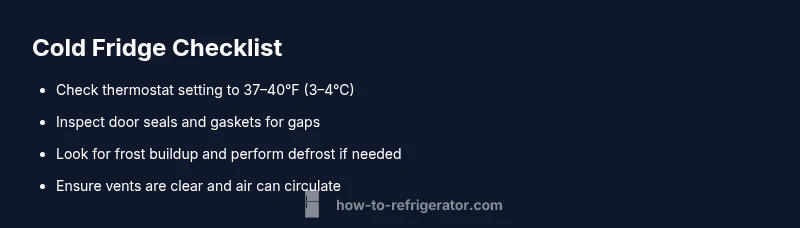
- Check the thermostat: set it to about 37-40°F (3-4°C) and wait several hours to observe changes. If your model supports it, use a separate fridge thermometer to confirm readings.
- Inspect the door seals: run a dollar-bill test to ensure a tight seal; replace worn gaskets if needed.
- Look for frost: if frost is visible on the back wall or freezer, run a manual defrost cycle if your model supports it, or perform a safe defrost per the user manual.
- Check airflow: ensure items aren’t blocking vents; leave space around shelves for air to circulate.
- Listen for the compressor: a constantly running compressor or frequent cycling may indicate a control problem. If in doubt, unplug for a few minutes to reset and re-evaluate after powering back up.
If these steps don’t yield results, move to the diagnostic flow and consider professional service.
Diagnostic Flow Snapshot (Overview)
Symptom: Refrigerator feels too cold relative to its setting.
Causes:
- cause: Thermostat/temperature control fault; likelihood: high
- cause: Frost buildup blocking airflow; likelihood: medium
- cause: Faulty evaporator fan or defrost system; likelihood: low
Fixes:
- fix: Adjust or replace defective thermostat or temperature sensor (easy to medium).
- fix: Defrost the evaporator and clean coils; re-check airflow (easy).
- fix: Inspect the evaporator fan and defrost timer; replace if necessary (medium).
Note: If frost is persistent or if you notice warm spots after a defrost cycle, professional assessment is recommended to avoid damage to the cooling system.
STEP-BY-STEP: Fix for Overly Cold Temperature
- Check Thermostat Settings: Power down the unit briefly, then set the thermostat to a mid-range (around 37-40°F / 3-4°C). Test by returning to normal operation and monitoring for 6-8 hours. Tip: Use a separate thermometer to verify actual interior temperature.
- Inspect Door Seals and Gaskets: Inspect for cracks, tears, or gaps. Clean with mild soap and water, then snug the door to ensure a proper seal. Tip: A loose seal can make the freezer work harder and cause cold spots in the fridge.
- Assess Frost and Defrost: If frost is visible, perform a controlled defrost or use the defrost setting if available. Clean coils and check the defrost drain for blockages. Tip: Unplug the unit before removing panels; wear gloves to protect against sharp edges.
- Check Airflow: Remove items from shelves that block vents. Ensure there is space around foods to allow air to circulate. Tip: Don’t overfill—air needs to flow freely to keep temperatures even.
- Reset and Observe: After making adjustments, power cycle the fridge (unplug for 1–2 minutes, then plug back in) and monitor for 24 hours. If temperatures remain unstable, schedule professional service. Tip: Keep a log of temperature readings for a week to detect patterns. Estimated total time: 15-30 minutes for quick checks; up to several hours for defrosts and calibration.
TIPS & WARNINGS
- Pro tip: Use a fridge thermometer to monitor actual temperatures in the main compartment and freezer for at least 7 days to detect drift.
- Warning: Never attempt refrigerant service yourself. Work on electrical components only if you are confident and unplug the unit first.
- Note: Regular coil cleaning and vent clearance reduce frost buildup and improve energy efficiency.
KEY TAKEAWAYS
- Start with the simplest fixes: thermostat settings and door seals.
- Frost and airflow issues are common culprits; address them first.
- Use a dedicated thermometer to verify actual temperatures for accuracy.
- If problems persist after safe checks and resets, contact a professional for a thorough diagnostic.
Steps
Estimated time: 15-30 minutes
- 1
Check thermostat settings
Verify the temperature target is in the mid-range (37-40°F / 3-4°C). If you have a separate thermometer, compare readings after several hours.
Tip: Small adjustments have big effects on cooling balance. - 2
Inspect door seals
Look for gaps or tears in gaskets. Clean the seals and ensure the door closes fully and evenly.
Tip: A tight seal prevents warm air from entering and reduces frost formation. - 3
Check for frost and defrost
Inspect the back wall for frost; if present, perform a defrost cycle or manual defrost per your manual.
Tip: Avoid using sharp objects to remove frost to prevent damage. - 4
Evaluate airflow
Ensure vents are clear and not blocked by stored items. Create space for air to circulate.
Tip: Airflow is crucial for even cooling; blockages create cold and warm spots. - 5
Power cycle & monitor
Unplug for 1-2 minutes, plug back in, and monitor temperatures for 24 hours. Record readings to spot trends.
Tip: If the problem returns, the issue might be a faulty component requiring service.
Diagnosis: Refrigerator is colder than the user-set temperature
Possible Causes
- highThermostat or temperature sensor fault
- mediumFrost buildup restricting airflow
- lowDefrost system or evaporator fan failure
Fixes
- easyTest and replace faulty thermostat/thermistor or adjust sensor calibration
- easyDefrost evaporator, remove frost, clean coils, and restore airflow
- mediumInspect evaporator fan and defrost timer; replace parts if needed
FAQ
Why is my refrigerator colder than the setting?
Colder temps can result from an overactive thermostat, faulty temperature sensor, frost buildup, or a defrost system issue. Start with the thermostat and defrost checks, then verify airflow and seals.
If your fridge is colder than you set it, check the thermostat, defrost if needed, and make sure airflow isn’t blocked. If it persists, a professional may be required.
Can a bad door seal cause overcooling?
Yes. Worn or misaligned door seals can trick the system into cooling more to compensate for heat gain. Inspect and replace seals as needed.
A faulty door seal can lead to overcooling, so check seals and replace if they’re damaged.
Is frost on the evaporator normal?
Light frost on the evaporator can be normal during warming cycles, but persistent frost indicates a defrost problem that should be addressed.
A little frost can happen, but ongoing frost means a defrost issue needs attention.
When should I call a professional?
If you’ve completed safe checks, defrosted, and temps are still off or there are unusual noises, contact a technician to prevent further damage.
If safe checks don’t fix it, it’s time to call a professional.
Can incorrect settings affect both fridge and freezer?
Yes. A mis-set temperature or faulty control can impact both compartments. Verify both zones and adjust to recommended ranges.
Sometimes both compartments are affected by one setting; double-check both controls.
Watch Video
Top Takeaways
- Start with thermostat and seals before diving deeper.
- Frost and airflow problems are common culprits.
- Verify temperatures with a dedicated thermometer.
- Defrost when frost blocks airflow; call a pro for recurring issues.