Fridge Not Cold? Urgent Troubleshooting You Can Do Now
Is your fridge not cold? How To Refrigerator guides homeowners through urgent, safe troubleshooting to diagnose cooling issues and restore temperatures quickly. Learn a clear, step-by-step method to triage, fix common faults, and know when to call a pro.


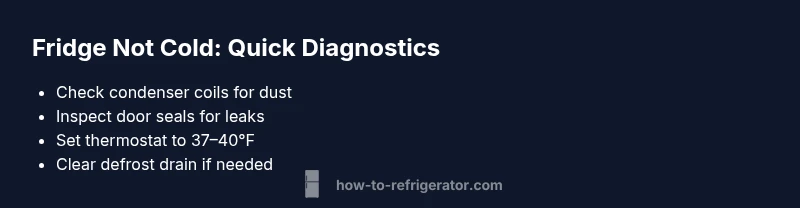
Most often, a fridge not cold is caused by dirty condenser coils, a malfunctioning defrost timer, or an incorrect thermostat setting. Start with safety: unplug the unit, clean coils, and reset the temperature to around 37–40°F (3–4°C). If cooling doesn’t resume, check the evaporator fan, door seals, and defrost drain before scheduling professional service.
What it means when a fridge isn't cooling
When a fridge isn’t cooling, you may notice temperatures creeping up on the shelves, dairy and produce softening, or ice cream losing its firmness. This isn’t a single symptom; it’s a signal that the cooling cycle isn’t removing heat effectively. Common culprits include a dirty condenser coil, a failed defrost timer or defrost heater, or an incorrect thermostat setting. Less frequent but serious issues involve a faulty compressor or refrigerant problems. According to How To Refrigerator, many cooling failures are avoidable with routine maintenance and timely checks. Understanding the basics of how the cooling system operates — refrigerant circulates via the compressor through the condenser coils, then passes through an expansion device to the evaporator — helps you spot airflow blockages or control faults early. This knowledge empowers you to triage safely as a homeowner and avoid unnecessary parts replacement.
Quick checks you can safely perform
Before you start dismantling components, perform simple safety-first checks. Always unplug the unit before touching electrical parts. Verify the door seals seal properly so warm room air can’t creep in, and ensure items aren’t propped against vents. Inspect condenser coils (often under the fridge or at the back) for dust or lint and clean them with a gu- brush or vacuum. Set the thermostat to a safe range around 37–40°F (3–4°C) and give the system time to respond. If you didn’t find obvious issues, check the evaporator fan for smooth operation and listen for airflow inside the freezer compartment. A blocked defrost drain can cause frost buildup that impedes airflow; clear any visible ice and run a defrost cycle if your model supports it. Keep warning signs in mind: unusual noises, frost on the evaporator, or pooling water inside indicate more targeted problems. Throughout this process, refer to your appliance manual, but remember that major repairs may require a professional.
How cooling systems work (simplified)
A modern refrigerator relies on a closed-loop cooling cycle. The compressor compresses refrigerant, which releases heat in the condenser coils and becomes a high-pressure liquid. It then travels through an expansion valve, cooling as it enters the evaporator. Inside the evaporator, the refrigerant absorbs heat from the interior, cooling the cabinet. A fan circulates air inside, while another fan may assist the condenser. If any part of this cycle is interrupted—blocked airflow, an iced evaporator, or a failed defrost timer—cooling efficiency falls and the interior warms. Knowing these basics helps you identify where to look first when the fridge isn’t cold.
Common causes (detailed)
- Dirty condenser coils (high likelihood): Dust and lint build up over months, reducing heat rejection. Fix: unplug, vacuum, and carefully brush coils; ensure at least 1–2 inches of clearance around the back or bottom. Likelihood: high.
- Thermostat mis-set or faulty (high): If the thermostat is set too high or a faulty sensor misreads temperature, the compressor won’t run reliably. Fix: set to 37–40°F (3–4°C); if readings are unstable, consider replacing the sensor. Likelihood: high.
- Defrost timer/defrost heater failure (medium): Ice can block airflow through the evaporator. Fix: consult your manual to test the timer or heater; replacement may be needed. Likelihood: medium.
- Evaporator fan not running (medium): When the fan fails or is obstructed, cold air doesn’t circulate. Fix: inspect for debris, test continuity, and replace if needed. Likelihood: medium.
- Door gasket leaks (medium): A torn or loose gasket lets warm room air enter. Fix: replace the gasket; ensure doors seal tightly. Likelihood: medium.
- Compressor or refrigerant issues (low): These are less common and typically require a pro. Fix: professional inspection and refrigerant handling. Likelihood: low.
If you identify one of these issues, address it step-by-step and re-test the temperature. In many cases, addressing airflow and temperature control resolves the problem without major component work.
How to diagnose without tools
Start with visible checks: verify door seals, listen for the evaporator fan, and inspect for frost buildup. Next, confirm the thermostat setting and listen for the compressor at startup. If you hear a buzzing or humming noise for a prolonged period but the temperature doesn’t drop, that can indicate a compressor or refrigerant concern. Use the carton method to verify airflow: place a paper strip near the vents and see if air moves through; lack of airflow suggests a blocked coil or fan issue. Document symptoms and times you notice them to help a technician if you need to call one. Remember, never bypass safety features; unplug before touching power components and avoid attempting refrigerant repair yourself.
Safety and what to avoid
Safety is paramount when troubleshooting fridges. Always unplug before any interior inspection. Never poke at electrical components with metal tools or bypass safety switches. If you notice a burning smell, buzzing that doesn’t stop, loud compressor noises, or visible refrigerant leaks (often a sharp chemical odor), stop immediately and call a licensed technician. Do not attempt to recharge refrigerant or repair the sealed system yourself. For most homeowners, routine maintenance—clean coils, test door seals, and set an appropriate temperature—reduces the risk of a cooling failure. Finally, keep a log of temperatures over 24–48 hours to monitor stability and prevent spoilage.
When to call a pro and what to expect
If basic checks don’t restore cooling within 24–48 hours, or you suspect a defrost timer, evaporator fan failure, or refrigerant issue, contact a professional. A trained technician will diagnose using safe, industry-standard methods and will explain whether a part replacement or refrigerant service is required. Ask about surge protections, energy efficiency, and warranty coverage for any repairs. The goal is to restore safe temperatures and extend the life of your fridge without unnecessary downtime.
Steps
Estimated time: 30-60 minutes
- 1
Power down safely
Unplug the fridge and remove perishable items. This keeps you safe while inspecting electrical components and avoids shocks. Wait for 60 seconds before touching any exposed parts.
Tip: Use a non-conductive flashlight to inspect deep panels without removing components. - 2
Check door seals
Inspect gaskets for cracks, tears, or gaps. Close the door on a dollar bill or piece of paper; if you can pull it out easily without resistance, the seal may be compromised and needs replacement.
Tip: Replace worn seals promptly to prevent warm air intrusion. - 3
Clean condenser coils
Locate coils (back or bottom). Vacuum dust with a brush attachment, then wipe with a damp cloth. Ensure clearance around the unit to allow airflow.
Tip: Do this every 6–12 months or sooner in dust-prone environments. - 4
Set proper temperature
Reconnect power and set the thermostat to 37–40°F (3–4°C). Avoid extreme settings; excessive cooling demand won’t fix a blocked airflow and can waste energy.
Tip: Record the temperature reading after 24 hours to confirm stability. - 5
Test the evaporator fan
Listen for the evaporator fan running when the door is open. If you don’t hear air movement, the fan may be blocked or defective and require replacement.
Tip: Never bypass the fan; airflow is essential for even cooling. - 6
Inspect defrost drain
If you see frost accumulation or water pooling, inspect and clear the defrost drain. A clog can block airflow and lead to poor cooling.
Tip: Use warm water or a flexible routine to clear the drain tube gently. - 7
Power on and observe
Plug in, monitor interior temperature for 24–48 hours, and check for consistent cooling. If temperatures remain high, a professional assessment is recommended.
Tip: Keep a temperature log to simplify future troubleshooting.
Diagnosis: Fridge not cold (interior temps rising, warm shelves)
Possible Causes
- highDirty condenser coils causing poor heat rejection
- highThermostat set too high or incorrect temperature
- mediumDefrost timer/defrost heater failure
- mediumEvaporator fan not running or blocked
- mediumDoor gasket leaks causing cold air escape
- lowCompressor or refrigerant issues
Fixes
- easyClean condenser coils and ensure airflow clearance around the unit
- easyReset thermostat to 37–40°F and monitor for 24–48 hours
- mediumInspect and clear defrost drain; test defrost timer/heater if accessible
- mediumCheck evaporator fan operation and replace if not spinning smoothly
- easyReplace torn or loose door gasket to restore seal integrity
- hardConsult a pro for compressor or refrigerant-related problems
FAQ
What is the first thing I should check if my fridge is not cold?
Start with the thermostat setting and door seals. If the temperature still rises, inspect condenser coils and fans for obstructions. Unplug before touching electrical parts.
First check the thermostat and door seals, then inspect coils and fans with the unit unplugged.
Can a dirty condenser coil really cause not cold?
Yes. A dusty condenser coil reduces heat rejection, forcing the system to work harder and can stop effective cooling. Clean the coils and re-test.
Yes, dirty coils can prevent proper cooling; clean them and test again.
Should I wait to see if it cools after restarting?
Give the appliance at least 24 hours to stabilize after adjustments. If it doesn’t drop temperature within that period, seek professional help.
Give it 24 hours to stabilize after changes; otherwise call a pro.
Is refrigerant leakage dangerous?
Yes. Refrigerant leaks require a licensed technician. If you suspect a leak, stop using the unit and contact support promptly.
Refrigerant leaks are hazardous; stop use and call a professional.
What’s the difference between not cold and not defrosting?
Not cold means a systemic cooling issue, like airflow or compressor problems. Not defrosting refers to frost buildup blocking airflow, which needs defrost cycle checks.
Not cold means airflow or compressor issues; frost buildup means a defrost problem.
Is it safe to speed up defrost with heat?
No. Do not use external heat sources; allow the defrost cycle to work as designed or call a pro if it’s stuck. Avoid safety hazards.
Don’t use heat to defrost; it’s unsafe—let the system work or get help.
Watch Video
Top Takeaways
- Unplug before inspecting any interior components.
- Clean condenser coils to restore heat transfer.
- Set thermostat to 37–40°F and monitor for 24–48 hours.
- Check door seals and evaporator fan for airflow issues.
- Call a pro for compressor or refrigerant problems.