Fridge Not Cooling? Quick Repair Guide
Urgent troubleshooting guide to diagnose and fix a refrigerator or freezer not getting cold. Follow safe steps, identify common causes, and know when to call a pro.


Your refrigerator not cooling? Start with the basics: verify power, confirm thermostat settings, and inspect for frost or blocked vents. This How To Refrigerator guide walks you through a safe, step-by-step flow to diagnose the most common causes and restore cooling quickly while preventing further damage. Act now to avoid food spoilage.
Understanding the Not-Cooling Problem
According to How To Refrigerator, a refrigerator or freezer not getting cold is usually caused by airflow or temperature regulation issues rather than a mysterious defect. When cooling fails, food safety and energy usage become immediate concerns. You’ll hear fans, compressors, and defrost components working, but if heat exchange isn’t happening efficiently, temperatures rise. This article helps homeowners diagnose the root cause and act safely, avoiding unnecessary repairs. By understanding how these systems are supposed to work, you can recognize when a symptom points to a simple fix versus a costly replacement. The goal isn’t to replace parts at random, but to follow a logical path that protects food and your wallet.
Quick Checks You Can Do Safely
Before you dive into deeper troubleshooting, run a few quick checks that don’t require tools. First, ensure the unit is plugged in and the outlet is powered; check your circuit breaker if the outlet seems dead. Next, confirm the thermostat is set to a cold enough level and that the door seals are intact—gaps let warm air in and can mislead you into thinking the unit isn’t cooling. Look for frost buildup or blocked vents inside the freezer and fridge, which can impede air circulation. Finally, clear any debris around the condenser coils if you can access them safely. If ice is present on the evaporator, that could indicate a defrost problem. These checks are foundational and often resolve the issue without professional help.
Common Causes and How They Happen
Homeowners often face a handful of recurring culprits when cooling fails. Dirty condenser coils reduce heat transfer efficiency, causing the compressor to run longer and temperatures to rise. Damaged or loose door gaskets allow warm air to infiltrate, defeating the thermostat’s settings. A malfunctioning defrost system can lead to frost buildup that blocks airflow. Thermostat malfunctions or incorrect temperature settings are another frequent problem. In rare cases, a refrigerant leak or compressor failure will disrupt cooling and require expert repair. Understanding these causes helps you prioritize steps and avoid jumping to conclusions. How To Refrigerator notes that most fixes fall into safe, at‑home tasks with a clear path to professional help when needed.
Diagnostic Flow Overview
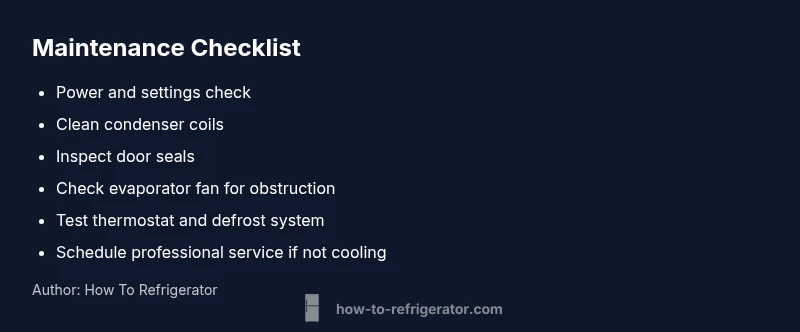
A structured diagnostic flow keeps you from guessing. Start with basic power and settings, then test airflow paths. If airflow is clear, move to the defrost system and thermostat. If none of these fix the issue, the problem may be a refrigerant leak or compressor fault, which requires licensed service. This section outlines how symptom observation leads to a logical diagnosis and actionable solutions. It also highlights safety considerations and when professional intervention is appropriate.
Prevention and Maintenance to Avoid Future Issues
Preventive maintenance reduces the likelihood of future cooling problems. Clean condenser coils every 6–12 months, depending on use and environment. Keep the area around the unit clean and unobstructed to maintain proper airflow. Regularly check door seals and replace worn gaskets to prevent warm air intrusion. Don’t overload shelves, which can block cold air from circulating. Finally, set a consistent temperature and avoid frequent, rapid changes. Small, proactive steps preserve efficiency, reduce wear, and extend the life of your appliance.
Safety and Final Considerations
Always unplug the unit before reaching inside or around electrical components. If you smell burning, hear buzzing or sizzling noises, or notice refrigerant odor, stop immediately and seek professional help. When in doubt, err on the side of caution and consult a licensed technician—especially for refrigerant or compressor concerns. The goal is to keep your food safe while protecting yourself from electrical or chemical hazards. Remember, some fixes require tools, parts, and local codes that a professional can navigate more safely and quickly.
Steps
Estimated time: 60-90 minutes
- 1
Power and Controls Check
Begin by confirming the unit is plugged in and the outlet is powered. Check the thermostat setting—too warm a setting won’t cool effectively. If the breaker tripped, reset it and see if cooling returns. Ensure you’re not adjusting settings too frequently, which can confuse the system.
Tip: If the outlet is controlled by a wall switch, confirm the switch is ON and not in a different room. - 2
Inspect Door Seals and Alignment
Visually inspect door gaskets for tears, cracks, or gaps. A loose seal allows warm room air to enter and spoils cooling efficiency. Close the door slowly and feel for air leakage around the gasket. Realigning or replacing a damaged seal can restore proper temperature control.
Tip: Clean seals with mild soap and water to restore elasticity; replace if hardened or cracked. - 3
Clean Condenser Coils and Ensure Airflow
Dusty coils reduce heat transfer, forcing the compressor to work harder. If coils are accessible, unplug the unit and carefully vacuum or brush dust from the fins. Ensure nothing blocks the rear or bottom airflow—clear debris and keep space for ventilation.
Tip: Use a coil cleaning brush or a soft brush; avoid metal tools that could bend fins. - 4
Check Evaporator Fan and Air Circulation
Listen for the evaporator fan when doors are closed. If you don’t hear it or feel insufficient airflow into the freezer or fridge, the fan may be blocked or faulty. Clearing obstructions and testing fan operation can confirm this issue.
Tip: If you hear unusual noises, don’t touch moving parts; consult a technician. - 5
Defrost System and Drain Check
Ice buildup on the evaporator can block air channels. If you see frost or ice, allow a manual defrost or follow your model’s defrost procedure. Check the defrost drain for clogs that may cause water to back up.
Tip: Never insert objects into frost buildup; use a safe defrost method as per manufacturer guidelines. - 6
Thermostat and Temperature Verification
Test the thermostat by temporarily adjusting to colder settings and monitoring response. If the unit still won’t cool after adjustments, the thermostat may be faulty or miscalibrated. Replacing a faulty thermostat can restore proper cooling.
Tip: Keep a consistent temperature; frequent changes stress the system. - 7
Professional Help if Needed
If none of the above steps resolve the issue, it’s time to contact a licensed technician. Refrigerant leaks, compressor failures, and major electrical problems require skilled service and proper handling.
Tip: Document observed symptoms and steps already taken to speed up diagnosis.
Diagnosis: Refrigerator or freezer not getting cold
Possible Causes
- highPower issue (outlet, cord, or circuit breaker)
- highDirty condenser coils or obstructed airflow
- mediumFaulty door gasket causing warm air ingress
- mediumDefrost system failure leading to ice buildup and cooling loss
- lowThermostat or temperature control fault
- lowLow refrigerant from a leak (requires professional)
- lowCompressor failure
Fixes
- easyCheck outlet, plug properly, and reset the circuit breaker if needed
- easyUnplug; vacuum and clean condenser coils; ensure airflow around the unit
- easyInspect door gasket for tears; clean and replace if damaged
- mediumDefrost timer/heater replacement or manual defrost if ice buildup is present
- mediumTest or replace thermostat; verify calibration
- hardRepair refrigerant leaks and recharge with licensed technician
- hardReplace compressor as advised by a professional
FAQ
Why is my refrigerator not cooling even though the light is on?
Having power does not guarantee cooling. The issue is usually with the thermostat, defrost system, condenser coils, or door seals. Start with basic checks and then test airflow and temperature settings.
Power being on doesn’t always mean cooling works—check thermostat, defrost, and coils before calling a pro.
What should I do first if foods spoil quickly?
Move perishables to a colder space if possible and check the thermostat setting and door seals. Ensure the unit isn’t overloaded and that airflow isn’t blocked by items inside. If temperatures don’t recover, explore the steps in this guide.
Move perishables, then verify thermostat and seals, and don’t overload shelves.
Can a dirty condenser keep fridge from cooling?
Yes. Dirty condenser coils impair heat exchange, making the fridge work harder and potentially fail to cool. Clean them safely according to your model’s guidance.
Dirty condensers can stop cooling; cleaning them usually helps.
Is a faulty defrost system common in older models?
Defrost failures are more common in older units and can cause frost buildup that blocks airflow. A professional may need to replace timers or heaters.
Defrost problems are common in older fridges; professionals may be required.
When should I call a professional for not cooling?
Call a professional if you smell refrigerant, hear burning or buzzing sounds, notice frost that won’t clear, or if the unit still isn’t cooling after basic checks.
Call a pro if you hear unusual noises or smell gas, or if cooling doesn’t resume after basic checks.
Can low refrigerant cause fridge not to cool?
Low refrigerant typically indicates a leak and requires a licensed technician. Do not attempt to recharge refrigerant yourself.
Low refrigerant means a leak and needs a pro to fix.
Watch Video
Top Takeaways
- Start with power, thermostat, and seals before deeper checks
- Dirty coils and airflow limits are the most common culprits
- Follow a structured diagnostic flow to identify issues safely
- When in doubt, call a professional for leaks, defrost, or compressor problems