Refrigerator Not Cooling? Freezer Works — Quick Fix Guide
Urgent guide for homeowners: diagnose why a refrigerator won’t cool while the freezer still chills. Includes airflow checks, frost removal, vent clearance, and when to call a pro.


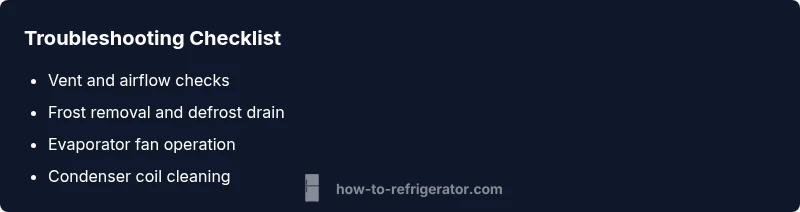
Most likely, the issue is airflow or frost buildup preventing cool air from reaching the fresh-food compartment. Start by checking for blocked vents between the freezer and fridge, then inspect the evaporator coils for frost. Make sure the evaporator fan is running and the condenser coils are clean. If airflow is blocked or the fan isn’t working, cooling will fail even if the freezer stays cold.
Understanding the symptom: refrigerator not cooling but freezer works
Not cooling but freezer working points to airflow or frost issues rather than a failed compressor. The fresh-food compartment relies on cool air circulated from the freezer. If airflow is restricted or frost blocks the evaporator, the fridge won’t chill while the freezer remains cold. According to How To Refrigerator, these failures are usually solved by simple, safe checks you can perform without special tools. Start with the basics: verify there’s no food blocking vents, listen for the evaporator fan, and look for frost on the evaporator coils. If you notice frost, there’s likely a defrost issue to address. This approach aligns with practical homeowner troubleshooting strategies and helps you avoid unnecessary part replacements.
Airflow and vent checks
Airflow between the freezer and refrigerator is essential. When the damper or vents are blocked by items or ice, the fridge may not reach the desired temperature even though the freezer stays cold. Check the following:
- Front vent between freezer and fridge: ensure nothing is blocking it.
- Damper control: some models have a variable damper that can stick open or closed.
- Return path: ensure the refrigerant line area isn't obstructed.
After adjusting, close the doors and wait 20-30 minutes to evaluate temperature changes. If there is still inadequate cooling, move to frost-related checks and other common culprits.
Frost buildup and defrosting
Frost buildup can act like a partial seal, blocking airflow across the evaporator and preventing cool air from reaching the fridge compartment. Frost may form from frequent door openings, a defective defrost timer, or a failed defrost heater. If you’re seeing a lot of frost, perform a safe defrost: unplug the unit, allow frost to melt, and clean the defrost drain to prevent refreezing. After defrosting, plug in and monitor temperatures for an hour or two. According to field observations, frost issues are among the top reasons for this symptom and are often resolved with a thorough but careful defrost.
Evaporator fan and condenser coils checks
The evaporator fan circulates air from the freezer to the fridge. If the fan is dead or obstructed, the fridge won’t cool even if the freezer stays cold. Listen for the fan running when the freezer door is opened or during normal operation. If you don’t hear it, it may need replacement. Similarly, dirty condenser coils reduce cooling efficiency; clean them with the unit unplugged and the coils accessible from the back or underneath. A common homeowner mistake is neglecting the condenser; regular cleaning helps maintain consistent temperatures and airflow.
Thermostat, door seals, and coil health
Incorrect thermostat settings can prevent the fridge from cooling. Check that the fridge is set to an appropriate temperature (usually around 37-40°F / 3-4°C) and the freezer to the recommended setting. Inspect door seals for gaps or wear; a leaky seal can allow warm air to sneak in, undermining cooling in the fridge while the freezer remains cold. Also inspect refrigerant coils for dirt and ensure the compressor is running smoothly. If the coils are dirty or the seal is compromised, clean/replace as needed. If you notice persistent frost or unusual noises, consider professional service.
Safety, maintenance, and when to call a pro
If you’re ever unsure about disassembly, voltage, or refrigerant handling, stop and call a licensed technician. Working with refrigerants or high-voltage components without proper training can be dangerous. Basic safety steps include unplugging before checks, avoiding water around electrical parts, and using insulated gloves if handling ice or coils. Regular maintenance—vent checks, coil cleaning, and door seal inspections—helps prevent this issue from returning. If none of the safe DIY steps restore cooling, a professional diagnosis is the safest next move.
Prevention tips for the future
To minimize the risk of this problem recurring: keep vents clear, minimize door openings, clean condenser coils every 6-12 months, ensure proper defrost function (auto or manual depending on model), and test temperature settings after any service. Regular checks improve reliability and extend the life of your fridge. Remember, small, proactive steps today can prevent bigger issues tomorrow.
Steps
Estimated time: 60-90 minutes
- 1
Power down safely
Unplug the refrigerator and move items away from the back. This reduces shock risk and makes inspection safer.
Tip: Always unplug before handling electrical components. - 2
Check vents and airflow
Open both doors and look for blocked vents. Remove any food items that obstruct airflow and ensure the damper can move freely.
Tip: Leave space for air to circulate around stored items. - 3
Inspect for frost and defrost
Look for frost buildup on the evaporator coils. If present, defrost according to model instructions or manual defrost temporarily.
Tip: Defrost only if you know how this model handles defrost cycles. - 4
Listen for evaporator fan
With doors closed, open the freezer and listen for the evaporator fan. If you don’t hear it, it may be faulty and require replacement.
Tip: Be careful near moving parts and never touch wires while powered. - 5
Check thermostat settings
Verify fridge is near 37-40°F (3-4°C) and freezer around 0°F (-18°C). Adjust slowly and give the system time to respond.
Tip: Small changes can have big effects; wait 20-30 minutes between adjustments. - 6
Inspect door seals
Check gaskets for cracks or gaps. A poor seal can let warm air in and disrupt cooling.
Tip: Clean seals with mild soap and water to restore a better seal. - 7
Clean condenser coils
Access the condenser coils and remove dust and lint. Clean with a brush or vacuum and ensure good clearance around the unit.
Tip: Do not bend fins; use a soft brush to avoid damage. - 8
Test and monitor
Plug back in and monitor temperatures for several hours. If cooling remains weak, seek professional service.
Tip: Document what you checked to help the technician diagnose faster.
Diagnosis: Refrigerator not cooling
Possible Causes
- highBlocked air damper or vents between compartments
- highFrost buildup on evaporator coils
- mediumNon-working evaporator fan
- lowDirty condenser coils reducing heat rejection
- lowMisadjusted thermostat or door seals leakage
Fixes
- easyUnblock vents and ensure damper operates freely
- easyDefrost the evaporator and clear the defrost drain
- mediumTest or replace evaporator fan if it’s not running
- easyClean condenser coils and ensure proper airflow around unit
- mediumAdjust thermostat and replace faulty door seals as needed
FAQ
Why is my fridge warm but the freezer still cold?
That pattern usually means airflow is blocked or frost is preventing air from circulating. Check vents, defrost if needed, and inspect the evaporator fan. If you can’t locate the cause, seek professional help to avoid further damage.
If your fridge is warm but the freezer stays cold, airflow blockage or frost is likely. Check vents, defrost if needed, and inspect the fan. Contact a pro if unresolved.
How can I tell if the evaporator fan is working?
Open the freezer door and listen for a faint hum when the compressor runs. If you don’t hear the fan, it may be faulty and require replacement. Visual inspection can confirm if the fan blades move freely.
Listen for the evaporator fan when the freezer runs. If you don’t hear it, it may need replacement and a service call may be needed.
Can a dirty condenser coil cause not-cooling symptoms?
Yes. Dirty condenser coils reduce heat rejection and can make the fridge struggle to cool, even if the freezer remains cold. Clean coils with the appliance unplugged and ensure proper airflow around the unit.
Dirty condenser coils can cause cooling problems. Clean them after unplugging the unit and make sure air can flow around it.
Is manual defrost ever necessary for modern fridges?
Some models include auto-defrost, but many require manual defrost if frost accumulates. Follow your model’s manual for safe defrost procedures and check the defrost drain for clogs.
Auto-defrost models sometimes need manual defrost if frost builds up. Check your manual for safe defrost steps.
When should I replace the thermostat?
If temperature readings are off despite adjustments, the thermostat could be faulty. A professional can test and replace it safely, as improper wiring can harm the unit.
If temps stay off after adjustments, the thermostat may be faulty. A pro can test and replace it safely.
What if I can’t access the back panels safely?
Avoid critical disassembly if you’re not comfortable. Expert technicians have the right tools and procedures to inspect coils, fan, and compressors without risk.
If you’re not comfortable with back-panel access, call a technician. They have the right tools and training.
Watch Video
Top Takeaways
- Check airflow and vent openings first
- Defrost frost buildup promptly when present
- Verify evaporator fan operation
- Keep condenser coils clean and unobstructed
- Call a pro if symptoms persist beyond DIY limits