Refrigerator Not Cooling but Freezer Works? Troubleshooting Guide
A practical, urgent guide to diagnosing why your refrigerator doesn't work but freezer does. Learn quick checks, a diagnostic flow, step-by-step fixes, and preventive tips to restore cooling safely.


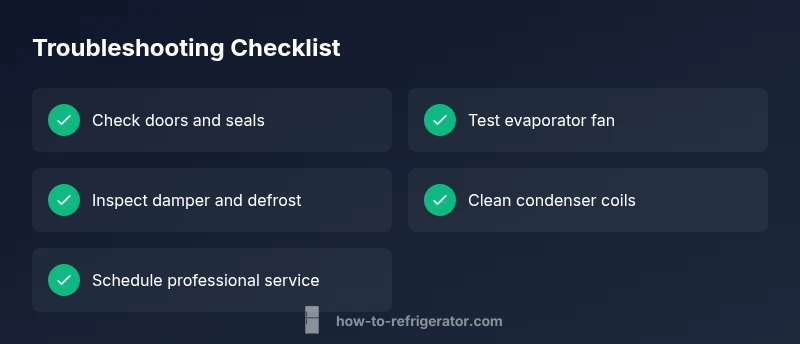
When the freezer stays cold but the refrigerator won’t, airflow or control issues are the most common culprits. Start with quick checks: inspect door seals, look for frost on the evaporator, and verify the damper is opening. If these basics don’t restore cooling, power-cycle the unit and, if needed, call a professional. This scenario—refrigerator doesn’t work but freezer does—often points to a airflow problem rather than a compressor fault.
Why this happens
When a refrigerator stops cooling while the freezer continues to hold its temperature, you’re likely dealing with airflow or control issues rather than a single failed compressor. The two compartments share a cooling circuit, but the fridge relies on a steady stream of cold air from the evaporator; if that air can’t circulate, the fresh-food compartment can heat up even while the freezer stays frozen. The phrase refrigerator doesn't work but freezer does is common in households, and it’s a good clue that the problem isn’t the compressor but something in the air pathway, damper, defrost cycle, or thermostat. According to How To Refrigerator, start with the simplest checks: confirm the unit is powered, doors seal tightly, and there’s no visible frost or ice buildup that indicates a defrost fault. If frost is present, you may be seeing a blocked airflow problem that requires defrost or damper repair. As you proceed, stay mindful of safety and avoid opening the refrigerant enclosure.
Common culprits
The most frequent issues behind a refrigerator that won’t chill while the freezer remains cold include airflow limitations and control faults. Here are the top suspects:
- Evaporator fan failure: If the fan isn’t moving air to the refrigerator shelf area, the fresh-food compartment will warm up even as the freezer stays cold.
- Damper control stuck: A damper that’s closed or sluggish will choke off cold air from the evaporator to the fridge.
- Defrost system fault: A failed defrost timer or heater can cause frost buildup that blocks airflow paths.
- Frost on evaporator: Visible ice indicates blocked airflow or an ineffective defrost cycle.
- Sensor or control board issues: Inaccurate temperature readings can prevent the compressor from running or reduce cooling efficiency.
- Dirty condenser coils: Overheating reduces overall cooling capacity and can worsen compressor performance.
- Worn door seals: Leaky gaskets allow warm air to infiltrate, confusing the thermostat and reducing cold air delivery.
If you notice any unusual noises from the evaporator area, or you hear a hum that doesn’t fit a normal cycle, take it as a sign to investigate further. Remember: not every problem is a single faulty part; it's often a cascade of airflow and control issues.
Quick checks you can do safely
Before you disassemble panels or test electrical components, perform these safe checks:
- Inspect door seals and gaskets for cracks or gaps; replace if damaged.
- Listen for the evaporator fan when the compressor runs; a lack of air flow could indicate a faulty fan.
- Look for frost buildup on the evaporator coils inside the freezer or behind a panel; frost suggests a defrost issue.
- Check the damper lever or control knob to ensure it moves freely and isn’t stuck.
- Power-cycle the unit: unplug for 60 seconds, then plug back in and observe how cooling resumes.
- Ensure the condenser coils are clean and unobstructed; vacuum off dust and debris carefully.
- Ensure both doors seal properly and aren’t left ajar by mistake.
If these checks don’t restore steady cooling, proceed to targeted tests or call a professional.
How to test the evaporator fan
The evaporator fan moves cold air from the freezer to the refrigerator compartment. To test it safely:
- Unplug the appliance and remove the cover panel over the evaporator if accessible.
- Visually inspect the fan blades for obstruction and spin the motor by hand to feel for resistance.
- If the motor won’t spin freely or makes grinding noises, the fan may be failing and requires replacement.
- Use a multimeter to check continuity if you have a replacement part available; if there’s no continuity, replace the fan.
Also verify that the fan is receiving power during normal operation; a faulty control board can stop power to the fan even if it looks fine. Reconnect the panel securely when finished.
Damper control and air flow
Airflow between the freezer and refrigerator is governed by the damper. When the damper is blocked or stuck closed, the fridge won’t receive enough cold air. To evaluate:
- Manually move the damper if accessible and listen for airflow change in the refrigerator.
- If the damper lever is sticky or the control knob doesn’t respond, the damper mechanism may need cleaning or replacement.
- Confirm the evaporator fan is running; without it, damper checks won’t matter because air isn’t circulating.
- If air flow seems proper but temperatures remain off, the damper or thermostat sensor might be misreading or failing.
Direct access to the damper varies by model; if you’re unsure, contact a technician to avoid damaging ductwork.
Defrost system checks
A defrost fault can lead to frost blocking the evaporator, which in turn limits airflow. Key checks include:
- Defrost timer: If the timer is stuck in defrost or not advancing, frost can accumulate.
- Defrost heater: A failed heater won’t melt frost accumulation, reducing air flow.
- Frost inspection: Look for a thick frost layer on evaporator coils; if present, you may need to run a manual defrost or replace faulty components.
If frost persists after a manual defrost, you should involve a professional to diagnose timer and heater failures and prevent compressor stress.
When to suspect the control board and sensors
Some units rely on electronic controls to manage compressor run and fan operation. If temperatures are inconsistent or fans fail to power on, the culprit may be a sensor or control board fault. Signs include sporadic cooling, abnormal compressor cycles, or error codes on digital displays. Fixes typically require a professional with the right diagnostic tools to avoid further damage.
Quick fixes you can try before calling a pro
- Reset the system by unplugging for a full minute and plugging back in.
- Inspect and reseat all wiring harnesses you can access safely.
- Clean the condenser coils and ensure there’s at least a few inches of clearance around the backside of the unit.
- Ensure doors are fully closed and seals are intact.
- If frost is persistent or the evaporator fan isn’t moving air, avoid further disassembly and schedule service.
These steps can resolve simple issues and prevent unnecessary service calls. If the refrigerator still doesn’t chill after these actions, a professional diagnosis is recommended.
Preventive maintenance to stop recurrence
Adopt a regular maintenance routine to keep cooling balanced:
- Clean the condenser coils every 6–12 months depending on usage and environment.
- Check door seals every few months and replace worn gaskets promptly.
- Empty and clean the drain may occasionally help prevent frost buildup.
- Keep the temperature settings within the manufacturer’s recommended range to avoid overworking the compressor.
By sticking to a routine, you’ll reduce the likelihood that the refrigerator doesn’t work but freezer does scenario recurs, saving time and energy.
Steps
Estimated time: 30-60 minutes
- 1
Power down and access panels
Unplug the refrigerator, move it away from the wall, and remove the front grille or access panel over the evaporator if your model allows. This step ensures you can safely inspect internal components without energizing the unit.
Tip: Take a photo of wiring connections before touching harnesses. - 2
Inspect the evaporator fan
Look for obstructions, test blade rotation by hand, and check for continuity with a multimeter if you have one. A seized or open circuit fan will stop cold air flow to the fridge.
Tip: If you hear buzzing or grinding, replace the fan. - 3
Check the damper and airflow
Move the damper lever and verify airflow into the refrigerator when the unit is on. If air flow is restricted, the damper may need cleaning or replacement.
Tip: Avoid forcing the damper; damage can worsen airflow. - 4
Assess the defrost system
Inspect the defrost timer and heater path for frost build-up. If frost is heavy, perform a manual defrost and test the timer after reassembly.
Tip: Never bypass the defrost heater; it’s a safety-critical component. - 5
Power-cycle and re-test
Reconnect power, wait 5–10 minutes for stabilization, and monitor cooling in both compartments. A return to normal cooling confirms a resolved issue.
Tip: Document any error codes seen on the display.
Diagnosis: Refrigerator not cooling
Possible Causes
- highEvaporator fan failure
- highDamper control failure
- mediumDefrost system fault
- mediumFrost buildup blocking airflow
- lowThermostat or sensor issue
Fixes
- easyTest or replace evaporator fan
- easyInspect and replace faulty damper or thermostat
- mediumRepair defrost timer/heater and remove frost
- easyClean condenser coils and improve airflow around unit
- hardReplace faulty sensors or control board if diagnostics indicate
FAQ
Why would a fridge not cool but the freezer still freeze?
This typically happens when cold air isn’t reaching the fridge due to airflow restrictions such as a faulty evaporator fan, blocked damper, or frost buildup. The freezer can stay cold because it’s closer to the cooling source and doesn’t rely on airflow as heavily for its limited compartments.
Often airflow problems near the evaporator or a stuck damper cause the fridge to underperform even though the freezer remains cold.
Should I defrost my freezer to fix this?
If you see frost buildup on the evaporator coils, a defrost issue could be the root cause. A controlled defrost or professional defrost repair may restore airflow. Do not force defrost if you’re unsure how to do it safely.
Frost buildup can block airflow; a proper defrost or defrost system repair is often needed.
Can I fix this myself or call a pro?
Safe basic checks can be done by homeowners (door seals, frost checks, power-cycles). For component tests like the evaporator fan or defrost timer, or if you encounter error codes, contact a qualified technician.
Do simple checks yourself, but don’t probe refrigerant lines or high-voltage parts without training.
What are quick signs I need professional service?
Persistent frost, unusual noises, or the fridge failing to cool after basic resets indicate a deeper fault best handled by a technician with the right tools.
If simple resets don’t fix it, get a professional diagnosis.
Is a condenser coil cleaning worth it?
Yes. Dirty coils can impair cooling performance and may contribute to uneven cooling. Clean them following the manufacturer’s instructions or have a pro do it.
Cleaning coils helps cooling efficiency and prevents overheating.
Watch Video
Top Takeaways
- Identify airflow as the primary issue
- Check evaporator fan and damper first
- Defrost faults can cause frost and airflow blocks
- Power-cycle before deeper diagnostics
- Call a professional if safety or components are uncertain