Refrigerator Freezing Everything? Fix It Fast
Diagnose and fix a refrigerator that is freezing everything with safe, proven steps. Learn quick resets, damper and defrost timer checks, thermostat settings, and when professional help is needed.


Unplug the fridge, then reset to factory temperature and replug. The most common cause is an overactive cooling system or a stuck damper letting cold air into the fridge. After resetting, verify door seals, condenser coils, and airflow. If the issue persists, proceed with the diagnostic flow below for a safe fix.
Understanding the symptom and common causes
If you notice that your refrigerator is freezing everything—from vegetables to milk—the first step is to understand what this symptom means. In a standard two-compartment unit, the fridge should stay around 35-38°F (2-3°C) while the freezer runs at 0°F (-18°C). When food inside the fridge freezes, the issue is usually not a general cooling failure but a misbalance in airflow or the defrost system. Common culprits include a miscalibrated temperature control, a faulty damper that lets too much cold air into the refrigerator, a stuck defrost timer, closed or blocked air vents, a dirty condenser coil restricting heat removal, or a door seal that leaks cold air into the cabinet. According to How To Refrigerator Team, addressing airflow and defrost control promptly reduces waste and energy use.
Understanding these possibilities helps you prioritize checks and avoid unnecessary replacements. Remember that not every freezing symptom means a broken compressor or refrigerant leak. Often the fix is simpler, cheaper, and can be completed safely at home with basic tools. Keep in mind the keyword refrigerator is freezing everything as you work through the steps, so you know you’re targeting the right cause.
Quick checks you can perform safely
Before disassembling panels, run through a quick, safe checklist. These steps are designed for the average homeowner and won’t require specialized tools.
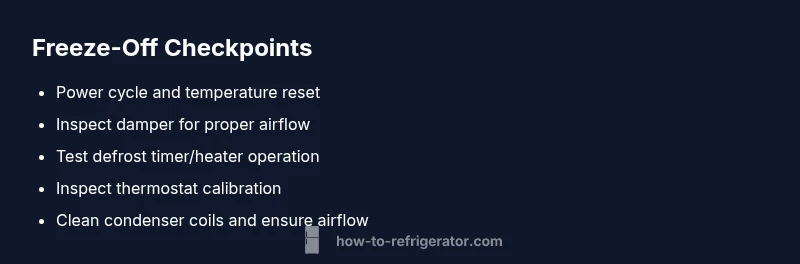
- Power cycle the unit: unplug for 5-10 minutes, then plug back in and set the temperature to a normal fridge setting (about 37°F/3°C). This can reset a misbehaving control board.
- Verify thermostat settings: ensure the fridge compartment isn’t set too cold. If you’re unsure, start at 37°F (3°C) and adjust by 1-2 degrees.
- Inspect door seals: check for cracks, tears, or compressed gaskets. A leaky seal can cause cold air to circulate unevenly, sometimes freezing items near the door.
- Check airflow vents: ensure nothing blocks the vents between the freezer and the refrigerator. Blocked vents force the fridge to compensate, which can frost food.
- Inspect condenser coils: look for dust or pet hair accumulating on coils; this restricts heat rejection and can cause frost if the system runs too long.
- Examine the damper mechanism: if you can access it safely, gently move the damper to confirm it opens and closes smoothly. A stuck damper can push extra cold air into the fridge.
If you notice that the fault persists after these checks, you’re ready for a deeper diagnostic flow. The next steps help pinpoint whether the issue is a damper, a defrost problem, or a thermostat calibration.
Diagnostic approach: narrowing down root cause
The symptom refrigerator is freezing everything often points to airflow or defrost control issues rather than a total cooling failure. Start by confirming whether the freezer is the source of the excessive cold in the fridge. If the freezer is overly cold or frost appears in unusual places, a defrost system fault is likely. If frost is only near the back wall or shelves, airflow disruption is more probable. Together with the quick checks above, use these diagnostic hints to narrow down root causes.
- If the damper is stuck or misadjusted, cold air floods the fridge while the freezer stays balanced. Check damper operation and reseat components if needed. This tends to be a high-lidelity cause with a high likelihood in households with frequent temperature fluctuations.
- A malfunctioning defrost timer or heater can cause ice to form and keep circulating cold air into the fridge. Look for frost buildup in the freezer and unusual temperatures in the fridge as clues. This is a medium likelihood issue that often requires a timer or control board replacement.
- Thermostat miscalibration or a low temperature setting can silently drive the fridge colder than intended. Recalibrate or replace the thermostat as needed. This is a common, easy-to-fix cause.
- Dirty condenser coils or poor airflow can prevent heat rejection, causing longer run times and frost development. Cleaning coils and improving airflow is a straightforward fix with a low to medium difficulty depending on access.
Document symptoms as you test, and use a step-by-step approach. If testing suggests a more complex repair, move to the STEP-BY-STEP section for actionable instructions. Always remember to unplug before inspecting electrical components and consult a professional if you’re uncomfortable with any step.
How to fix: safe, effective remedies
Based on the diagnostic clues, here are practical fixes you can perform in sequence. Start with the simplest, least invasive adjustments and escalate only if necessary. If you ever feel unsure, stop and call a pro.
- Fix a damper issue: If the damper is not moving freely, clean and gently lubricate (if manufacturer-approved) or replace the damper. Ensure the damper seals properly and allows only the intended amount of cold air into the fridge.
- Reset defrost system: If you suspect a defrost timer issue, locate the timer and cycle it with the proper tool or replace if faulty. A stuck timer can cause frosting and improper cooling balance between compartments.
- Thermostat calibration: If the fridge runs too cold, recalibrate the thermostat to the mid-range setting and let temperatures stabilize for several hours. Consider replacing a faulty thermostat if calibrations don’t fix the issue.
- Clean and maintain coils: Unplug the unit, vacuum dust from condenser coils, and ensure there’s ample clearance around the back. Clean coils improve heat rejection and can stop frost buildup caused by overworking.
- Vent clearance: Remove any groceries that block vents, especially near the back wall or near the bottom shelf. Proper airflow prevents overcooling in localized areas of the fridge.
- Door seal maintenance: If gaskets are degraded, replace them to restore a tight seal. This reduces unintended cold air inflow and helps stabilize temperatures.
If these remedies do not resolve the issue, you’re likely dealing with a fault that requires professional service, such as a defective control board or refrigerant-related problem. How To Refrigerator Team recommends a systematic troubleshooting flow to prevent recurring freezing.
Safety, warnings, and when to call a pro
Safety first. Unplug the appliance before any inspection beyond surface cleaning. If you smell burnt plastic, hear buzzing, or notice refrigerant odors, stop immediately and contact a licensed technician. Do not attempt refrigerant handling yourself. When in doubt, seek professional help sooner rather than later to avoid damage or injury. Some fixes involve voltage-sensitive components or gas refrigeration circuits that require specialized tools and training. The How To Refrigerator team emphasizes that many not-quite-right temperatures can be resolved with basic steps, but more complex issues should be handled by qualified technicians.
Prevention and maintenance to avoid future freezing
To minimize future freezing, implement a simple maintenance routine. Schedule periodic coil cleaning, door gasket inspections, and annual thermostat calibration checks. Use a thermometer in both the fridge and freezer to monitor real temps, and keep your appliance away from heat sources or direct sunlight, which can affect cooling cycles. Practice mindful loading so air can circulate; avoid overpacking shelves and leave space around vents. Regular maintenance reduces frost, energy use, and the chance of sudden freezing events.
Steps
Estimated time: 60-90 minutes
- 1
Power cycle and confirm temperature
Unplug the unit, wait 5-10 minutes, plug back in, and reset to normal fridge temperature (37°F / 3°C). Monitor for several hours. This often clears transient faults.
Tip: Label unplugged time to avoid forgetting to plug back in. - 2
Inspect damper and airflow
Access the damper (if safe) and ensure it moves freely. Clear any obstructions blocking air flow and reseat the damper. A stuck damper can overcool the fridge.
Tip: Never force parts; refer to the model manual if unsure. - 3
Check thermostat calibration
Test the thermostat by temporarily setting mid-range, then observe temperatures over several hours. If still freezing, consider replacing a faulty thermostat control.
Tip: Use a calibration tool or service manual to avoid incorrect reassembly. - 4
Clean condenser coils
Unplug the fridge, vacuum and brush coils on the back or bottom. Ensure there’s at least a few inches clearance for airflow. This reduces run-time and frost risk.
Tip: Do not use water directly on coils; follow manufacturer guidelines. - 5
Inspect door seals and vents
Check gaskets for cracks and ensure vents are clear. Replace damaged gaskets to prevent cold air leakage that destabilizes temperatures.
Tip: Test with a dollar bill by closing the door; if you can pull it out easily, seal needs replacement.
Diagnosis: Refrigerator is freezing everything
Possible Causes
- highDamper issue allowing excess cold air into the refrigerator
- mediumStuck defrost timer causing continuous cooling
- lowThermostat setting too low or temperature control miscalibrated
- lowDirty condenser coils reducing heat dissipation
Fixes
- easyAdjust or replace the damper; ensure proper airflow
- mediumTest and replace defrost timer/board if faulty
- easyCalibrate thermostat and set to recommended range
- easyClean condenser coils and ensure appropriate clearance
FAQ
Why is my refrigerator freezing everything?
Freezing in the fridge is usually caused by airflow imbalance from a faulty damper, a defrost system fault, or an overly cold thermostat setting. By testing these components in order, you can identify the root cause and fix it safely.
Most often, a damper or defrost fault is to blame, then thermostat settings.
Can a dirty condenser coil cause freezing in the fridge?
Dirty condenser coils reduce heat rejection, which can cause the system to run longer and frost up. Cleaning the coils is a safe first step and can resolve frost issues without replacing parts.
Yes, dirty coils can contribute to frost buildup.
Should I defrost my fridge if it’s freezing?
If frost buildup is excessive or irregular, defrosting the freezer and inspecting the defrost system is reasonable. However, identify and fix the root cause to prevent recurrence.
Defrost can help, but fix the underlying issue as well.
Is it safe to DIY fix a freezing fridge?
Basic checks like cleaning coils and adjusting temperature are safe. Electrical components, sensors, and refrigerant require professional handling for safety and compliance.
DIY is okay for simple checks, but not for refrigerant work.
How long does it take for temperatures to normalize after a fix?
Temperatures in both compartments can take several hours to settle after a fix. Minimize door openings and avoid heavy loading during this period.
Temps can take hours to stabilize after repairs.
Watch Video
Top Takeaways
- Start with a safe power reset and airflow checks
- Diagnose damper, defrost, thermostat, and coils in order
- Calibrate temps and maintain seals for stability
- Call a pro for refrigerant or control-board issues