Why Is Your Refrigerator Not Freezing? Troubleshooting Guide
Discover quick, practical steps to diagnose why your refrigerator isn't freezing. Clear checks, safe fixes, and when to call a pro for faster results today.


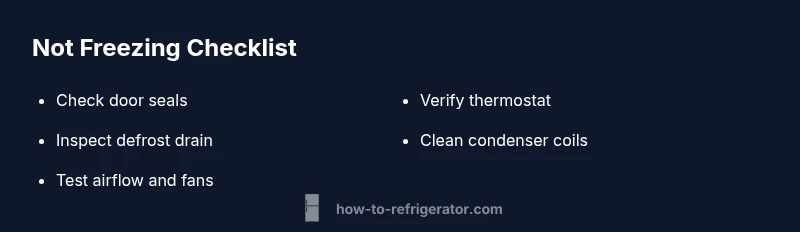
Most often, a refrigerator stops freezing because the defrost system isn’t working or the door seal is letting cold air escape. A blocked defrost drain can also cause frost buildup that blocks airflow. Start by checking door seals, then listen for the compressor and fan, and verify the temperature setting is correct.
Why refrigerators stop freezing
Refrigerators rely on a careful balance of the cooling cycle, airflow, and airtight seals. When any part of that system falters, the freezer may fail to reach its target temperature. Homeowners often notice frost buildup, uneven cooling, or food thawing sooner than expected. The goal of this guide is to help you systematically identify and fix the most common not-freezing issues with safe, actionable steps. By understanding the heating and cooling cycle, you’ll be better prepared to diagnose problems without unnecessary delays. Remember, not every cold problem means a total replacement—the majority of fixes are straightforward maintenance or adjustments you can perform yourself.
Common causes at a glance
- Defrost system failure: The defrost heater or timer can fail, causing frost to accumulate and block airflow.
- Blocked defrost drain: Melted frost has nowhere to go and freezes into a blockage in the drain path.
- Door gasket leaks: A worn seal lets warm room air into the fridge, forcing the compressor to run continuously without achieving freezing temps.
- Incorrect thermostat setting: If the temperature is set too high, the freezer won’t reach freezing conditions.
- Dirty condenser coils or blocked airflow: Thick dust reduces cooling efficiency and can cause the fridge to struggle to freeze.
Safety-first: basic checks you can do
Before you dig into components, perform quick, safe checks:
- Unplug the unit if you need to access interior components or the back coils.
- Confirm both doors seal tightly when closed and that there are no obstructions preventing door closure.
- Verify the thermostat settings: freezer around 0°F (-18°C) and fridge around 37–40°F (3–4°C).
- Ensure the condenser area behind or under the fridge is free from dust and debris; a clogged coil reduces cooling efficiency.
- Listen for the compressor hum and evaporator fan; unusual noises or no fan operation can indicate a defect.
Diagnostic flow overview
The diagnostic flow helps you isolate causes by starting with the simplest checks and progressing to component tests:
- Confirm power and basic controls are correct.
- Check door seals and airflow paths.
- Inspect defrost system and drain for frost buildup.
- Test thermostat and control boards.
- Inspect condenser coils and fans for blockages.
- If unresolved, consider professional testing for refrigerant or compressor issues. This flow emphasizes safety and gradual escalation, so you don’t waste time on complex fixes when basics still apply.
Step-by-step: Fix a blocked defrost drain
- Unplug the refrigerator and move it safely away from the wall to access the back panel or freezer roof as needed.
- Locate the defrost drain, usually a small plastic tube at the back of the freezer or in the drain pan area.
- Use warm water, a trough of lukewarm solution, and a flexible pipe cleaner to loosen any frost blockages.
- Rinse with water and let the drain run clear; reassemble and power up the unit. Tip: Have towels ready to catch residual water. If frost persists, the defrost heater or timer may need replacement, which should be done by a professional.
Step-by-step: Replace door gaskets if they’re worn
- Inspect the door seals for cracks, tears, or stiff sections that don’t seal properly.
- With the door open, close it slowly to feel for air leaks around the gasket—common problem areas include the corners.
- Clean the gasket and the groove with mild soap and water; replace if there are visible gaps or deformations.
- Buy the correct replacement gasket for your model and install it according to the manufacturer’s instructions. Tip: After replacement, test the door with a folded dollar bill or light spray of soapy water to confirm a tight seal. If leaks continue, the cabinet itself may be misaligned.
Step-by-step: Check thermostat settings and defrost timer
- Locate the thermostat dial and confirm it’s set to standard cooling ranges (fridge 37–40°F, freezer 0°F).
- If you suspect a faulty thermostat, test with a separate thermometer and compare readings; replace if inaccurate.
- The defrost timer governs periodic melting of frost; if you hear no defrost cycle after several hours, the timer or heater may be defective.
- Consider testing by cycling power to force a defrost cycle; if frost accumulates again quickly, plan for component replacement. Tip: Don’t attempt to bypass safety controls; consult a technician if you suspect a defective timer or heater.
Step-by-step: Condenser coils and airflow check
- Unplug the unit and locate the condenser coils (usually beneath or behind the appliance).
- Inspect for dust, lint, or pet hair and clean with a brush or vacuum designed for electronics.
- Ensure the fan (condenser or evaporator) runs smoothly; unusual noises or no airflow indicates a fan problem.
- After cleaning, plug in and monitor the cooling cycle to see if freezing improves. Tip: Regular coil cleaning every 6–12 months can prevent many cooling issues from worsening.
Prevention and maintenance routines
- Schedule seasonal maintenance: clean coils, vacuum behind the unit, and inspect seals.
- Keep the fridge well organized to avoid obstructing vents and airflow in the interior.
- Use a thermometer to verify accurate fridge/freezer temperatures and adjust settings as needed.
- Replace worn door seals promptly to maintain energy efficiency and proper freezing performance.
- If you notice frost buildup beyond routine defrost cycles, schedule a professional inspection to check defrost components and refrigerant levels.
When to call a professional
If you’ve completed the diagnostic flow and basic fixes but the fridge still won’t freeze, it’s time to call a pro. Frozen food safety and refrigerant handling require specialized tools and expertise. A qualified technician can diagnose issues like a failed compressor, refrigerant leak, or a faulty control board with accuracy and safely complete the repair.
Steps
Estimated time: 60-90 minutes
- 1
Power down safely
Unplug or switch off the circuit breaker, then pull the unit away from the wall to access the back panel. This reduces the risk of electric shock while you inspect components.
Tip: Use a flashlight and wear gloves for安全. - 2
Check defrost drain
Locate the defrost drain in the freezer and inspect for frost blockage. Clear any obstruction with warm water and a flexible wire, ensuring the path is clear.
Tip: Do not use sharp objects that could puncture tubing. - 3
Inspect thermostat
Ensure the thermostat is set within the recommended range and test with a separate thermometer. Replace if readings don’t match the dial setting.
Tip: Small calibration errors can affect cooling. Recheck after adjustment. - 4
Test door seals
Close doors on a thin piece of paper; if you can pull it out with little resistance, the seal may be weak and need replacement.
Tip: Replace gaskets promptly to maintain efficiency. - 5
Clean condenser coils
Unplug, locate coils, and remove dust with a brush or vacuum. Recheck airflow and listen for the fan to confirm it’s functioning correctly.
Tip: Do this every 6–12 months to prevent not-freezing issues. - 6
Re-test temperatures
Plug back in and allow 24 hours to stabilize; verify freezer is at 0°F (-18°C) and fridge at 37–40°F (3–4°C).
Tip: If temps drift, consider professional calibration.
Diagnosis: Fridge not freezing
Possible Causes
- highDefrost system failure
- mediumDoor gasket leak allowing warm air
- highThermostat mis-set or faulty
- lowDirty condenser coils or blocked airflow
Fixes
- mediumTest defrost timer and heater; check frost buildup; replace components if needed
- easyInspect and replace door seals; reseal doors
- easySet thermostat to proper range and calibrate, then monitor cooling
- easyClean condenser coils; ensure proper airflow and functioning fan
FAQ
What are the most common causes of a refrigerator not freezing?
Not freezing is often due to a faulty defrost system, a failed thermostat, door seal leaks, or dirty coils restricting airflow. Start with simple checks before pursuing parts replacement.
Common causes include defrost and thermostat issues, door seals, and dusty coils. Start with basic checks.
How can I diagnose a blocked defrost drain?
Locate the drain in the freezer, inspect for frost, and flush with warm water or a flexible wire to clear the path. If blockage recurs, the defrost heater or timer may be defective.
Check the freezer drain, flush with warm water, and confirm the path is clear.
Is a not-freezing fridge dangerous to use?
Not typically dangerous, but not freezing can lead to food spoilage. Monitor safety of perishable items and follow food safety guidelines if cooling is inconsistent.
Usually not dangerous, but food may spoil. Watch perishables and fix cooling promptly.
When should I call a technician?
If you’ve followed the diagnostic flow and basic fixes but the fridge still won’t freeze, or you hear odd noises, contact a professional for further diagnosis.
If not resolved or you hear odd noises, call a pro.
Can I safely perform DIY fixes at home?
Yes for basic checks like door seals, thermostat settings, and coil cleaning. Avoid handling refrigerant or high-voltage components unless trained.
DIY is fine for basic checks; don’t touch refrigerant or risky parts.
What maintenance helps prevent not-freezing?
Regular cleaning of coils, sealing checks, and temperature verification help prevent freezing issues. Schedule semi-annual maintenance.
Keep coils clean and seals tight to prevent problems.
Top Takeaways
- Check door seals and thermostat first
- Defrost drain blockages are common culprits
- Clean condenser coils regularly to maintain airflow
- Troubleshoot in safe steps, escalating only as needed
- Call a pro if not freezing after diagnostic flow