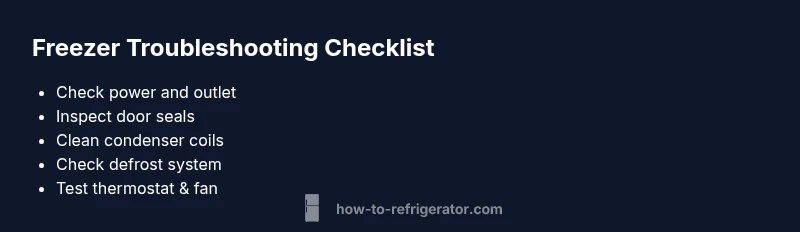
Why Your Freezer Won't Freeze and How to Fix It
Urgent, step-by-step guide to diagnose and fix why your freezer won t freeze. Learn common causes, a diagnostic flow, and safe, practical fixes from How To Refrigerator.


Most freezer cooling problems come from a defrost issue, thermostat fault, or a failing compressor. Start with quick checks: confirm the temperature setting, listen for the compressor, and inspect door seals and airflow. If these don t restore freezing, follow the diagnostic flow below.
Understanding the Issue
If you are asking why freezer won t freeze, you are not alone. In many homes a non freezing freezer is a symptom of a cooling system that cannot move heat away efficiently or keeps frost built up on the evaporator. How To Refrigerator recommends a practical, systematic approach that splits the problem into three subsystems: the defrost cycle, the door and air seals, and the heat rejection path through the condenser and fan. When any one part malfunctions, warm air or frost can block airflow and reduce freezing performance. A disciplined check list helps you identify whether the problem is a simple setting, a blocked drain, or a failing component. In real world testing you should listen for the compressor cycle, observe airflow, and inspect interior frost patterns. This approach saves time and avoids unnecessary part replacements.
Quick Home Checks You Can Do Now
Before you open the tool kit, run a few no risk checks that often restore freezing or reveal a simple fix. First, verify the freezer temperature setting is correct (usually around -18 C or 0 F). Next, inspect the door gaskets for tears or stiffness and clean the seals to ensure a tight seal. Check interior vents for obstructions like bags or containers that block airflow. Finally, give the condenser coils a quick cleaning if they are dusty or greasy, and listen for the compressor cycling on and off. If you notice frost buildup along the evaporator or a consistently warm interior, this points to a defrost or airflow problem that needs deeper testing.
Common Causes Behind Cooling Failures
Several common culprits can make a freezer fail to reach freezing temperatures. A blocked defrost drain can cause frost to accumulate and block the airflow that feeds the evaporator. Damaged or dirty door seals allow warm air to enter, especially after opening. Dirty condenser coils reduce heat rejection and cause the system to run longer than normal. A faulty thermostat or defrost timer can prevent proper cooling cycles. Finally, a malfunctioning evaporator fan may not circulate air effectively, leading to uneven cooling or no freezing at all.
Diagnostic Context: How We Decide Next Steps
A practical diagnostic mindset follows the symptom to the root cause. Start with simple, observable checks and move toward electrical testing only as needed. If the freezer runs continuously without achieving cold temperatures, it is often a sign of a defrost or airflow issue rather than a refrigerant fault. Document what you observe: frost presence, door seal condition, fan noise, and how long the unit takes to respond after changing settings. This helps you decide between cleaning, part replacement, or professional service.
Safety, Precautions, and When to Seek Help
Working on a freezer involves electricity and refrigerant systems that can be dangerous if mishandled. Always unplug the unit before inspecting electrical components or cleaning coils. Do not attempt to bypass safety interlocks or use sharp objects to remove ice. If you smell refrigerant, hear hissing sounds, or see persistent frost after performing basic fixes, it is time to contact a professional technician. Regular maintenance like cleaning coils and inspecting gaskets reduces future risk and improves efficiency.
Steps
Estimated time: 30-60 minutes
- 1
Power down and verify outlet
Unplug the unit and confirm the outlet is supplying power by testing with another device or using a tester. Inspect the cord for any signs of wear before proceeding.
Tip: If you must test power, use a non contact tester for safety. - 2
Check temperature setting and controls
Set the freezer to around -18 C (0 F) and wait 20-30 minutes to see if cooling returns. If the display is unreliable, consult the manual for troubleshooting the control board.
Tip: Avoid rapid temperature changes to prevent frost buildup. - 3
Inspect door seals and airflow vents
Look for cracks or stiffness in gaskets and clean with warm soapy water. Ensure vents inside are not blocked by stored items.
Tip: A simple seal test is to close the door on a piece of paper; if it slides out easily, replace the gasket. - 4
Clean condenser coils and verify airflow
Disconnect power and carefully vacuum the coils behind or beneath the unit. Clear dust and ensure the compressor has unblocked heat dissipation.
Tip: Do not spray water on electrical components; use a brush or microfiber cloth. - 5
Check defrost system and drain
Inspect the defrost drain for clogs and clear with warm water. Verify the defrost heater and timer are functioning as designed.
Tip: If frost is heavy, consider a manual defrost to restart proper cycling. - 6
Test thermostat and evaporator fan
With power reconnected, listen for the evaporator fan and observe compressor cycling. Replace components if airflow is weak or if noises indicate damage.
Tip: If you are unsure about electrical testing, contact a professional.
Diagnosis: Freezer won't freeze
Possible Causes
- highDefrost drain blockage causing frost buildup and restricted airflow
- mediumDamaged or dirty door seals letting warm air in
- mediumDirty condenser coils reducing heat rejection
- lowFaulty thermostat or defrost timer
- lowNon-working evaporator fan
Fixes
- easyUnblock and flush the defrost drain; check pan and vent to ensure proper drainage
- easyInspect door gaskets; replace if cracked or torn and clean seal surfaces
- easyVacuum or brush condenser coils; ensure airflow around the unit
- mediumTest thermostat/defrost timer and replace if faulty
- mediumCheck evaporator fan operation; replace motor if there is no airflow or unusual noises
FAQ
What are the first steps I should take when my freezer won t freeze?
Begin with basic checks: confirm temperature setting, inspect door seals, and ensure vents aren t blocked. If the freezer still won t freeze, continue with the diagnostic flow to identify deeper issues.
Start with simple checks, then follow the flow for deeper tests.
Can a dirty condenser coils cause a freezer not to freeze?
Yes. Dirty coils reduce heat rejection and can cause reduced cooling. Clean the coils regularly to restore performance.
Dirty coils can stop cooling; clean them to restore performance.
Should I replace the door seals if I notice frost around the door?
Frost near the door usually points to air leaks; check seals for damage and replace if needed. Clean the gasket surface before resealing.
Check and replace damaged door seals if you see frost near the door.
When is it time to call a professional?
If you smell refrigerant, hear hissing or buzzing from the compressor, or see persistent frost after basic fixes, contact a qualified appliance repair technician.
Call a pro if you hear refrigerant issues or constant unusual noises.
Is it safe to manually defrost the freezer?
Manual defrost is safe if done with the unit unplugged. Follow manufacturer guidance and avoid using sharp objects to remove ice.
Yes, unplug and defrost safely per the manual.
Top Takeaways
- Start with the simplest checks to save time
- Defrost drain and gasket issues are common culprits
- Clean coils regularly to maintain cooling
- Test the thermostat and evaporator fan if basic fixes fail
- Call a professional if you encounter refrigerant or electrical concerns