Refrigerator No Freezer: Troubleshooting Guide
Learn fast, safe steps to diagnose why your refrigerator has no freezer. This How To Refrigerator guide covers common causes, practical checks, and simple fixes for homeowners.


Most likely, a refrigerator no freezer issue stems from a faulty defrost timer, a frozen evaporator, or improper temperature settings. According to How To Refrigerator, start with quick, safe checks: confirm doors seal tightly, set the freezer around -18°C (0°F) and fridge around 3-5°C, and clear any vents. If this doesn’t fix it, move through the diagnostic flow.
Understanding the No Freezer Symptom
A refrigerator no freezer condition can be alarming, but many root causes are manageable by a careful homeowner. When the freezer section won’t get cold, you should first confirm basic operating conditions and then move to targeted checks. Start by noting any frost, unusual noises, or ice buildup, which can point to a defrost or airflow problem. The goal is to isolate whether the issue is a simple setting error, a blocked vent, a worn door seal, or a more complex component failure. Throughout this guide, we focus on practical steps you can take with common tools, without special refrigeration equipment. The keyword is methodical testing: change one variable at a time and observe the result. For homeowners troubleshooting a refrigerator no freezer, patience and safety come first; always unplug before touching internal components and never attempt refrigerant work yourself.
Common Causes and How They Look
Most no-freezer symptoms come from issues in airflow, defrost, or temperature control. A faulty defrost timer or heater can leave frost on the evaporator, blocking air to the freezer. A frozen evaporator coil prevents cold air from circulating, so the freezer stays warm even while the fridge seems active. A worn door gasket lets warm room air infiltrate, raising the interior temperature. Dirty condenser coils reduce cooling efficiency, while a failing compressor or sealed system problem is less common but serious. Recognizing these patterns helps you decide whether a simple setting tweak or a professional repair is required. Throughout this section, look for frost buildup, unusual motor sounds, or ice on the back panel as telltale signs. How To Refrigerator analysis shows that thermostat settings and airflow obstructions are frequent culprits.
Quick Checks You Can Do Safely
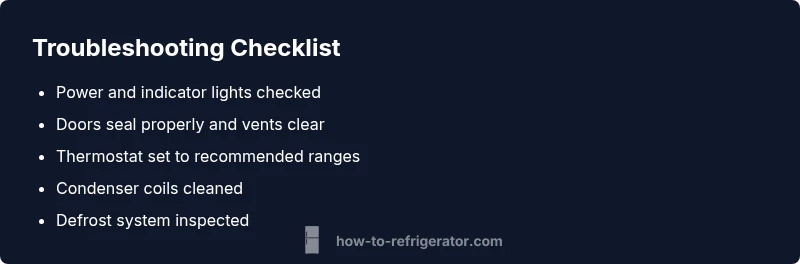
Before you dive into more advanced troubleshooting, perform safe, simple checks. Verify the doors seal completely and that the gaskets aren’t torn. Make sure the temperature controls are within the recommended range (freezer around -18°C, fridge around 3-5°C). Clear any obstructions blocking vents inside the freezer and fresh-food compartments. Inspect the condenser coils for dust and clean with a brush or vacuum—a dirty coil can reduce cooling capacity. Listen for the evaporator fan when the door is open; you should hear a gentle hum. If you don’t, the fan or its wiring may be faulty. Finally, check for ice buildup on the back wall of the freezer; if frost is excessive, a manual defrost might be needed after unplugging the unit.
Diagnostic Considerations and a Flow to Follow
Start with simple checks and progress through a logical flow. If the freezer isn’t freezing, test the defrost timer and heater by listening for a cycling sound and visual cues at the evaporator. If frost is accumulating, the defrost system may be stuck; this often requires component replacement. If the evaporator coil is icy, defrosting and ensuring proper defrost cycle operation is essential. If the condenser is dusty, clean it and recheck airflow; poor airflow can mask other issues. If temperature readings are off, recalibrate the thermostat and temperature control or replace a faulty sensor. At each step, confirm whether the problem persists before moving to the next check. Always document what you test so you can relay precise details to a technician if needed.
Safety First: When to Call a Pro
For many refrigerator no freezer problems, basic home troubleshooting is safe, but some tasks require professional help. Don’t attempt refrigerant handling or any repair that involves opening sealed components. If you hear hissing, see oil around the compressor, or detect a burnt smell, stop and contact a licensed technician right away. If the defrost timer or control board appears damaged, or the unit is still under warranty but not cooling, a pro should inspect it. Remember that working on complex parts without the right tools can worsen the problem or void warranties. When in doubt, seek professional repair service.
Prevention Tips for a Reliable Refrigerator Performance
Regular maintenance helps prevent a refrigerator no freezer scenario. Clean the condenser coils every 6-12 months, check door gaskets for cracks, replace damaged seals promptly, and ensure proper airflow around the unit. Keep the freezer organized to avoid blocking vents, and avoid placing hot foods inside the fridge. Schedule routine inspections if your model requires annual service. By addressing air leaks, frost issues, and defrost cycle function early, you can reduce the chance of a surprise no-freezer day.
Steps
Estimated time: 45-60 minutes
- 1
Power down safely and inspect indicators
Unplug the unit and pull it away from the wall if possible. Check for power indicators, lights, or error codes. Note any frost or moisture patterns inside the freezer and fridge. This initial check helps confirm that the issue isn’t a simple power or display fault before you touch mechanical parts.
Tip: Always unplug before touching wiring or interior components. - 2
Check temperature settings and vents
Verify the freezer is set to around -18°C (0°F) and the fridge to about 3-5°C. Ensure vents inside the cabinet aren’t blocked by groceries, which can trap cold air and disrupt circulation.
Tip: Use a thermometer to confirm accurate readings. - 3
Inspect door seals and gaskets
Look for cracks, tears, or gaps in the door seals. A worn gasket allows warm air to creep in, especially if the door doesn’t seal with a press. Replace damaged seals to restore proper cooling.
Tip: Clean the gasket with warm soapy water to improve sealing. - 4
Check the defrost system components
If you notice frost buildup on the evaporator or a non-cycling defrost timer, the defrost system may be stuck. This may require testing or replacing the timer or heater to restore airflow to the freezer.
Tip: Follow the manufacturer’s service manual for timer testing. - 5
Inspect condenser coils and airflow
Dusty or obstructed coils reduce cooling efficiency. Clean coils with a soft brush or vacuum and ensure the area around the unit has good airflow. A clogged condenser can masquerade as other issues.
Tip: Always shut off power before cleaning coils. - 6
Test operation after fixes and monitor
Plug the unit back in, reload contents, and wait several hours to see if freezing resumes. If not, escalate to professional service for deeper diagnostics or refrigerant checks.
Tip: Keep notes of what you tested and when.
Diagnosis: Refrigerator not freezing; freezer shows no cold air
Possible Causes
- highDefrost timer or heater failure causing frost buildup and airflow blockage
- highEvaporator coil iced over due to poor defrost cycle
- mediumDoor gasket leaks causing warm air intrusion
- lowLow refrigerant or sealed system issue
Fixes
- hardTest defrost timer and heater, replace if faulty
- easyManually defrost if frost buildup present, then check defrost cycle operation
- easyEnsure door seals are intact and gaskets seal properly
- easyClean condenser coils and improve airflow around the unit
- easyVerify thermostat setting and adjust to recommended ranges
FAQ
Why is my refrigerator not freezing while the freezer is warm?
A common reason is a faulty defrost system or airflow blockage. Frost buildup can prevent cold air from reaching the freezer. Check the defrost timer, evaporator, and vents.
A common reason is a faulty defrost system or airflow blockage. Check the defrost timer, evaporator, and vents.
Can a dirty condenser cause not freezing?
Yes. A dusty condenser reduces overall cooling efficiency, which can translate into weak freezer performance. Clean the coils and improve airflow around the unit.
Yes. A dusty condenser reduces cooling efficiency and can affect freezing.
Is it safe to manually defrost my freezer?
Manual defrost is safe if you disconnect power first and follow the manufacturer’s instructions. This can clear frost buildup that blocks airflow.
Manual defrost is safe if you disconnect power and follow steps from the manual.
When should I replace the defrost timer?
If the timer fails to advance or the defrost cycle never runs, replacement is often needed. A professional can confirm the timer’s function with diagnostic tests.
If the timer won’t advance or cycle, replace it after a diagnostic check.
Does temperature control affect freezer performance?
Yes. Incorrect settings or faulty temperature sensors can prevent the freezer from reaching freezing temperatures. Recalibrate or replace faulty sensors as needed.
Yes, temp control can affect freezing. Recalibrate or replace faulty sensors.
Watch Video
Top Takeaways
- Start with door seals and temperature settings.
- Defrost and airflow issues are the top causes of frozen-freezer problems.
- Clean coils and verify vents for reliable cooling.
- Call a pro for refrigerant or compressor concerns.