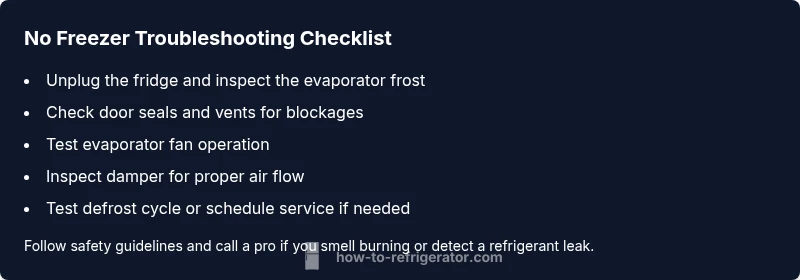
Fridge No Freezer Troubleshooting Guide
Urgent, practical troubleshooting guide to fix a fridge with no freezer. Learn common causes, step-by-step fixes, safety tips, and when to call a pro. How To Refrigerator


Most likely, the freezer isn’t freezing due to a defrost system issue or blocked airflow. Quick fix: unplug and inspect the freezer and evaporator for frost buildup, ensure the damper and ice maker aren’t stuck, and confirm the freezer light works. If the evaporator is frosted or you hear a loud humming, stop and call a pro.
What "fridge no freezer" means and why it matters
A refrigerator that runs but won’t freeze is a warning sign that the appliance’s cooling pathway is blocked or misadjusted. When the freezer isn’t freezing, foods in the fridge can spoil more quickly, and ice cream may soften or melt. The root causes often lie in the defrost system, the airflow damper, or a worn thermostat. Addressing the issue promptly protects perishable foods and reduces the risk of a larger breakdown. In this guide from How To Refrigerator, you’ll learn to diagnose safely and fix common no-freezer symptoms without unnecessary parts replacement. The aim is to empower homeowners with clear, actionable steps while outlining safety boundaries and when to call a professional.
This problem is common across brands and ages. Even minor issues—such as a door that doesn’t seal properly or a clogged air vent—can disrupt airflow to the freezer. We’ll cover the likely culprits, how to test them, and practical fixes you can perform with basic tools. By staying methodical, you’ll save time and reduce the chance of damaging sensitive components.
If your goal is to restore freezing power quickly, start with the simplest checks and move to more involved tests only as needed. Always prioritize safety and unplug the unit before touching electrical parts or removing panels. How To Refrigerator’s approach emphasizes a structured, safety-first method that homeowners can trust.
Common causes of a fridge with no freezer
When the freezer isn’t freezing, several causes dominate the symptom spectrum. The defrost system is a frequent culprit: if the defrost heater or timer fails, frost accumulates on the evaporator coil, blocking airflow. A damaged or stuck damper door can prevent cold air from reaching the freezer, leaving it warm while the fridge stays cooler. A faulty evaporator fan stops circulating air, so the freezer never receives the cold it needs. Temperature sensor or thermostat malfunctions can keep the freezer at too warm a setting. Less common but possible issues include a collapsed foam insulation, a faulty door seal, or a blocked vents inside the freezer that restrict airflow.
- Defrost system failure: high likelihood
- Damper door stuck/blocked: high likelihood
- Evaporator fan failure: medium likelihood
- Thermostat/sensor malfunction: low likelihood
Understanding these causes helps you prioritize checks. If frost is visible on the evaporator, you’re likely dealing with a defrost or airflow problem. If the freezer remains cold but refuses to freeze, the evaporator fan or thermostat is a stronger suspect. Keep in mind the age and model of your fridge—older units are more prone to defrost-related failures, while newer models may show electronic control faults.
In some cases, the issue is the simplest: a door that doesn’t seal properly or an air vent blocked by items. Ensuring a clean, open airflow path can dramatically improve performance without replacing parts. Regular maintenance reduces recurring no-freezer symptoms and extends the life of your refrigerator.
Safety first: safe checks you can perform
Before opening panels or touching wiring, unplug the unit from the wall and move any stored items away from the cooling area. Use a flashlight to inspect the evaporator and coils through the freezer wall; frost buildup is a clear sign you need to address defrost issues. If you hear a buzzing or grinding sound from the rear, stop and check that the fans are free of debris. Gently tug at the door seals to ensure they’re sealing properly—worn seals can allow warm air to infiltrate and alter temperatures.
- Check door seals for cracks or gaps. Clean them with warm soapy water and inspect for stiffness.
- Look for frost or ice buildup around the evaporator coil; heavy frost indicates a defrost problem.
- Confirm the evaporator fan spins freely when the door switch is engaged.
If the latch or switch feels loose or intermittent, the door may not seal consistently, triggering temperature fluctuations that impact the freezer. Don’t bypass fuses or safety switches; if you’re unsure, it’s safer to call a professional.
Always handle interior components with dry hands and use non-conductive tools. When in doubt, stop and consult the manufacturer’s service guidelines or a trained technician.
How the defrost system and damper affect freezer freezing
The defrost system removes frost from the evaporator coil so air can circulate to both compartments. If the defrost timer or heater fails, ice can form on the coil, blocking airflow. The damper, a small door inside the freezer, regulates cold air entering the freezer from the fresh-food section. A stuck or misaligned damper can starve the freezer of cold air even if the compressor and condenser are working. Both components are common failure points, especially in older units.
To diagnose:
- Listen for the evaporator fan when the freezer door is open and the lights are on. If you don’t hear the fan, it may be faulty or blocked.
- Check for frost buildup near the rear wall of the freezer or inside the freezer ceiling; this indicates defrost issues.
- Inspect the damper control by gently moving it to test if air flows through to the freezer.
Fixes often involve resetting the defrost timer, replacing the defrost heater, or freeing a jammed damper. Depending on the model, you may access these parts behind the evaporator cover, which requires removing a back panel inside the freezer. If you observe burnt smells, melted plastic, or exposed wiring, stop immediately and call a professional.
Regular cleaning and periodic defrost checks can prevent frost buildup. Avoid overpacking the freezer—proper air circulation depends on open space for airflow.
Diagnosing airflow and temperature control in your fridge
Airflow between the fridge and freezer relies on a system of vents and a damper that balances cold air. A blocked vent or jammed damper prevents freezing air from reaching the freezer, even if the compressor is cooling. Temperature controls and sensors also impact performance; a faulty sensor can tell the control board that the environment is cold enough, preventing freezing.
Practical steps you can take:
- Verify that the damper is open when the freezer is cold. If it’s closed or stiff, air won’t circulate.
- Ensure items are not blocking vents inside either compartment. Leave space around frozen foods to prevent restricted airflow.
- Test the thermostat with a digital thermometer. If the freezer is reading incorrectly compared to the actual temperature, calibration may be needed.
If your tests show consistent airflow but temperatures are inaccurate, a sensor or control board fault could be the root cause. In this case, professional service is recommended to prevent further damage.
Diagnosing the evaporator coil and fan health
The evaporator coil is the heart of the cooling process. When blocked by frost, even a powerful compressor cannot produce sufficient cold air in the freezer. The evaporator fan should move air through the coil and into both compartments. If the fan is failing, the freezer will warm up despite the compressor running. Common signs include frost on the interior walls, unusual fan noise, or a lack of air movement when the freezer is powered.
How to check:
- With the freezer door open, listen for the evaporator fan when the fridge is in the cooling cycle. If you don’t hear it, the fan could be seized or its motor failed.
- Look for frost that covers the coil; heavy frost indicates a defrost cycle problem rather than a simple airflow blockage.
- Inspect the fan blades for debris or ice obstruction.
Solutions range from cleaning to replacing the evaporator fan motor. This step can be more involved and may require removing interior panels; if you’re uncomfortable, contact a technician.
Home fixes you can try before calling a pro
If you’re comfortable with basic appliance care, you can attempt several fixes that don’t require specialized tools. Begin with a safe defrost and airflow reset:
- Unplug the unit, remove items, and defrost for a few hours if there is heavy ice buildup. Dry the interior completely before powering on again.
- Check and replace door seals if they show cracks or gaps; clean with warm soapy water and ensure a tight seal.
- Clear any food items obstructing vents; ensure proper spacing around frozen foods to promote air flow.
- Inspect the damper control by gently moving it and listening for airflow changes.
- If you suspect a faulty thermostat, consider replacing the temperature sensor or seeking professional calibration.
If you observe unusual smells, melted insulation, or refrigerant exposure, stop and call a professional immediately. These symptoms indicate more serious issues that require licensed service.
When to call a professional and what to expect
If basic checks don’t restore freezing, it’s time to seek expert help. Trained technicians can safely test the defrost heater, timer, defrost fuse, motherboard or controller, and the compressor. They can also diagnose refrigerant-related problems, which require specialized equipment and licenses. Knowing when to call a pro reduces the risk of further damage and protects your household.
What to expect from service:
- A diagnostic visit to test defrost components, sensors, and the evaporator.
- Replacement of failed parts and a check for proper refrigerant levels if needed.
- A written estimate with parts and labor and a clear explanation of the steps.
Preparation tips: have model and serial numbers ready, note recent temperature changes, and confirm whether ice buildup was present. Keeping a record of symptoms helps the technician pinpoint the cause faster.
Maintenance tips to prevent future freezer issues
Prevention is easier than repair. Regular maintenance helps preserve freezer performance and prolong appliance life. Implement these habits:
- Schedule periodic defrost checks, especially for older models. Keep coils clean and dust-free.
- Inspect door seals monthly and replace worn gaskets promptly.
- Avoid overfilling; allow airflow around frozen items.
- Keep the unit level; uneven positioning can affect door seals and airflow.
- Set the temperature correctly and monitor with a thermometer in the freezer and fridge to maintain even cooling.
A proactive routine reduces the likelihood of recurring no-freezer symptoms and keeps your food safely preserved.
What to expect during professional service and post-repair steps
After a professional repair, consecutive tests confirm correct operation. A technician will verify that the defrost system, damper, evaporator fan, and thermostat are functioning as intended. They may perform a run test, monitor temperatures over several hours, and check for frost formation on the evaporator. Once the system stabilizes, you should see consistent freezing in the freezer and stable temperatures in the fridge. Ask for maintenance tips and a written warranty for any replaced parts. With proper care, your fridge can regain reliable freezing performance and a longer service life.
Steps
Estimated time: 60-120 minutes
- 1
Unplug and prepare for inspection
Power down the fridge and remove items from the freezer. Allow any frost to soften, then wipe down the interior to avoid water damage. Use a flashlight to inspect coils and fans when you re-open the unit.
Tip: Use a non-conductive tool to gently move any obstructing items away from vents. - 2
Check door seals and air vents
Close doors and inspect gaskets for cracks or gaps. Clean seals with warm soapy water and test the door by closing on a dollar bill to see if resistance is even. Ensure vents are free of food debris.
Tip: Avoid overstuffing the freezer; proper air flow depends on space around items. - 3
Assess the defrost system, if accessible
Remove the freezer panel to view the evaporator coil. Look for frost buildup; if you see ice, the defrost cycle may be failing. Do not attempt high-voltage tests on the defrost components without guidance.
Tip: Only perform defrosting steps if you are comfortable with unplugging and handling ice buildup. - 4
Test the evaporator fan
Power the unit back on and listen near the freezer for the fan. If you don’t hear air movement, the fan may be stuck or faulty. Inspect the fan blades for ice or debris.
Tip: If the fan is seized, do not force it; seek professional service. - 5
Inspect the damper control
Locate the damper inside the freezer; make sure it moves freely and that cold air isn’t blocked. A jammed damper prevents cold air from entering the freezer, causing thawing.
Tip: Move the damper gently; avoid using excessive force. - 6
Check the thermostat/sensor
Measure the freezer temperature with a thermometer and compare to the thermostat setting. If temperatures diverge significantly, the sensor may need replacement.
Tip: Calibrate per the owner’s manual before replacing components. - 7
Run functional test
After reassembling, plug in the unit and monitor temperatures for several hours. Check that the freezer is reaching 0°F (-18°C) and the fridge stays within its target range.
Tip: Record readings to share with a technician if needed. - 8
Plan professional service if needed
If symptoms persist after the above steps, contact a licensed technician. Complex issues like refrigerant leaks or compressor faults require professional handling.
Tip: Keep model/serial numbers handy for faster service.
Diagnosis: Fridge runs but freezer does not freeze
Possible Causes
- highDefrost system failure causing evaporator ice buildup and airflow restriction
- highDamper door stuck or blocked, preventing cold air to freezer
- mediumFaulty evaporator fan or motor
- lowThermostat or temperature sensor malfunction
Fixes
- easyReset/repair defrost timer or heater; remove ice buildup from evaporator
- mediumInspect and replace damper if stuck or misaligned
- mediumTest and replace evaporator fan motor if it’s not turning or is noisy
- hardTest and recalibrate thermostat/sensor or replace faulty component
FAQ
What causes a fridge to stop freezing even though it runs?
Several issues can prevent freezing, most commonly defrost system failure, a blocked damper, or a faulty evaporator fan. Temperature control problems or blocked vents can also disrupt freezing. A systematic check helps identify the exact culprit.
Common causes include defrost problems, a jammed damper, or a bad evaporator fan. A quick check of vents and seals often reveals the issue.
Is it safe to manually defrost the freezer?
Manual defrost is safe if you unplug the unit and follow careful steps to melt frost. Use towels to absorb water and dry the interior thoroughly before powering back on. If frost recurs quickly, a defrost system repair is needed.
Yes, manual defrost is safe if you unplug first and dry the interior afterward. If frost keeps returning, you likely need a defrost repair.
Should I replace the defrost timer or heater?
Replacement depends on testing results. A failed defrost timer or heater is a common fix for frost buildup. A professional can confirm which part is faulty and ensure correct installation.
If testing shows a defrost component failure, replacing the timer or heater is often needed. A technician can confirm and replace safely.
How long does a typical defrost cycle take?
Defrost cycles vary by model but commonly run for 20-30 minutes per cycle. Continuous frost or multiple cycles suggest a defective defrost system that should be inspected.
Defrost cycles usually last about 20 to 30 minutes, but continuous frost means you should have it checked.
When should I call a professional?
Call a professional if you hear buzzing, smell burning plastic, detect refrigerant leaks, or if basic troubleshooting hasn’t restored freezing after several checks. Don’t attempt refrigerant work yourself.
Call a pro if you hear buzzing, smell burning plastic, or suspect a refrigerant leak; and if basic checks don’t fix the issue.
Can a fridge not freezing be caused by a door seal problem only?
A door seal issue can indirectly affect freezing by letting warm air in and upsetting temperature balance. However, freezing problems usually involve the defrost system, damper, or evaporator. Check seals as part of routine maintenance.
Door seals can contribute to temperature problems, but most no-freezer issues come from defrost or airflow problems.
Is it worth defrosting after a new ice buildup?
If new ice forms, defrosting can reset the airflow. Use the manual defrost method or service mode per your model’s manual. Recheck vents and seals after defrost.
Defrosting can help reset airflow if new ice forms; then recheck vents and seals.
Watch Video
Top Takeaways
- Start with defrost and airflow checks to restore freezing.
- Don’t ignore visible frost; it signals a defrost or airflow problem.
- If basic fixes fail, call a professional to avoid further damage.
- Maintain regular preventive care to prevent future no-freezer issues.