Why There Is Water Inside Your Refrigerator: A Troubleshooting Guide
Learn why water collects inside your refrigerator and how to diagnose and fix common causes like blocked defrost drains, leaking ice makers, and faulty door seals with a safe, step-by-step approach.


Most interior water is caused by a blocked defrost drain or a leaking ice maker. Start by inspecting the door seals, then locate and clear the defrost drain, and check the ice maker supply line. If the issue persists, verify the drain pan and level the fridge. If this doesn’t fix it, call a professional.
Understanding the problem: why water is inside your refrigerator
Water pooling inside a refrigerator is almost never a single broken part by itself. In most homes, quick fixes fail because moisture follows a pattern: condensation from warm air meeting cold surfaces, a blocked defrost drain, or a leaking water line. According to How To Refrigerator, interior water is typically a symptom that something else isn t right, not a standalone component failure. Start by ruling out obvious culprits: the door gaskets, the fridge s leveling, and visible leaks around the ice maker. By taking a calm, systematic approach, you can halt the drip without turning off the entire kitchen.
In most cases, the first sign is a damp shelf or a small puddle along the back wall inside the fridge. If you see ice crystals in the drain area or a pool near the bottom, that points to a defrost drain issue. Moisture on the ceiling of the crisper or on the bottom of the crisper drawer often comes from humidity that is not vented properly. Understanding these patterns helps you target the right fix quickly and safely.
Common causes at a glance
Not every drip means a costly repair. Here are the most frequent reasons water ends up inside your refrigerator, with quick tips to identify them:
- Blocked defrost drain: Frozen or clogged drain channels prevent meltwater from draining to the pan below, causing a puddle inside the fridge.
- Leaking ice maker supply line: A loose or damaged water line can seep into the interior or freeze near the ice maker.
- Condensation from a faulty door seal: Gaps around the gasket let humid air rush in, especially after frequent door openings.
- Overflow or misaligned drain pan: If the defrost pan isn t positioned correctly, water may spill back into the cabinet.
- Temperature and leveling issues: If the fridge isn t level or the temperature setting is too low, condensation can accumulate.
Diagnostic flow you can follow
This quick diagnostic flow helps you separate the most common causes from rarer issues. Start with the simplest checks and move toward the more technical steps. If at any point you identify a safe, actionable fix, test it before moving on.
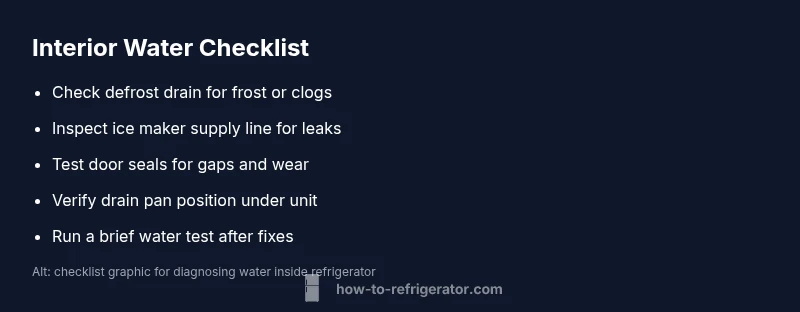
- Inspect the door seals for cracks or gaps. If you notice air leakage around the gasket, replace or reseal.
- Check the defrost drain for frost build-up or a visible block. Clear it if needed.
- Check the ice maker and water line for leaks or kinks.
- Level the fridge and ensure the drain pan sits properly under the unit.
- Run a short test with the door closed and observe any moisture buildup over an hour.
Quick checks before you start
Before disassembling panels, perform quick checks that often solve the problem:
- Make sure the fridge is level; an uneven frame can push condensation to internal walls.
- Inspect the door gaskets for cracks and replace if necessary.
- Look for frost on the back panel behind the crisper; this indicates a defrost issue.
- Verify the ice maker s water line connections are tight and free of leaks.
- Place a towel to absorb any residual moisture and prevent mold growth while you work.
Steps
Estimated time: 60-90 minutes
- 1
Power down and secure water supply
Unplug the fridge and shut off the ice-maker water supply. Move the unit away from the wall if you need to access back panels. This reduces the risk of shock while you inspect components.
Tip: Always unplug before touching electrical parts. - 2
Check door seals
Close the doors on a folded piece of paper; if the paper pulls out easily, the gasket needs adjustment or replacement.
Tip: Clean the gasket with warm soapy water to reveal wear. - 3
Find the defrost drain
Remove the interior rear panel behind the fridge shelves to locate the defrost drain. Look for frost blockages or ice around the tube.
Tip: Use a flashlight to spot ice buildup around the drain tube. - 4
Clear the defrost drain
Carefully flush the drain with hot (not boiling) water using a turkey baster or syringe. A flexible brush can help remove stubborn clogs. Do not force any object through the tube.
Tip: Wear gloves and keep towels handy for spills. - 5
Inspect ice maker and water line
Check the supply line for kinks, cracks, or loose fittings. Tighten connections and replace a damaged line. Then run the ice maker to confirm proper water flow.
Tip: Run water briefly to flush air from lines before testing ice production. - 6
Level and test drainage
Ensure the fridge is perfectly level with feet adjusted. Confirm the drain pan sits properly under the unit and isn’t tilted or touching components.
Tip: A level on the top edge helps ensure accuracy. - 7
Reassemble and monitor
Return panels, push the fridge back, and plug in. Monitor for 24–48 hours for any new moisture.
Tip: Keep a towel nearby during the test period. - 8
Call a professional if needed
Persistent moisture after these steps may indicate a faulty sealed system or refrigerant issue requiring licensed service.
Tip: The How To Refrigerator team recommends professional service for persistent leaks.
Diagnosis: Water inside fridge
Possible Causes
- highBlocked defrost drain
- highLeaking ice maker supply line
- mediumFaulty door gasket causing humidity
- lowLeaking water inlet valve/line
Fixes
- easyClear defrost drain and thaw ice
- mediumInspect and replace ice maker line or valve
- easyReplace door gasket or reseal
- easyRealign/level fridge and drain pan
FAQ
Water pooling causes
Water pooling inside a refrigerator is usually caused by a blocked defrost drain, a leaky ice maker supply line, or humidity from worn door seals. Start with the defrost drain and ice maker inspection, then check gaskets and leveling.
Water pooling is usually from a blocked drain, a leaking ice maker line, or humidity from a bad door seal.
Fix defrost drain
To fix a clogged defrost drain, locate the drain behind the back panel and flush with hot water using a turkey baster. Remove any ice with a flexible tool. Ensure the pan is properly positioned.
Flush the drain with hot water and remove ice to clear the clog.
Door seals cause moisture?
A damaged door seal allows warm, humid air inside, which condenses on cold surfaces. Clean or replace worn gaskets to restore a proper seal.
A bad door seal lets in humid air that condenses inside.
Hair dryer safe?
Do not use a hair dryer or other heat source to dry the interior or drain. Unplug the fridge and use safe methods to clear the drain.
No, avoid heat near electrical components; unplug first.
Ice maker replacement?
If the ice maker or its line is damaged, replace or repair the kit. A failing ice maker can leak water into the fridge.
Replace a leaking ice maker line or kit as needed.
Prevent moisture?
Regularly inspect gaskets, level the fridge, and perform monthly quick checks to catch moisture early and prevent leaks.
Keep gaskets in good shape and level the fridge to prevent condensation.
Watch Video
Top Takeaways
- Check defrost drain first and clear it if blocked
- Inspect ice maker and water line for leaks
- Test door seals and ensure fridge is level
- Persistent leaks require professional service