Water in the Bottom of the Fridge: Troubleshooting Guide
Struggling with water pooling at the bottom of your fridge? This How To Refrigerator guide walks homeowners through a fast diagnostic flow, safe fixes, and prevention steps to stop leaks and protect your appliance.


Water pooling at the bottom of the fridge is most often caused by a blocked defrost drain, which allows melting ice to spill into the fridge instead of draining away. The quick fix is to unplug, locate the drain, flush it with warm water, and clean the drip pan. If the problem lasts, inspect the door gasket and water line for leaks.
What causes water at the bottom of the fridge?
Water at the bottom is usually a symptom of one of several common issues. A blocked defrost drain can back up melted frost into the fridge cavity, while a damaged door gasket can admit extra humidity or let warm air in, causing condensation. Spills from the water dispenser or accidental overfilling can also pool near the crisper drawers. According to How To Refrigerator, understanding the root cause helps homeowners tailor a fast, safe fix. Start with the simplest explanations: is there obvious spilled water from nearby containers, or a visibly loose door seal? If the answer isn’t clear, move to a systematic check of the drain, seals, and lines to prevent recurring leaks.
How to approach the problem
- Prioritize safety: unplug the fridge before poking around behind shelves or the back wall.
- Clear manual leaks: wipe up visible water and ensure no items block airflow from the rear coils.
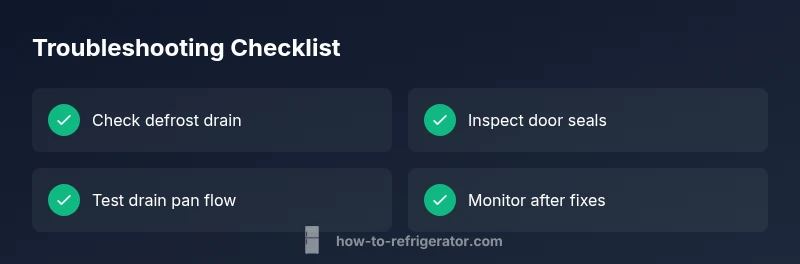
- Plan for a measured test: after any fix, reassemble and monitor for 24 hours to confirm the issue is resolved.
Quick checks you should perform first
Before diving into deeper diagnostics, perform a few quick checks that often resolve the issue without tools:
- Ensure the fridge is level; a tilt can cause improper drainage.
- Check for obvious spills around shelves and gaskets; clean and dry thoroughly.
- Listen for unusual noises that could signal a clogged drain or pump issues.
How to inspect and fix the defrost drain
The defrost drain is typically located at the back of the fridge or near the salad drawer. A clog can form from ice or debris. Use warm water and a flexible pipe cleaner to loosen the blockage, then flush the line until clear. Don’t use sharp objects that could puncture the tube. After clearing, pour a small amount of water through the drain to verify it flows away to the drain pan. If you can’t reach the drain or the blockage persists, proceed to inspect other potential causes.
When to call a professional and how to prevent future leaks
If you encounter refrigerant odors, unusual frost patterns, or if the compressor runs constantly after a drainage fix, stop and contact a qualified technician. In between repairs, prevent leaks by keeping the door seals clean and dry, avoiding frequent door openings, and placing moisture-absorbing containers near the crisper to reduce humidity. Regular cleaning and inspection of the drip pan and tubing can dramatically reduce the chance of reoccurrence.
Steps
Estimated time: 45-60 minutes
- 1
Power down and prep your space
Unplug the fridge and remove items from the bottom area to prevent mess. Have a towel or bucket ready to catch any water. This first step reduces the risk of shock and makes it safer to inspect components.
Tip: Take a quick photo of layouts before moving shelves to aid reassembly. - 2
Locate the defrost drain
Access the back wall or interior rear panel where the defrost drain sits. Identify the drain tube and the drain pan beneath the fridge. If you see ice, plan to melt it safely to clear the line.
Tip: Use a flashlight to spot the tiny drain tube; ice can mask the channel. - 3
Clear the defrost drain
Pour warm (not boiling) water into the drain to dissolve clogs. You can use a flexible pipe cleaner or a small siphon to help push debris through. Stop if you feel significant resistance to avoid damage.
Tip: Do not use sharp objects; plastic tubing or a pipe cleaner is safest. - 4
Inspect the drip pan and line
Slide out the drip pan and wipe it dry. Check the line from the pan to the back of the unit for cracks or disconnections and reattach or replace if needed.
Tip: Keep the pan slightly inclined toward the drain so water flows freely. - 5
Check the door gasket and seals
Close the door on a dollar bill test or flashlight check to ensure a tight seal. Clean any residue and replace warped gaskets as needed.
Tip: A clean seal saves energy and reduces moisture intrusion. - 6
Test and monitor
Plug the unit back in and monitor for 24 hours. If water reappears, repeat checks on drains and gaskets and consider scheduling a professional service if the issue persists.
Tip: Record the times and conditions when water appears to identify patterns.
Diagnosis: Water collects at the bottom of the fridge
Possible Causes
- highDefrost drain is clogged or blocked
- mediumDamaged or mis-sealed door gasket
- lowDispenser line or water inlet leak
- lowSpills or condensation from humid conditions
Fixes
- easyUnblock defrost drain and flush with warm water; clean drip pan
- mediumInspect/replace door gasket; reseal as needed and re-test
- easyInspect dispenser line for leaks; tighten fittings or replace hose
- easyWipe spills, improve airflow, and reduce humidity around the fridge
FAQ
What is the first thing I should check when I see water at the bottom of my fridge?
Start by unplugging the unit and inspecting the defrost drain for clogs. Clear the drain and flush with warm water, then check the drip pan and gaskets. If water returns, proceed with a broader diagnostic flow.
First, unplug the fridge and check the defrost drain for clogs. Clear the line, flush with warm water, and inspect the drip pan and seals. If it comes back, continue with a broader check.
How do I unclog a fridge defrost drain safely?
Use warm water and a flexible pipe cleaner to dissolve the clog. Avoid sharp tools. Gently probe the drain until water flows freely into the drain pan.
Use warm water and a flexible pipe cleaner to loosen the clog. Don’t use sharp tools. Probe gently until water flows freely.
Can a leaking water line cause bottom leaks, and how do I fix it?
Yes, a loose or cracked water line can leak water into the fridge. Inspect the line for cracks, tighten fittings, or replace the line if needed. If you rely on a dispenser, inspect the valve as well.
A loose or cracked water line can leak water. Tighten fittings or replace the line if needed, and check the dispenser valve.
When should I call a professional?
If you detect refrigerant odor, hear unusual noises, or after checking the drain and gaskets the water still collects, contact a technician. Persistent leaks may indicate a sealed system issue requiring specialized tools.
Call a pro if you smell refrigerant, hear strange noises, or the leak persists after checks.
How can I prevent water from collecting again in the future?
Keep door seals clean and dry, avoid frequent door openings, and periodically inspect the drain and pan. Consider using moisture-absorbing containers near the bottom of the fridge to reduce humidity.
Keep seals clean, minimize door openings, and inspect drainage regularly to prevent future leaks.
Watch Video
Top Takeaways
- Start with the defrost drain; most leaks begin there
- Clean doors seals to prevent moisture intrusion
- Test after fixes and monitor for 24 hours
- If in doubt, call a professional to avoid damage
- Regular maintenance reduces future leaks