Why is My Refrigerator Compressor Overheating? A Homeowner's Troubleshooting Guide
Urgent, step-by-step troubleshooting guide for why your refrigerator compressor is overheating. Learn common causes, safe checks, a diagnostic flow, and practical fixes homeowners can perform before calling a pro.


Most refrigerator compressor overheating is caused by heat buildup or a failing component. The top culprits are dirty condenser coils, restricted airflow, a malfunctioning condenser fan, a faulty start relay, refrigerant under/overcharge, or a failing thermostat. Quick fixes you can try now: unplug the unit, clean the coils, ensure fans spin freely, check for dusty vents, and remove any obstructions around the condenser grille. If it persists, call a professional.
Understanding Refrigerators and Overheating
Understanding why is my refrigerator compressor overheating begins with the basics of heat transfer and system design. According to How To Refrigerator, the compressor is the heart of the cooling loop, compressing refrigerant and enabling heat to move from inside the fridge to the outside coils. When heat removal is blocked or the compressor works harder than it should, the device overheats, triggering inefficiency, higher energy use, and potential damage. A healthy fridge keeps the compressor temperature in a narrow range, but dust, restricted airflow, and aging components can push it past safe limits. Recognizing the signs early means you can prevent a failure that could leave you with spoiled food and a costly repair bill. In practical terms, overheating usually shows up as warm interior temperatures, frost buildup, or the sense that the compressor is constantly running.
This guide helps homeowners diagnose the issue without guessing. By understanding the core cooling cycle and common failure points, you gain the confidence to perform safe, effective checks. Remember that while many causes are simple and reversible, persistent overheating can indicate a refrigerant leak or a failing component that requires professional service. The How To Refrigerator team emphasizes safety and methodical testing to minimize risks and prevent further damage.
Common Causes of Overheating
Overheating is rarely caused by a single issue. The most frequent culprits are problems with heat dissipation, airflow, and control systems. Here are the typical causes, ranked by how commonly they lead to overheating:
- Dirty condenser coils: Dust buildup acts as an insulating layer, trapping heat and forcing the compressor to work harder.
- Restricted airflow: Poor clearance behind the unit or blocked vents reduce heat transfer from inside the fridge to the outside coils.
- Faulty condenser fan: A non-spinning or slow fan reduces heat removal from the condenser coils.
- Faulty start relay or compressor: If the relay sticks or the compressor’s start circuit fails, the unit may overheat during startup or run continuously.
- Refrigerant charge issues: Low or overcharged refrigerant can force the compressor to cycle improperly and overheat.
- Thermostat or control board problems: Faulty sensing can keep the compressor running longer than needed, causing heat buildup.
If you notice warm interiors alongside a hot compressor, start with the simplest potential issues first and progress to more complex checks. Even small dust blocks can double the effort the compressor must exert, so cleaning coils and ensuring airflow is almost always the fastest fix. How To Refrigerator recommends validating each cause with a quick test before moving to the next.
Safety First: What Not to Do
Safety comes first when troubleshooting a live appliance. Do not attempt to open sealed refrigerant lines, recharge a system yourself, or bypass electrical safety features. Never poke at the compressor or motor windings with metal tools, and avoid operating the fridge with the back panel removed for extended periods. If you smell burning insulation, hear crackling, or notice signs of electrical arcing, disconnect power immediately and call a licensed technician. Keep kids and pets away from the unit during inspection, and always unplug before touching any exposed components. Finally, never use a damaged power cord or outlet; a professional should replace worn cords and inspect wiring insulation to prevent electric shock or fire risk.
Quick Checks You Can Do Today
If you’re facing overheating, start with these safe, non-invasive checks you can perform without special tools:
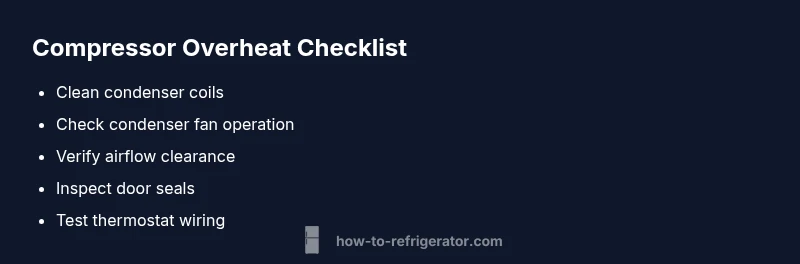
- Unplug and inspect the condenser coils: look for dust and grime on the back or underneath the unit and clean with a brush or vacuum.
- Check the condenser fan: if accessible, spin the fan blades by hand to ensure smooth rotation; replace if it sticks or wobbles.
- Inspect airflow around the fridge: ensure at least 2–3 inches of clearance behind and 1 inch on the sides; remove any objects blocking the vents.
- Verify door seals: a poor seal lets in warm air, causing the compressor to run longer; replace damaged gaskets as needed.
- Listen for unusual noises: a buzzing or grinding sound can indicate a failing fan or motor that requires service.
- Confirm the thermostat setting: set to a mid-range temperature and observe whether the compressor responds normally to door openings and cooling demand. If the unit still runs hot after these checks, it’s time to advance to diagnostic testing or call a pro.
Diagnostic Flow Overview
This section outlines a practical, step-by-step approach to identify the root cause of compressor overheating. Start with the simplest checks (coils, airflow, seals) and proceed to component tests (fan, relay, refrigerant). Use a flow-based approach: observe symptom, hypothesize cause, test, implement fix, re-test. If any step reveals a safety risk or a leak, stop and contact a qualified technician. By documenting each step, you can convey clear findings to a repair professional, reducing diagnosis time and cost.
Step-by-Step Fix: Most Common Cause (Condenser Coils)
The most common cause of overheating is dirty condenser coils. Follow these steps to fix it safely and effectively:
- Power off and unplug the refrigerator. Disconnect from the wall outlet to prevent any electric shock. Tip: If you must pull the fridge away from the wall, have a helper and place a protective mat to avoid floor damage.
- Access the condenser coils. Depending on your model, coils may live at the back or beneath the unit behind a grille. Tip: Make note of any screws or panels you remove so you can reassemble correctly.
- Clean the coils with a soft brush and a vacuum. Remove all dust, pet hair, and debris until the surface looks clean and metallic. Tip: Do not use water directly on electrical components; wipe only the coils and surrounding surfaces.
- Inspect the condenser fan and shroud. If the fan won’t spin freely, remove the obstruction and test again. Replace if you hear grinding or see bent blades. Tip: Spin the fan gently with a finger to confirm smooth rotation before powering up.
- Reattach panels, plug in the unit, and run the fridge for several hours. Check for normal cycling and stable interior temperatures. Tip: Monitor the back of the unit for any residual heat after a few hours of operation.
- If overheating recurs or new symptoms appear (leaks, frost buildup, or PWM cycling), escalate to a professional for a compressor and refrigerant assessment. Tip: Document your steps and findings to share with the technician for faster service.
Prevention: How to Keep Your Compressor Cooler
Preventing overheating starts with regular maintenance and mindful use. Schedule coil cleaning every 6–12 months, ensure adequate clearance for airflow, and replace aging seals promptly. Keep the kitchen environment moderate—extreme ambient temperatures put extra strain on the compressor. When upgrading, choose energy-efficient models with good airflow design and accessible maintenance. A short, consistent maintenance routine helps your refrigerator maintain optimal performance and prolongs the life of the compressor.
Steps
Estimated time: 45-60 minutes
- 1
Power down safely
Unplug the fridge and switch off the dedicated circuit to ensure no live electrical risk during inspection.
Tip: Always double-check the outlet with a non-contact tester if you’re unsure. - 2
Expose condenser coils
Remove any panels or grilles to access coils; note how panels detach to ease reassembly.
Tip: Take a photo of the wiring routing before disassembly. - 3
Clean coils thoroughly
Use a soft brush and vacuum to remove dust and debris until coils look shiny. Avoid moisture near electrical parts.
Tip: Work from top to bottom for efficient debris removal. - 4
Inspect the condenser fan
Ensure the fan spins freely by hand; listen for bearing noise. Replace if it drags or stalls.
Tip: Check for loose mounting screws that could cause vibration. - 5
Reassemble and test
Reconnect panels, plug in the unit, and run through a normal cycle while monitoring for heat and temperature stability.
Tip: Give the system several hours to reach stable cycling. - 6
Escalate if needed
If overheating returns or leaks are suspected, contact a licensed appliance technician for a refrigerant assessment or compressor replacement.
Tip: Keep receipts and model information handy for faster service.
Diagnosis: Compressor overheats quickly after startup; unit may shut off or run continuously with warm interior.
Possible Causes
- highDusty condenser coils reducing heat transfer
- highRestricted airflow around back/underside of unit
- mediumCondenser fan not spinning or failing
- mediumFaulty start relay or compressor circuit
- lowLow or overcharged refrigerant
- lowThermostat or control board malfunction
Fixes
- easyUnplug the unit and clean condenser coils; ensure the fan can rotate freely; improve room airflow around the appliance
- mediumInspect condenser fan operation; replace if the blade is damaged or the motor won’t run
- hardCheck for refrigerant leaks or incorrect charge; do not attempt to recharge yourself; call a pro
- mediumTest thermostat and control board signals; replace faulty components as needed
- easyVerify power supply and outlet stability; ensure the unit isn't on a weak circuit or overloaded strip
FAQ
What are the first signs that indicate a compressor is overheating?
Early signs include abnormally warm interior temperatures, a hot back panel, frost buildup near the coils, or a compressor that runs continuously. If you notice these signs, perform safety checks and inspect the coils and fan before calling a technician.
Look for warm temperatures inside, a hot back panel, continuous running, or frost around the coils. Check coils and fan, then call a pro if it keeps overheating.
Can I run my fridge if the compressor feels hot to the touch?
No. If the compressor feels hot, unplug the unit and let it cool before inspecting. Running a hot compressor can worsen overheating and potentially damage components.
If the compressor is hot, unplug the fridge and let it cool before inspecting. Don’t run it while overheated.
Is a buzzing or humming sound from the compressor a sign of a problem?
A steady buzz or hum is common, but unusual grinding or intermittent buzzing can indicate a failing condenser fan or a faulty start relay. If you hear abnormal noises, power down and inspect or consult a technician.
A loud or unusual buzzing can mean the fan or relay is failing. Power down and have it checked if the sound persists.
Is it safe to clean condenser coils while the fridge is plugged in?
No. Always unplug the appliance before cleaning the coils to avoid electric shock. If you must test after cleaning, wait until the unit is fully unplugged and dry before powering it again.
Never clean coils while it's plugged in. Unplug first, dry, then test after reassembly.
How long can a compressor run overheated before damage occurs?
There’s no universal safe duration. Repeated overheating can shorten compressor life and lead to refrigerant leaks or motor failure. Seek professional assessment if overheating recurs.
There isn’t a safe window for overheating. If it keeps happening, get a professional check.
When should I call a professional?
If basic checks don’t solve the problem, if you smell gas-like refrigerant, or if you suspect a refrigerant leak or capacitor/relay failure, contact a licensed technician. They can accurately diagnose refrigerant issues and provide safe repairs.
Call a professional if the issue persists after basic checks or you suspect a refrigerant leak.
Watch Video
Top Takeaways
- Check coils and airflow first when overheating occurs
- Always unplug before servicing and avoid refrigerant handling
- If the problem persists, consult a professional
- Regular maintenance prevents future overheating
- Document steps taken for faster service