Does Refrigerator Compressor Get Hot? A Practical Troubleshooting Guide
Urgent guide: learn why a fridge compressor gets hot, how to diagnose safely, and proven steps to fix overheating and protect your food. Practical checks, warnings, and maintenance from How To Refrigerator.


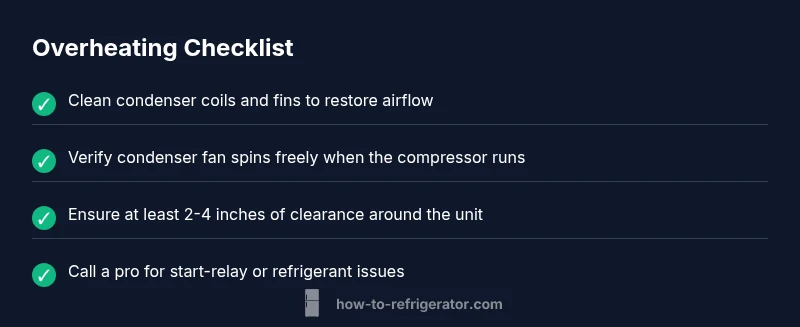
Does refrigerator compressor get hot? In many fridges, a warm compressor is normal during operation, but persistent overheating is a warning sign. Start with quick checks: clean condenser coils, ensure adequate airflow around the unit, and confirm the condenser fan runs. If heat remains, a faulty start relay or refrigerant issue may require professional service.
Why does does refrigerator compressor get hot? and what it means
Many homeowners notice the compressor surface warming during normal operation. A hot compressor can be part of the cooling cycle, but excessive heat or continued heating beyond typical cycles signals a problem. According to How To Refrigerator, understanding the normal range helps distinguish a routine temperature rise from a fault. The team emphasizes that safe, methodical checks protect both the appliance and your household. If the compressor is hot to the touch for hours or emits a burning smell, treat it as urgent and stop using anything that relies on the fridge until you’re sure it’s safe.
Common causes of overheating and how to spot them
Overheating usually points to airflow or electrical issues. Dusty, blocked condenser coils reduce heat rejection, forcing the compressor to work harder. A failing condenser fan slows air movement, increasing heat buildup. Poor clearance around the fridge or a cramped kitchen can trap heat, especially in warm rooms. In some cases, a faulty start relay or a weak capacitor causes the compressor to struggle to start and run, producing extra heat. Identifying the primary cause helps you pick the right fix quickly.
Safe checks you can perform without specialized tools
Before you call a technician, perform basic, safe checks: unplug the unit when opening access panels; vacuum and brush dust from the back grille and coil fins; verify the fridge has at least a few inches of clearance on all sides for air flow. Ensure your kitchen has adequate ventilation and that the fridge isn’t placed right next to a heat source or in direct sunlight. If the fan at the condenser is visible, spin it gently by hand and listen for smooth operation. Do not touch electrical components or refrigerant lines with bare hands.
Diagnostic flow snapshot you can rely on
This section maps symptoms to likely causes and practical fixes in a logical sequence. Start with the simplest steps, then move to more involved checks. If you notice unusual noises, ice buildup, or oil smell near the compressor, stop and seek professional help. The diagnostic path prioritizes safe, incremental checks and clearly marks when professional service is needed to avoid personal injury or further equipment damage.
Step-by-step fix for the most common cause: dirty condenser coils
The most frequent reason for a hot compressor is blocked heat rejection due to dirty coils. Step-by-step:
- Power off the fridge and unplug it. 2) Move the unit away from walls to access the back. 3) Use a soft brush and vacuum to remove dust from coils and fins. 4) Reposition the fridge with several inches of clearance and plug it back in. 5) Monitor the compressor temperature while the unit cycles. If heat persists, proceed to the next checks or contact a pro.
Safety notes, mistakes to avoid, and when to call a pro
Working on refrigeration involves electrical components and refrigerant systems. Always unplug before opening access panels and never poke at pressure-relief devices. Avoid using water near electrical parts. If you’re unsure about electrical tests or suspect refrigerant leaks, stop and hire a certified technician. Regular maintenance reduces heat-related issues over time.
Prevention tips to keep your refrigerator running cool
Prevent overheating with proactive maintenance: clean coils every 6–12 months, ensure proper room ventilation, and maintain consistent power supply. Use a thermometer to verify that the fridge stays within safe temperature ranges. Keep the condenser area unobstructed and check door seals to prevent extra run-time. Regular service can extend compressor life and lower the risk of heat-related failures.
Steps
Estimated time: 45-90 minutes
- 1
Power down and prepare
Unplug the fridge and move it gently away from the wall to access the back. This step prevents electric shock and allows safe cleaning. Gather a flashlight, vacuum attachment, and a soft brush.
Tip: Keep the fridge on a dry surface and avoid pulling the power cord out from under the unit. - 2
Inspect the condenser area
Look for dust and debris on the back coils and fan housing. Blocked airflow is the leading cause of heat buildup. Take note of any signs of damage to the fins or fan blade.
Tip: Use a water spray only if the unit is completely unplugged and dry; otherwise, moisture can cause shorts. - 3
Clean coils and verify airflow
Gently vacuum and brush away dust from coils and fins. Re-check that air can flow freely through the coil area when the fan is running. Reposition the unit for optimal clearance.
Tip: Do not bend fins; use a plastic card or soft tool to straighten any bent areas. - 4
Test the condenser fan
With the unit plugged in, listen for the fan when the compressor starts. If the fan is silent or stalls, it may be faulty and require replacement.
Tip: If you hear grinding or see a seized fan, stop and call a pro to avoid further damage. - 5
Check room ventilation and clearance
Ensure the fridge has several inches of clearance on all sides and the room isn’t excessively hot. Improper placement can trap heat and force the compressor to work harder.
Tip: Avoid placing the fridge in a corner or next to heat-producing appliances. - 6
Monitor temperatures and decide on next steps
After reassembly, run the fridge for 24–48 hours and monitor compressor temperature and cooling stability. If overheating returns, escalate to professional service.
Tip: Document symptoms and actions taken; this helps the technician diagnose faster.
Diagnosis: Compressor is hot to the touch or the area around the condenser feels unusually warm; fridge cooling may be inconsistent or reduced.
Possible Causes
- highBlocked or dirty condenser coils with restricted airflow
- highCondenser fan not spinning or failing
- mediumInsufficient space around the fridge or poor room ventilation
- lowElectrical issue like faulty start relay or capacitor
Fixes
- easyUnplug and clean condenser coils; vacuum dust from the grille and coils
- mediumCheck condenser fan for smooth operation; replace if it grinds, stalls, or stops
- easyIncrease clearance around the unit and improve room ventilation
- hardHave a technician inspect the start relay, capacitor, and refrigerant system if heat persists
FAQ
Can a hot refrigerator compressor cause food spoilage?
Yes. If the fridge cannot maintain safe temperatures, food can spoil. Overheating often signals compromised cooling performance that should be addressed promptly.
A hot compressor can lead to unsafe temperatures inside your fridge, so address overheating quickly to protect food.
Is it safe to touch a hot compressor?
Avoid touching hot surfaces. Unplug the unit before inspecting and keep hands away from moving parts. If the surface remains hot after unplugging, call a technician.
Don’t touch a hot compressor. Unplug first and call a pro if it stays hot.
Why does my fridge get hot only after several hours of operation?
Heat can accumulate if coils are dirty or airflow is restricted, causing the compressor to work longer. Check coils, fan, and clearance, then reassess.
Heat after hours usually means airflow or coil issues—start with cleaning and clearance checks.
Should I operate the fridge with the back panel off?
No. Don’t operate with panels removed unless you’re trained. This exposes electrical parts and refrigerant lines to damage and risks.
Don’t run the unit with panels off; it’s dangerous and can cause more harm.
When should I call a professional?
If cleaning coils and ensuring proper ventilation doesn’t reduce heat, or if you suspect a start relay or refrigerant issue, contact a certified technician promptly.
Call a pro if heat persists after basic fixes or you suspect electrical or refrigerant problems.
Watch Video
Top Takeaways
- Identify the common overheating causes first
- Prioritize safe, simple fixes before calling a pro
- Regular maintenance prevents future overheating
- Know when professional service is needed