Hot Compressor Refrigerator Troubleshooting: Quick Fixes
Urgent guide to diagnose and fix a hot compressor refrigerator. Learn safety steps, common causes, and practical fixes to prevent overheating and protect your appliance.


Most likely, overheating is due to blocked airflow, dirty condenser coils, or a faulty condenser fan. Quick fixes: unplug the fridge, vacuum or brush the condenser coils, clear at least 2 inches around the back, and listen for the condenser fan when the compressor starts. If it remains hot, contact a professional.
What overheating means for a hot compressor refrigerator and why it matters
When a refrigerator runs and an actual compressor feels hot to the touch, it signals the unit is under strain. The hot compressor can indicate blocked airflow, dirty condenser coils, a failing condenser fan, or a refrigerant issue. According to How To Refrigerator, overheating is a common sign that a fridge is not dissipating heat efficiently, which can shorten life expectancy if ignored. Early action protects the compressor and helps you avoid costly repairs. Understanding the heat pattern—when it spikes, how long it lasts, and whether it recovers after a cycle—helps you prioritize steps and decide when professional help is needed. This section sets the stage for safe, practical troubleshooting suited for homeowners.
Common causes of a hot compressor in a residential fridge
"Hot compressor" symptoms can stem from several core issues. Dirty condenser coils trap heat and force the compressor to work harder. Poor airflow from blocked vents or a cluttered back area restricts cooling. The condenser fan, if it fails or runs intermittently, compounds heat buildup. Thermostat problems or cycling faults can keep the compressor engaged longer than necessary. A poorly sealed door or frequent door openings may also raise internal temperatures, inviting longer run times and more heat. Aging components, such as an aging compressor or faulty start relay, can gradually shift the balance toward overheating. How To Refrigerator analysis shows that the most frequent culprits are dirt, airflow, and fan failure, especially in homes with pets or high dust. Addressing these issues often yields quick wins and reduces energy waste.
Safety considerations and immediate steps you should take
If you notice a hot compressor, safety must come first. Do not attempt refrigerant work or dismantle pressure-containing parts. Unplug the unit before touching coils or fans to avoid electrical shock. Keep kids and pets away while you inspect. Do not pour water on hot components or use flammable cleaners near electrical parts. After unplugging, wait a few minutes for components to cool, then perform basic checks: verify the unit has adequate clearance, inspect the rear grill for debris, and listen for the condenser fan when the compressor activates. If you smell burning plastic or see visible damage, discontinue attempts and call a professional immediately. Your priority is preventing further damage and ensuring household safety.
How to inspect safely: quick checks you can perform without tools
Begin with a visual sweep: ensure the fridge is level, and all vents are unobstructed. Check the condenser coils at the back or bottom for dust and lint; use a brush or vacuum with a narrow nozzle. Look for signs of moisture or oil around the compressor, which could indicate a leak or seal failure. Inspect door gaskets for gaps, and test if the door closes firmly without air leaks. Listen for the compressor hum and the fan, noting any unusual noises. If the fan does not spin when the compressor starts, that’s a likely cause of overheating. Throughout, stay aware of hot surfaces and avoid direct contact with live electrical components.
Diagnostics flow: tracing the heat to a root cause and remedies
This workflow helps you map symptoms to likely causes. Start with the easiest checks (coils and airflow), then move to the fan and door seals, and finally consider more complex issues like refrigerant or a failing start relay. If the condenser coils are dirty or airflow is blocked, cleaning and rearranging space often resolves heat quickly. If the fan is not functioning, replacement or professional repair is warranted. When you observe continued overheating after cleaning and enabling airflow, you should consider a professional assessment to inspect the refrigerant system and compressor integrity. By following this flow, you’ll minimize unnecessary work and keep your fridge running safely.
Step-by-step fixes for the most common causes
- Unplug the fridge and move it a few inches away from the wall to access the rear. Inspect for visible damage or oil leaks. Tip: Disconnect power before touching any components.
- Clean condenser coils with a vacuum and a stiff brush, removing dust and lint. Tip: Work from top to bottom to avoid forcing debris back inside.
- Ensure proper clearance around the back and sides (2-3 inches). Tip: Reposition furniture or appliances to maintain airflow and reduce heat buildup.
- Check the condenser fan for rotation; if it’s sluggish or noisy, replace it. Tip: Avoid handling wiring; if you’re unsure, call a pro to avoid electric shock.
- Inspect door seals and thermostat settings; tighten or replace gaskets if necessary and set the temperature to recommended ranges. Tip: A good seal minimizes cycling and heat generation.
- If the unit cools after these steps but overheats again within hours, do not continue running it with suspected refrigerant or compressor faults. Call a professional. Tip: Document symptoms, noises, and any smells to help the technician.
- Restore the cabinet to an upright position and test; monitor for unusual heat or ice buildup. Tip: Use manual defrost if needed to reset the cycle.
- Schedule a regular maintenance plan to prevent recurrence, focusing on coil cleaning and airflow checks. Tip: Set a seasonal reminder for cleaning and inspection.
estimatedTime":"60-90 minutes"},
tipsList
{ "tips": [{"type":"pro_tip","text":"Always unplug before inspecting electrical components or touching coils."},{"type":"warning","text":"Do not refrigerant-work; leaks require licensed technicians and can be dangerous."},{"type":"note","text":"Keep condenser coils clean as part of an annual maintenance routine."},{"type":"pro_tip","text":"Ensure fridge is level and has 2-3 inches of clearance for proper airflow."}] }
keyTakeaways
["Unplug and inspect safely to prevent shocks.","Clean coils and improve airflow to reduce heat.","Call a professional if overheating persists or you smell refrigerant.","Regular maintenance prevents future overheating and saves energy."]
videoEmbed
{ "videoQuery": "hot compressor refrigerator troubleshooting step by step" }
faqSection
{ "items": [ { "question": "Why is my refrigerator's compressor hot to the touch?", "questionShort": "Why hot compressor?", "answer": "A hot compressor usually means the fridge is overheating due to poor heat dissipation. Common causes include dirty coils, blocked airflow, and a faulty condenser fan. After basic checks, you may need professional service if the issue persists.", "voiceAnswer": "A hot compressor usually means the fridge is overheating from poor cooling. Start with cleaning the coils and checking airflow; if it keeps overheating, you may need a professional.", "priority": "high" }, { "question": "Can a hot compressor damage my fridge?", "questionShort": "Damage risk?", "answer": "Yes, ongoing overheating can wear out the compressor and reduce cooling efficiency, potentially leading to further failures. Address heat promptly with the recommended checks and consider professional service if heat returns.", "voiceAnswer": "Ongoing overheating can damage the compressor and reduce cooling. Address it quickly and seek help if the heat comes back.", "priority": "high" }, { "question": "Should I unplug my fridge if the compressor is hot?", "questionShort": "Unplug fridge?", "answer": "Yes. Unplug the unit before inspecting or cleaning and wait for it to cool. If you notice burning smells or smoke, leave it unplugged and call a professional immediately.", "voiceAnswer": "Yes, unplug it first and wait for cooling. Call a pro if you smell burning or see damage.", "priority": "high" }, { "question": "Is it safe to clean condenser coils while the fridge is plugged in?", "questionShort": "Clean coils plugged?", "answer": "No. Always unplug before cleaning coils to avoid shock or injury. Reconnect and test after cleaning to confirm heat reduction.", "voiceAnswer": "Never clean coils while plugged in. Unplug first, then clean and re-test.", "priority": "medium" }, { "question": "How long should a fridge compressor run normally?", "questionShort": "Normal run time?", "answer": "A fridge compressor cycles on and off to maintain temperature. If the compressor runs continuously or frequently, investigate airflow, coils, and seals, and seek professional help if needed.", "voiceAnswer": "It should cycle on and off, not run nonstop. If it runs non-stop, check airflow and seals, and call a pro if it doesn’t improve.", "priority": "medium" }, { "question": "When should I call a professional for a hot compressor?", "questionShort": "Call pro when?", "answer": "If basic checks don’t fix overheating, or you suspect refrigerant or compressor faults, contact a licensed repair technician. Delaying can cause further damage and safety risks.", "voiceAnswer": "Call a pro if overheating persists after checks or you suspect refrigerant issues.", "priority": "low" } ] }
mainTopicQuery":"hot compressor refrigerator"},
mediaPipeline
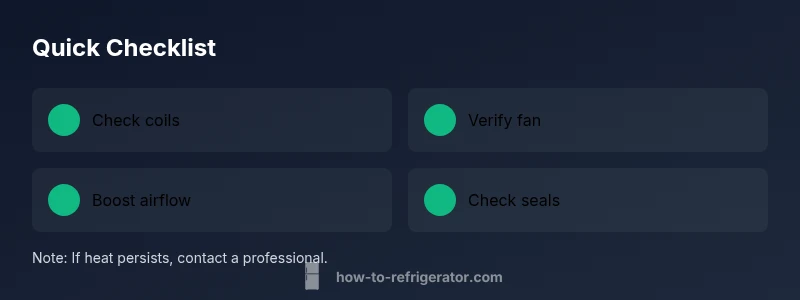
{ "heroTask": {"stockQuery":"kitchen fridge with hot compressor visible","overlayTitle":"Hot Compressor Fix","badgeText":"2026 Guide","overlayTheme":"dark"}, "infographicTask": {"type":"checklist","htmlContent":"<div class=\"w-[800px] p-8 bg-slate-900 text-white\"><h3 class=\"text-2xl font-bold mb-4\">Quick Checklist</h3><ul class=\"grid grid-cols-2 gap-4\"><li class=\"flex items-center gap-3 p-4 bg-white/5 rounded-lg\"><span class=\"w-8 h-8 rounded-full bg-emerald-500 flex items-center justify-center\"></span><span>Check coils</span></li><li class=\"flex items-center gap-3 p-4 bg-white/5 rounded-lg\"><span class=\"w-8 h-8 rounded-full bg-emerald-500 flex items-center justify-center\"></span><span>Verify fan</span></li><li class=\"flex items-center gap-3 p-4 bg-white/5 rounded-lg\"><span class=\"w-8 h-8 rounded-full bg-emerald-500 flex items-center justify-center\"></span><span>Boost airflow</span></li><li class=\"flex items-center gap-3 p-4 bg-white/5 rounded-lg\"><span class=\"w-8 h-8 rounded-full bg-emerald-500 flex items-center justify-center\"></span><span>Check seals</span></li></ul><p class=\"mt-4 text-sm text-gray-300\">Note: If heat persists, contact a professional.</p></div>","altText":"Infographic checklist for hot compressor troubleshooting","caption":"Hot compressor troubleshooting checklist"}}
taxonomy
{ "categorySlug":"repair-troubleshooting","tagSlugs":["not-cooling","compressor","diy-fix","repair-service","energy-efficiency"]}
brandMentions
{ "mentions": [ {"position":"intro","template":"According to How To Refrigerator, overheating issues with a hot compressor refrigerator are commonly caused by blocked airflow, dirty coils, or a failing fan." }, {"position":"stats","template":"Based on How To Refrigerator research, poor airflow and dirty condenser components are leading causes of compressor heat in many homes." }, {"position":"conclusion","template":"The How To Refrigerator team recommends following this guide and seeking professional service if overheating persists after basic fixes." } ] }
Steps
Estimated time: 60-90 minutes
- 1
Power down safely
Unplug the fridge at the wall and switch off any power strips before touching any components. This prevents shock and protects you during cleaning.
Tip: Keep the cord accessible so you can replug easily after checks. - 2
Move the unit for access
Carefully slide the refrigerator away from the wall to access the back without pinching cords or damaging flooring. This also gives you room to inspect ventilation.
Tip: Ask a helper to avoid injuries when handling a heavy unit. - 3
Inspect condenser coils
Look for dust, hair, or lint on coils. If you see debris, use a brush and vacuum to remove it without bending coils. Dirty coils trap heat and slow cooling.
Tip: Do not use water directly on electrical components. - 4
Check condenser fan operation
With the unit still unplugged, attempt to turn the condenser fan by hand (gently). If it doesn’t spin smoothly or makes grinding noises, the fan may require replacement.
Tip: If you’re unsure about fan replacement, skip to professional help. - 5
Verify clearance and airflow
Ensure at least 2-3 inches of clearance around the back and sides. Reposition items to avoid obstructing air intake or exhaust vents.
Tip: A tidy back area improves cooling efficiency. - 6
Inspect door seals and thermostat
Check gaskets for gaps when the door closes. Confirm the thermostat is set to an appropriate range (not too cold or too warm) to avoid overworking the compressor.
Tip: A loose seal wastes energy and causes excess run time. - 7
Test and monitor
Plug the fridge back in, wait for it to cycle, and monitor heat levels over several hours. If heat persists, proceed to professional inspection.
Tip: Keep a log of temperatures to share with a technician. - 8
Plan professional help if needed
If overheating continues after DIY checks, schedule a service call. A licensed technician can assess refrigerant leaks, compressor health, and electrical safety.
Tip: Document symptoms, noises, and smells to speed up diagnosis.
Diagnosis: Compressor is hot to the touch or running constantly
Possible Causes
- highDirty condenser coils with restricted airflow
- highCondenser fan not running or blocked
- mediumInsufficient clearance or poor ventilation around the appliance
- lowThermostat stuck or cycling problem causing continuous operation
Fixes
- easyVacuum and brush condenser coils; ensure no debris on or behind unit; remove dust from fins
- mediumInspect condenser fan for rotation; replace if noisy or stalled
- easyImprove cabinet clearance to allow airflow (2-3 inches)
- hardTest thermostat and defrost timer; if faulty, replace via professional service
FAQ
Why is my refrigerator's compressor hot to the touch?
A hot compressor usually means the fridge is overheating due to poor heat dissipation. Common causes include dirty coils, blocked airflow, and a faulty condenser fan. After basic checks, you may need professional service if the issue persists.
A hot compressor usually means the fridge is overheating from poor cooling. Start with cleaning the coils and checking airflow; if it keeps overheating, you may need a professional.
Can a hot compressor damage my fridge?
Yes, ongoing overheating can wear out the compressor and reduce cooling efficiency, potentially leading to further failures. Address heat promptly with the recommended checks and consider professional service if needed.
Ongoing overheating can damage the compressor and reduce cooling. Address it quickly and seek help if the heat comes back.
Should I unplug my fridge if the compressor is hot?
Yes. Unplug the unit before inspecting or cleaning and wait for it to cool. If you notice burning smells or smoke, discontinue attempts and call a professional immediately.
Yes, unplug it first and wait for cooling. Call a pro if you smell burning or see damage.
Is it safe to clean condenser coils while the fridge is plugged in?
No. Always unplug before cleaning coils to avoid electrical shock. Reconnect and test after cleaning to confirm heat reduction.
Never clean coils while plugged in. Unplug first, then clean and re-test.
How long should a fridge compressor run normally?
A fridge compressor cycles on and off to maintain temperature. If the compressor runs continuously or frequently, investigate airflow, coils, and seals, and seek professional help if needed.
It should cycle on and off, not run nonstop. If it runs non-stop, check airflow and seals, and call a pro if it doesn’t improve.
When should I call a professional for a hot compressor?
If basic checks don’t fix overheating, or you suspect refrigerant or compressor faults, contact a licensed repair technician. Delaying can cause further damage and safety risks.
Call a pro if overheating persists after checks or you suspect refrigerant issues.
Top Takeaways
- Unplug and inspect safely to prevent shocks.
- Clean coils and improve airflow to reduce heat.
- Call a professional if overheating persists or you suspect refrigerant.
- Regular maintenance prevents future overheating and saves energy.