What Happens When Refrigerator Compressor Overheats
Discover why a refrigerator compressor overheats, how it affects cooling, and a clear, safe troubleshooting plan with steps, warnings, and when to call a pro.


When a refrigerator compressor overheats, efficiency drops, refrigerant pressure rises, and wear accelerates. You may notice warmer food, unusual humming, or a fridge that runs constantly. Start with safety steps, clear airflow to the condenser, and remove dust buildup. If the temperature stays high after cleaning, power down and contact a pro.
What happens when refrigerator compressor overheats
Understanding what happens when refrigerator compressor overheats helps homeowners act quickly to prevent further damage. The compressor is the heart of the cooling system, and when it overheats, the system struggles to move refrigerant through the coils. This can reduce cooling efficiency, cause the compressor to shut off on safety, or wear internal components prematurely. In some cases, overheating may indicate a blockage in airflow, a failing condenser fan, or an electrical fault. According to How To Refrigerator, recognizing the signs early lowers the risk of expensive repairs and helps you decide whether you can safely address the issue yourself or need professional service. By knowing the basics of why the compressor heats up, you can approach fixes calmly and methodically, reducing the chance of water leaks, motor damage, or refrigerant exposure. This section explains the physical processes inside the appliance and how overheating manifests in everyday symptoms.
Symptoms and early warning signs
A fridge that is overheating often shows telltale signs beyond warmth inside the cabinet. The exterior surfaces near the back of the unit may feel hot to the touch, and the condenser coils can appear dusty or clogged. You might hear the compressor running more frequently or for longer cycles, with a louder hum or vibration. Food preservation can degrade faster as temperatures rise inappropriately. In some cases, the thermostat may struggle to reach or maintain the set point, causing the compressor to cycle irregularly. If you notice any of these indicators, begin a careful diagnostic process to identify the root cause while ensuring personal safety.
Immediate safety steps to take
First, unplug the refrigerator to prevent electrical hazards while you inspect. Keep a clear path to access the condenser coils and avoid using water directly on electrical components. Check for obvious airflow obstructions: furniture or stored items blocking vents, a dust-coated condenser, or a fan that isn’t turning. If the unit is near a heat source or in a closed cabinet, improve ventilation and allow the compressor to cool before handling internal parts. If you smell burning, hear crackling, or see visible damage, stop and call a pro immediately. Safety comes first, and delaying professional help can cause further damage or leaks.
Diagnosing root causes in a home setup
There are several common culprits when a compressor overheats. The most frequent is restricted airflow due to dusty condenser coils or poor clearance around the back of the fridge. A faulty condenser fan, damaged fan blades, or a seized motor can also overwork the compressor. A worn door gasket or frequent door openings can let warm air in and make the cooling cycle harder. Less common but serious issues include refrigerant leaks or compressor wear from long-term use. Start with the easiest checks—clean the coils, test the fan, and inspect gaskets—before moving to more complex diagnostics. Each step narrows the possibilities and guides your next action.
Quick fixes you can try (non-invasive) and what to avoid
Begin with the simplest remedies: clean the condenser coils with a soft brush or vacuum to restore airflow, ensure there’s at least a few inches of clearance behind the unit, and verify the condenser fan spins freely when the compressor runs. Replace dusty air filters if your fridge has them and ensure the door seals form a tight, consistent seal when closed. Avoid using water on electrical components, never bypass safety switches, and don’t attempt refrigerant handling unless you’re licensed. If the temperature remains high after these steps, the issue may require professional diagnosis and service.
When to call a professional and what to expect
If cleaning and basic checks don’t restore proper cooling, you should call a licensed technician. Refrigerant leaks, compressor failures, and electrical faults require specialized tools and safety protocols. A pro will typically perform a pressures test, check for refrigerant loss, inspect the compressor wiring, and verify the operation of the fan and controls. They can also advise on long-term fixes like coil replacement or compressor replacement if necessary. Early professional assessment can prevent more serious damage and warranty issues.
Prevention: keeping your compressor cool and efficient
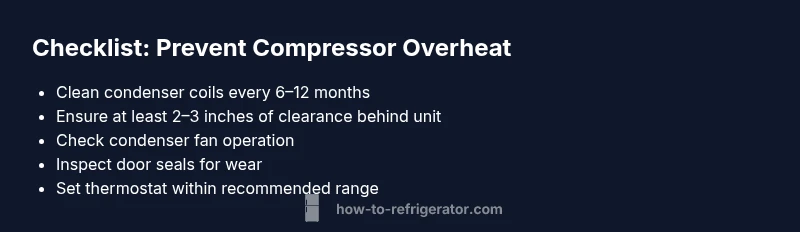
Prevention centers on regular maintenance and mindful use. Keep condenser coils clean, ensure adequate airflow, and place the fridge in a well-ventilated space away from heat sources. Set the thermostat to the manufacturer’s recommended range and avoid placing hot foods directly into the fridge. Periodically inspect door seals and ensure the unit isn’t overpacked, which can restrict airflow and raise inside temperatures. Schedule a yearly check or semi-annual clean of the coils to maintain efficiency and reduce the risk of overheating.
Steps
Estimated time: 30-60 minutes
- 1
Power off and prep
Unplug the fridge and move any obstacles away from the rear to access the condenser. Safety first—keep hands dry and avoid touching electrical components.
Tip: Have a bucket handy in case of minor spills. - 2
Inspect condenser coils
Check the coils for dust, dirt, and debris. Use a soft brush or vacuum to remove buildup from top to bottom. Do not use a metal tool that could damage fins.
Tip: Clean every 6–12 months for optimal airflow. - 3
Check condenser fan operation
With the unit unplugged, manually spin the fan to see if it turns freely. Reconnect power and listen for smooth operation when the compressor starts.
Tip: If the fan wobbles or stops, replace it. - 4
Inspect door seals
Close the door on a piece of paper; if it slides out easily, the gasket may be worn and in need of replacement. A tight seal reduces warm air intrusion.
Tip: Clean seals with mild soap and water before replacement. - 5
Check thermostat and internal airflow
Ensure the thermostat is set within the recommended range and verify air can circulate inside without obstruction from food items.
Tip: Avoid overfilling—the more air can circulate, the better cooling. - 6
Test and monitor
Plug the fridge back in and monitor temperature over several hours. If overheating recurs, stop troubleshooting and contact a pro for a thorough diagnosis.
Tip: Keep a log of temperatures for your technician.
Diagnosis: Compressor running hot or fridge not cooling properly
Possible Causes
- highBlocked condenser coils or poor airflow
- highFaulty condenser fan or motor
- mediumDoor gaskets leaking or mis-sealing
- mediumRefrigerant leak or low refrigerant charge
- lowOld or failing compressor
Fixes
- easyUnplug and clean condenser coils; clear surrounding space for airflow
- mediumTest and replace faulty condenser fan or motor if needed
- easyInspect and replace door gaskets to ensure a tight seal
- hardSchedule a refrigerant assessment and potential leak repair by a pro
- hardConsider compressor replacement if diagnosed as failing or worn
FAQ
Why does my refrigerator compressor overheat?
Overheating is commonly caused by restricted airflow, dirty condenser coils, a failing condenser fan, loose or damaged door seals, or refrigerant leaks. Start with the simplest checks and escalate as needed.
Overheating usually comes from airflow or coil problems, or a failing fan. Start with easy checks and then call a pro if needed.
Is it safe to keep the fridge running if it overheats?
No. If overheating is suspected, unplug the unit and assess the causes. Running a hot compressor can cause further damage or leaks. Call a professional if you cannot identify and fix the issue quickly.
No, unplug it and inspect. If you can't fix it quickly, contact a professional.
What should I check first when the compressor feels hot?
First check the condenser coils for dust and obstructions, ensure the condenser fan spins freely, and verify door seals. These are the easiest fixes that can restore cooling in many cases.
Check the coils, fan, and door seals first.
Can a bad door seal cause overheating?
Yes. A degraded door seal allows warm room air to enter, forcing the compressor to work harder and potentially overheat. Replace seals that show wear or gaps.
Yes, worn seals let in warm air and make the compressor work harder.
When should I call a professional for overheating?
If you suspect a refrigerant leak, hear unusual noises, or can't locate the cause after basic checks, contact a licensed technician. Refrigerant handling requires special training and safety precautions.
Call a pro if you suspect a refrigerant leak or can’t fix it with simple checks.
Can overheating damage other fridge parts?
Yes. Prolonged overheating can stress the compressor relay, wiring, and thermal switches, possibly affecting sensors and the cooling cycle. Timely diagnosis helps prevent collateral damage.
Overheating can stress other components, so fix it promptly.
How can I prevent this in the future?
Maintain clean coils, ensure good ventilation, avoid overloading, and monitor temperatures. Regular maintenance reduces the chance of future overheating and extends the life of your refrigerator.
Keep coils clean, ventilate, and avoid overloading.
Watch Video
Top Takeaways
- Identify overheating early to prevent compressor damage
- Clean coils and ensure proper airflow to restore cooling
- Test fans and door seals as quick fixes
- Call a pro for refrigerant leaks or compressor replacement
- Prevent future issues with regular maintenance