Refrigerator Temperature Guide: Set, Test, and Troubleshoot
Learn to set and test your refrigerator temperature for safety and energy efficiency. Step-by-step measurement, ideal ranges, maintenance tips, and troubleshooting from How To Refrigerator.


Keeping your fridge at the right temperature is essential for food safety and energy use. In general, set your refrigerator to about 3-5°C (37-41°F) and verify with a thermometer. This guide explains how to measure, monitor, and correct temperature, in plain terms.
Understanding refrigerator temperature and why it matters
If you’re asking who refrigerator temperature matters for, the answer is simple: it affects your family’s safety, the quality of your food, and your energy bill. According to How To Refrigerator, maintaining the correct temperature reduces the growth of harmful bacteria, slows spoilage, and keeps your appliance running efficiently. Small deviations can mean the difference between leftovers staying fresh and reaching the waste bin. In modern kitchens, the fridge is not just a storage box; it’s a controlled environment that requires regular checks and a stable baseline. Understanding the physics of air movement, door opening, and fan cycles helps you interpret readings rather than guessing. By learning to read a thermometer and apply small adjustments, you’ll protect perishable items and trim energy waste.
How to measure your refrigerator temperature accurately
Accurate measurement starts with placement and timing. Place a digital fridge thermometer on a middle shelf, away from the door vent and crisper drawers, and leave the door closed for at least 15 minutes to allow the air to settle. For best results, take three readings over a 30-minute window and average them. Remove any items that could skew readings (heavy containers or warm dishes nearby) and log the numbers. According to How To Refrigerator, consistency is more important than a single perfect reading. If your thermometer has a min/max feature, note the extremes for trend analysis.
Ideal temperature ranges for fridge and freezer zones
The refrigerator section should typically sit around 3-5°C (37-41°F). The freezer zone is usually kept near −18°C (0°F). These ranges balance safety (slowing bacterial growth) with energy efficiency and ice quality. Your specific model may have a slightly different recommended range in the user manual; always compare readings against the manufacturer’s guidance. Keep in mind that occasional short spikes due to door openings or hot leftovers are normal, but prolonged deviations indicate an issue that should be corrected.
Common issues affecting temperature and fixes
A door that doesn’t seal properly lets cold air escape and warm air creep in, causing temps to rise. Check gaskets for cracks and clean them to remove debris. Poor airflow from overcrowded shelves or blocked vents can also raise temperatures; reorganize so air can circulate. Dusty condenser coils force the compressor to work harder and raise energy use while potentially destabilizing temps. If the inside feels warm, verify the thermostat setting and ensure the drain hose is clear of blockages. Remember, periodic defrosting (for manual defrost models) helps maintain even cooling. Small fixes now prevent bigger repairs later.
Maintenance practices to keep temperature consistent
Schedule regular coil cleaning (every 6–12 months depending on use) and clean the door seals with a mild detergent to maintain a solid seal. Keep the fridge away from heat sources (oven, sunny windows) and avoid overloading shelves, which blocks cold air. Use a thermometer you trust and log readings weekly or after service. Calibrating your temperature control after cleaning or moving the unit ensures consistency. By maintaining an orderly interior and clean cooling system, you’ll sustain stable temperatures with less energy.
Troubleshooting quick-start checklist
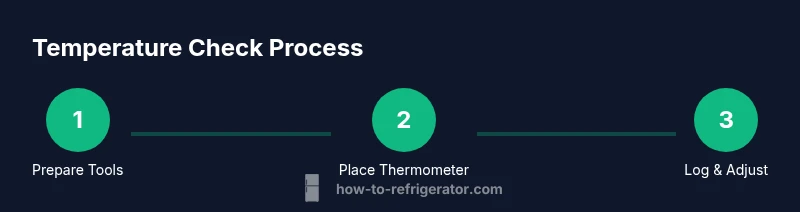
Use a simple, repeatable routine: 1) Gather your thermometer and manual; 2) Place the probe on a middle shelf and close the door; 3) Record readings after 15–30 minutes; 4) If outside the target range, adjust the thermostat one notch and wait 24 hours; 5) Re-check and log results; 6) If temps remain unstable, inspect seals, vents, coils, and door alignment, or call a pro.
Tools & Materials
- Digital fridge thermometer(Place on a middle shelf away from vents; read in °C/°F.)
- Owner’s manual or model spec sheet(Check model-specific target ranges and calibration notes.)
- Log sheet or notebook(Record date, time, and readings to spot trends.)
- Pen or pencil(For quick notes and updates in your log.)
- Clean cloth(Wipe sensor area and seals before measurement.)
Steps
Estimated time: 24-48 hours
- 1
Gather tools and locate controls
Collect your thermometer, manual, and log sheet. Find the fridge temperature control in the back or top of the interior, depending on your model, and note the current setting before making any changes.
Tip: Having everything ready prevents mid-task interruptions and ensures accurate testing. - 2
Place the thermometer correctly
Position the probe on a middle shelf, away from the door and walls, to avoid drafts from openings. Let it sit for 15 minutes to stabilize readings.
Tip: Avoid the crisper drawer or vents where airflow is irregular. - 3
Take baseline temperature readings
Record readings from three consecutive 5-minute intervals and compute the average. Note any unusually high or low values.
Tip: Use the same thermometer for consistency. - 4
Compare to the target range
Cross-check your average with the manufacturer’s recommended fridge range (usually 3–5°C). If outside, plan a small adjustment.
Tip: Minor changes often yield stable results; avoid large jumps. - 5
Adjust the thermostat if needed
Change the control by one notch, wait 24 hours, and re-test. If still off, repeat cautiously until you reach the target.
Tip: Document each adjustment to track its effect. - 6
Re-test and confirm stability
After 24 hours, re-measure and ensure readings are within range across multiple checks.
Tip: Consistency over multiple checks indicates true stability. - 7
Log results and maintain
Enter the final readings and date in your log. Schedule a monthly check and a yearly calibration review.
Tip: A simple log makes future adjustments faster and more accurate.
FAQ
What is the recommended refrigerator temperature?
Most experts suggest a fridge temperature of 3-5°C (37-41°F) and a freezer at 0°F (-18°C). Variations by model may exist, so check your manual for exact ranges.
Aim for around 3 to 5 degrees Celsius in the fridge, and 0 degrees in the freezer, adjusting only as needed per your model.
How long should I wait after changing the thermostat?
After adjusting the thermostat, allow about 24 hours for the temperature to stabilize before re-testing.
Give it about a day to stabilize before checking again.
Can I use the freezer temperature as a guide for the fridge?
No. The freezer has a separate target range and airflow; focus on the fridge range for perishable food.
The freezer is a different zone; use fridge readings to guide the fridge temperature only.
What should I do if temperatures keep fluctuating?
Check door seals, airflow vents, and condenser coils; verify the thermostat and consider professional service if the issue persists.
If temps keep bouncing around, inspect seals and coils and consider a professional check if needed.
Is a separate thermometer necessary?
Not strictly necessary, but a dedicated fridge thermometer improves accuracy and tracking over time.
A separate thermometer helps you stay precise and consistent.
How often should I test refrigerator temperature?
Test regularly—weekly during setup, then monthly or after service to ensure ongoing stability.
Test it weekly when you're adjusting, and then monthly to stay confident.
Watch Video
Top Takeaways
- Set a target fridge temperature and verify with a trusted thermometer
- Test measurements before making large adjustments
- Log readings to monitor trends and maintenance needs
- Keep coils clean and doors sealing properly for consistent cooling
- Conduct regular checks to sustain energy efficiency and food safety