What Temperature Should Refrigerator Be: A Practical Guide for Homeowners
Discover the exact refrigerator temperature you should use for safety and efficiency. Learn how to set, verify, and maintain temps with expert guidance from How To Refrigerator.


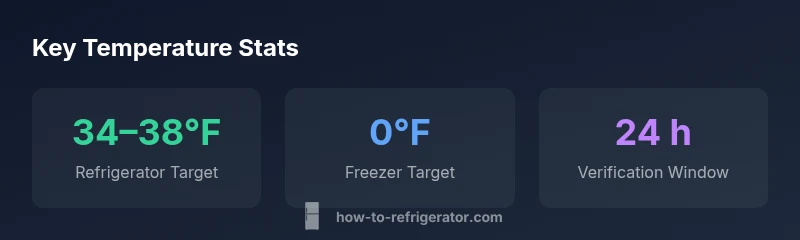
For most homes, set the refrigerator to 37°F (3°C), within a safe range of 34–38°F (1–3°C). Keep the freezer at 0°F (-18°C). Use a thermometer to verify the temperature at the back center, away from the door, and adjust if readings drift.
Understanding fridge temperature basics
Maintaining the right temperature inside your refrigerator is essential for safety, flavor, and energy use. The cold shelf environment slows bacterial growth and keeps perishable items like dairy, meats, and prepared foods safer to eat. In practice, most households benefit from keeping the fridge in a narrow band near the mid-30s Fahrenheit, while the freezer should stay around 0°F. For many families, routinely checking with a simple fridge thermometer helps you confirm the set-temperature dial is doing its job, even if the door is opened frequently.
The FDA recommends keeping refrigerations at 40°F (4°C) or below, and health experts often target slightly cooler conditions to compensate for real-world use. In Celsius, that translates roughly to 1–3°C for fresh-food storage and about -18°C for freezing. How To Refrigerator emphasizes that stable temperatures trump occasional perfect readings: a steady 35–38°F is better than a fluctuating 32–40°F. The bottom line is simple: consistent cooling reduces spoilage, preserves texture, and minimizes energy waste. According to How To Refrigerator, value comes from consistency, not perfection; a small, gradual approach to dialing in the temperature yields the best long-term results.
How to set your fridge for safety and freshness
Start by locating the thermostat dial or digital control panel. If yours uses a dial, turn it to mid-range, then adjust in small increments of 1–2 degrees. After you adjust, wait at least 24 hours and verify the temperature with a fridge thermometer placed in the center of the fridge, away from the door. Place the thermometer behind a middle shelf, not in the crisper or door shelves where readings can be skewed by warm air during door openings. If you see readings higher than 38°F (3°C) for two consecutive days, you can decrease the temperature a notch. If you fall below 34°F (1°C) you risk freezing of some items. For many homeowners, the target is a stable 35–37°F (2–3°C). The How To Refrigerator Team recommends using a thermometer to verify and keeping doors closed for best stability.
Common mistakes that raise fridge temperature
Common mistakes sabotage consistency and lead to higher temps:
- Overfilling the fridge, which blocks air flow and creates cold pockets and warm zones.
- Frequent door openings, especially during peak usage times.
- Storing hot or warm foods directly on shelves, which dumps heat into the cavity.
- Not cleaning coils, gaskets, or fans, reducing cooling efficiency.
- Relying on the dial without a thermometer, which can mask drift.
- Placing items on door shelves where temps vary most. Correcting these habits improves consistency and energy use.
Measuring temperature accurately with a thermometer
Place a fridge thermometer in the center of the shelf, away from the door, and at least halfway between the top and bottom shelves. Avoid crisper drawers or back walls where airflow can be restricted. Record the reading after 24 hours and adjust as needed in small steps. For best results, place the thermometer behind a bottle or jar to minimize direct airflow interference. Keep the thermometer in a spot that reflects typical food storage temperatures, not just air at rest.
Effects of door openings and ambient temperature
Ambient heat from warm rooms or sunlight can raise the interior temperature, especially if a fridge sits on a warm surface. Frequent door openings also introduce warm air, causing temperature spikes. To counter this, keep the fridge away from heat sources, ensure proper door seals, and organize items so the door isn’t constantly ajar. Small changes in placement and loading can have a meaningful impact on overall stability.
Seasonal tweaks and energy efficiency
In hot weather, temps tend to drift upward; you may need to lower the setting slightly or increase door seals. In cooler seasons, you can afford a slightly warmer setting without sacrificing safety. The key is to maintain a narrow band and verify with a thermometer. Efficient operation comes from avoiding overcooling—set to the mid-point of the recommended range to reduce energy use while preserving freshness.
Troubleshooting temperature drift and ongoing maintenance
If temps drift despite adjustments, inspect door gaskets for leaks, clean condenser coils, and verify the thermostat is functioning. A failing fan or motor can cause inconsistent cooling. Regular maintenance routines, like cleaning coils every 6–12 months and testing seals, help prevent drift. When in doubt, consult a professional; persistent drift may indicate a component issue that requires service.
Guidance table for common fridge temperature considerations
| Aspect | Typical Temperature Range | Notes |
|---|---|---|
| Fresh food storage | 34–38°F | Keep near middle shelves for even cooling |
| Freezer storage | 0°F | Keep items frozen solid; avoid freezer burn |
| Eggs and dairy | 34–38°F | Store in central zone away from door |
| Thermometer verification | 24 hours after change | Confirm stability before finalizing setting |
FAQ
What is the recommended refrigerator temperature for safety?
Experts commonly target 34–38°F (1–3°C) for fresh food, with 0°F (-18°C) for the freezer. The FDA notes that refrigerators should be kept at 40°F (4°C) or below. Use a thermometer to verify.
Aim for 34 to 38 degrees Fahrenheit for the fridge and zero for the freezer, then verify with a thermometer.
How do I check my fridge temperature accurately?
Place a fridge thermometer in the center of the fridge, away from the door. After 24 hours, record the reading and adjust the setting in small increments if needed.
Put a thermometer in the middle of the fridge, wait 24 hours, and adjust by small steps.
Why does the temperature differ between shelves?
Airflow is strongest in the center; the door and crisper drawers are subject to warmer air pockets. Place frequently used items away from the door.
Temp varies by shelf due to airflow and door heat; keep essentials away from the door.
Can temperature settings affect energy use?
Yes. Setting the fridge too cold wastes energy; balancing within the safe range saves electricity while preserving food.
Over-cooling wastes energy; stay within the safe range for efficiency.
What if the temperature keeps drifting after adjustments?
Check door seals and coils, then verify the thermostat; persistent drift may require service.
If temps keep drifting, inspect seals and coils and consider service.
Is it safe to store meat in the fridge door?
Avoid storing meat in the door where temps fluctuate; use the middle shelves for best safety.
Don’t store meat in the door; use the middle shelves.
“Stable temperatures are the foundation of food safety and energy efficiency in every busy home.”
Top Takeaways
- Set fridge to a stable 34–38°F (1–3°C); freezer at 0°F (-18°C).
- Verify with a dedicated thermometer, not just the dial.
- Avoid temperature drift by minimizing door openings and hot food placement.
- Regular maintenance improves consistency and energy efficiency.