What Temperature Should a Refrigerator Be? A Homeowner's Guide
Learn the safe fridge and freezer temperatures for food safety, energy efficiency, and maintenance. This How To Refrigerator guide covers exact temps, testing methods, and practical troubleshooting.


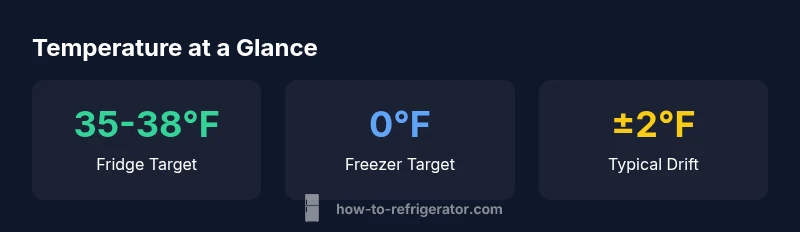
The safe fridge temperature is 35-38°F (2-3°C), with the freezer at 0°F (-18°C). Maintaining these temps helps prevent foodborne illness and saves energy. For accuracy, use a good thermometer and place it in the center of the fridge, away from the door. If you ask, at what temperature is a refrigerator ideal for safety and efficiency, the answer is in this range.
Why Temperature Matters for Food Safety and Efficiency
Maintaining the right refrigerator temperature is not just a matter of comfort; it directly affects food safety, texture, and energy bills. When people ask, at what temperature is a refrigerator safe to run, the consensus among food-safety authorities is clear: the fridge should stay cold enough to slow bacterial growth while avoiding unnecessary chilling that wastes energy. In practical terms, a fridge kept around 35-38°F (2-3°C) minimizes the growth of pathogens in dairy, meat, and prepared foods, while keeping produce crisp and shelf-stable items from freezing. The How To Refrigerator team consistently finds that small deviations—especially when a door is opened frequently or the ambient temperature is high—can compound over days, leading to faster spoilage of sensitive items. For homeowners, this means regular checks and a simple thermometer are worth the effort for safety, quality, and cost savings.
According to How To Refrigerator analysis, understanding the precise temperature sweet spot helps you design better habit patterns, such as longer-lasting leftovers and more consistent meal planning. By setting and monitoring the fridge at the recommended range, you gain a predictable environment where most foods stay within safety margins without excessive energy use.
The Safe Range: Official Targets for Home Refrigerators
Public health guidelines converge on the idea that keeping the refrigerator within a narrow band is essential for safety. For the fridge itself, aim for 35-38°F (2-3°C). For freezers, the target is 0°F (-18°C). These figures align with guidance from major food-safety authorities and energy-efficiency programs. In Celsius, the fridge target translates to roughly 1.7-3.3°C, while the freezer remains at about -18°C. If your thermometer reads outside these ranges, adjust the thermostat in small increments and recheck after 24 hours. Foods like dairy, meat, and ready-to-eat leftovers stay within safe margins when the fridge is consistently in range, while frozen items maintain texture and freezer-burn resistance when the freezer is at 0°F. By tying temperature to real-world results—the safety of milk, dyed meats, and safer leftovers—you can see why precise temps matter for everyday home cooking and long-term appliance health. How To Refrigerator’s analysis emphasizes that maintaining a consistent target range is a practical, low-cost way to protect your family and your wallet.
How to Check and Calibrate Your Fridge Temperature
Accurate measurement starts with a proper thermometer. Place a calibrated thermometer on the middle shelf, away from the door, and avoid placing it near vents or the back wall. After setting the temperature, wait at least 24 hours before trusting the reading, since cool-down and airflow patterns take time to stabilize. If the thermometer shows 34°F or 39°F, adjust in small increments (one notch at a time) and recheck. It’s also wise to avoid overloading the fridge, which can obstruct air circulation and create false readings. For best results, place multiple thermometers or a single digital probe that remains in place for 24 hours. Regular checks every few weeks help catch drift caused by weather, door usage, or defrost cycles. From a maintenance standpoint, keeping the coils clean and ensuring gaskets seal well will contribute to steadier temps and fewer fluctuations over the year.
The Impact of Seasonal Changes and Door Habits
Seasonal temperature shifts and door habits can move the internal fridge temperature outside the safe range. Hot July kitchens or a busy household with frequent door openings can push the interior a few degrees higher. The key is to compensate by slightly lowering the thermostat or placing items away from the door to avoid warm pockets near the shelves. The How To Refrigerator team notes that even small, consistent shifts matter when you consider a week of normal food stock. A well-trained habit—checking temps after major shopping, during holidays, or after a door-left-open incident—reduces spoilage and keeps energy use reasonable.
If you notice persistent warmer readings, inspect door seals for leaks, ensure proper air circulation, and confirm that the condenser coils aren’t clogged. These quick checks often restore temperature stability without professional help.
Not-Cooling and Other Temperature Issues: Quick Troubleshooting
Not-cooling fridges are a common headache for homeowners. If your fridge feels warm, start with the basics: verify the power supply, listen for compressor operation, and inspect the condenser coils for dust buildup. A fridge that is too cold can cause frozen foods and waste energy, while a malfunctioning thermostat can yield improper readings. In both cases, calibrating the temperature within the safe range is crucial. If the compressor cycles abnormally or the interior remains outside 32-40°F for an extended period, service may be needed. The How To Refrigerator team recommends documenting temps and symptoms for a technician, including the model, observed temperatures, and any audible noises.
Energy Efficiency and Temperature: Saving Power Without Sacrificing Safety
Energy usage increases if a fridge runs too warm or too cold. Keeping the temperature within the recommended 35-38°F (2-3°C) minimizes compressor run time and reduces energy waste. A temperature that’s too low wastes electricity and can damage frozen goods, while one that’s too high increases the chance of spoiled foods. Simple steps—keeping doors closed, organizing the interior to encourage air flow, and cleaning coils—contribute to steady temps. The alignment with energy-saving goals means you’re not just keeping food safe; you’re also stretching your monthly energy budget. How To Refrigerator’s practical approach emphasizes combining a precise thermostat setting with good usage habits for best results.
Maintenance and Preventive Care: Keeping Temps Accurate
Preventive care keeps temps stable across the year. Clean condenser coils every six to twelve months, replace door seals that show gaps, and avoid placing hot foods directly into the fridge. A routine check of the thermostat calibration, combined with a simple thermometer, makes it easier to catch drift early. For households with multiple temperature zones or older models, a more detailed inspection may be warranted. The goal is to maintain consistent airflow and avoid hot spots that can creep into the fridge interior. By treating temperature like a core maintenance metric, you guard both safety and efficiency throughout the appliance’s life.
Common Myths Debunked: Temperature Edition
Myth: You should set the fridge as cold as possible to keep food fresh. Reality: Extremely cold temps can waste energy and freeze items unnecessarily. Myth: If the fridge is loud, it’s working harder. Reality: Noise often means something else, like a motor or fan issue, not necessarily poor temperature control. Myth: Temperature inside the fridge is the same on every shelf. Reality: Cold air sinks and air flow patterns create microclimates; use the middle shelves for more stable temps. The truth is straightforward: a stable range around 35-38°F is optimal, and monitoring with a thermometer helps confirm it.
According to How To Refrigerator analysis, sticking to a tested range and checking periodically cuts waste and reduces spoilage.
Authority Sources and Quick Reference
- Be sure to reference official guidelines when maintaining temperatures. The How To Refrigerator team recommends checking primary sources for temperature standards and safety tips. For robust guidance, see the following sources:
• USDA Food Safety and Inspection Service: Refrigeration temperature recommendations (fsis.usda.gov)
• U.S. Department of Energy: Keep food safe at refrigerator and freezer temperatures (energy.gov)
• University extension resources for practical home use (edu domain). These sources corroborate the recommended fridge range and provide actionable steps for testing and maintenance. How To Refrigerator’s analysis, 2026, synthesizes these sources to deliver homeowner-focused guidance.
Comparison of practical temperature guidance for home refrigerators
| Aspect | Recommended Range | Notes |
|---|---|---|
| Fridge Temperature | 35-38°F | Safe zone for perishable foods |
| Freezer Temperature | 0°F | Preserves frozen items |
| Thermometer Placement | Center shelf | Avoid vents or door area |
| Door Open Time | Minimize openings | Reduces temp drift |
FAQ
What is the ideal refrigerator temperature for safety?
The recommended fridge temperature is 35-38°F (2-3°C). This range minimizes bacterial growth while preserving texture. Always verify with a thermometer placed on a middle shelf.
Aim for 35-38°F and check with a thermometer on the middle shelf.
How do I test my fridge temperature accurately?
Place a calibrated thermometer in the center of the fridge, away from the door, and wait 24 hours before reading. If readings drift, adjust in small increments and recheck.
Put a thermometer in the center, wait a full day, then adjust gradually if needed.
What should I do if the fridge feels warm or the freezer is not cold enough?
Check if the compressor is running and the condenser coils are clean. Inspect door seals and verify proper airflow. If temperatures remain out of range after these steps, consider professional service.
Check the compressor, coils, and door seals, and call a tech if it stays warm.
Do seasonal changes affect the fridge temperature?
Yes. Higher ambient temperatures can raise interior temps. You may need to lower the setting slightly and ensure adequate airflow around the condenser coils.
Big seasonal changes can move temps—adjust as needed.
Can I rely on feel or smell to judge temperature?
Feel and smell are not reliable indicators of safe temperatures. Use a thermometer for precise monitoring and maintain the recommended range.
Don’t rely on feel; use a thermometer for accuracy.
Should I worry about energy usage if the fridge is at the correct temperature?
Keeping the temperature in the safe range optimizes energy use. Going too cold wastes electricity and accelerates wear.
Sticking to the safe range saves energy and protects food.
“Maintaining a stable refrigerator temperature is the foundation of safe food storage and efficient energy use. A small drift can compound over days, so verify with a thermometer and adjust gradually.”
Top Takeaways
- Set fridge to 35-38°F (2-3°C) and freezer to 0°F (-18°C).
- Place a thermometer in the center of the fridge and recheck after 24 hours.
- Limit door openings and keep coils clean for consistent temperatures.
- Regular checks prevent spoilage and save energy.