Where Should Refrigerator Temp Be: A Homeowner's Guide to Safe, Efficient Cooling
Discover the exact fridge and freezer temperatures you should use for safety and energy efficiency. Practical ranges, how to measure, zone-by-zone tips, and common mistakes to avoid.


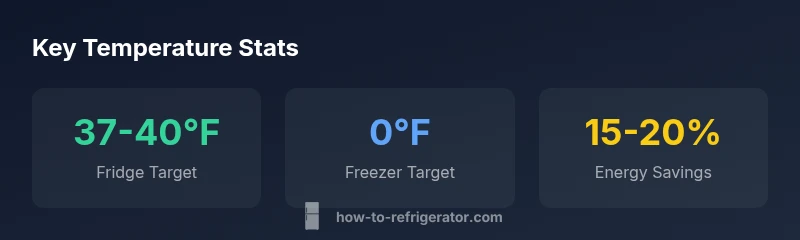
The refrigerator compartment should be kept at 37°F to 40°F (3°C to 4°C), while the freezer should be at 0°F (−18°C). Use a thermometer to verify these targets and adjust as needed. If you notice spoilage or odd temperatures, check door seals, airflow, and load patterns first before tweaking settings.
Understanding temperature fundamentals
Temperature control in a modern refrigerator influences both safety and energy use. For homeowners asking where should refrigerator temp be, the short answer is: keep the fridge compartment around 37-40°F (3-4°C) and the freezer at 0°F (-18°C). This range slows bacterial growth and preserves perishable foods without freezing items that should stay fresh. According to How To Refrigerator, consistent temperatures depend on proper airflow inside the unit, correct door seals, and minimal door openings. Temperature sensors and thermostats work together, but they can drift over time, especially in older models or in kitchens with high ambient heat. If the inside temperature drifts by more than a few degrees, you’ll likely notice faster spoilage in dairy, leafy greens, and leftovers. To start, locate the appliance manual or the temperature dial, and place a digital thermometer or two in the main shelf areas. For households with fluctuating power, consider a fridge thermometer with memory to monitor changes over 24 hours. Regular checks prevent surprises and give you a reliable baseline for further tweaks.
Why the 37-40°F range matters
Food safety guidelines consistently point to the 37-40°F window as optimal for inhibiting bacterial growth in the fridge while preserving texture and flavor. Temperatures above this range can allow bacteria to thrive, increasing the risk of foodborne illness, particularly with dairy, eggs, and meats. Colder temperatures can extend shelf life but may cause quality losses in some produce and increase energy use. The key is balance: keep perishable items safe without overworking the compressor. If your fridge runs near the top end of the range during peak hours, don’t panic—modern units tolerate temporary excursions well, but avoid chronic high temps by checking the door seal and ensuring adequate airflow.
How to verify temps accurately
- Place a digital thermometer in the center shelf, not near the door. - Use a second thermometer in the back of the fridge to gauge airflow. - Check temps after at least 24 hours of stable conditions for an accurate reading. - If you notice a consistent drift, calibrate the thermostat or consult the user manual for model-specific guidance. - For homes with long door openings, consider a thermometer with memory or alarms to catch warm spikes.
Basic temperature targets for common refrigerator configurations
| Compartment | Recommended Temp | Notes |
|---|---|---|
| Fridge | 37-40°F (3-4°C) | Most foods stored here; regular checks advised |
| Freezer | 0°F (-18°C) | Long-term storage; avoid frequent door openings |
FAQ
What is the recommended fridge temperature, and why?
The fridge should be set between 37-40°F (3-4°C). This range slows bacterial growth and preserves freshness without freezing foods. It’s the standard advised by most food-safety authorities and supported by our team at How To Refrigerator.
Keep the fridge at 37-40 degrees to keep food safe and fresh.
Can fridge temperatures vary by zone inside the unit?
Yes. The cold air is delivered from vents, so shelves closer to the back tend to be cooler, while the door and upper shelves may see slightly higher temperatures. Use multiple thermometers if you’re concerned about uneven cooling.
Yes, zones matter; you might want to check several spots.
Is it okay to use Celsius instead of Fahrenheit?
Absolutely. Many people use Celsius (3-4°C for the fridge, -18°C for the freezer). Just be consistent, especially when taking readings or recording data.
Celsius works fine if you’re consistent.
How often should I check fridge temps?
Check temperatures at least weekly, and after big meals, heavy traffic, or power outages. Use an external thermometer with a memory feature for easy tracking.
Check once a week, especially after changes.
What if my fridge feels too cold and foods freeze?
If items in the fridge start freezing, check the thermostat setting, fan operation, and cold air vents. Slightly raise the temperature and verify after 24 hours.
If things are freezing, raise the temp a notch and recheck.
What issues cause inconsistent temps besides settings?
Door gaskets, blocked vents, overcrowding, and bad condenser coils can cause uneven temps. Clean coils, ensure airflow, and avoid overloading shelves.
Door seals or airflow problems can mess with temps.
“Maintaining proper temperatures is the simplest, most effective step you can take to preserve food safety and appliance efficiency.”
Top Takeaways
- Set fridge to 37-40°F (3-4°C) and freezer to 0°F (-18°C).
- Use a thermometer to verify temps regularly.
- Check door seals and airflow if temps drift.
- Avoid hot foods directly entering the fridge.
- Schedule routine temperature audits for reliability.
- When in doubt, consult the manual or a pro.