What Temperature Should My Refrigerator Be?
Learn the ideal fridge and freezer temperatures, how to measure them, and practical tips to maintain safe, energy-efficient cooling. Practical guidance from How To Refrigerator for homeowners troubleshooting appliance issues.


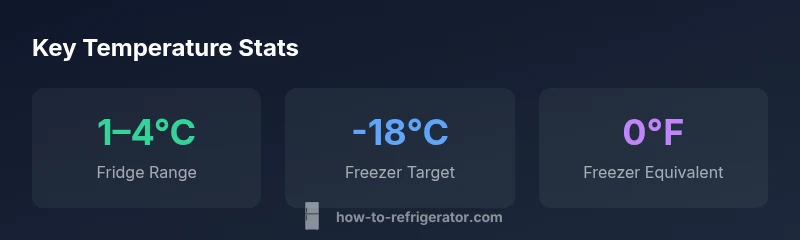
For reliable food safety and energy efficiency, set your refrigerator to a temperature range of 1°C to 4°C (34°F to 39°F). The freezer should be kept at -18°C (0°F). Regularly verify with a thermometer, minimize door openings, and adjust for hot weather or heavy use. If temps drift, inspect seals, airflow, and bins for blockages.
Why Temperature Matters for Food Safety and Energy Use
If you’re asking what temperature should my refrigerator be, you’re balancing two critical goals: keeping food safe from bacteria and minimizing energy costs. The right temperatures slow bacterial growth while reducing compressor workload. In practical terms, most homes benefit from keeping the fridge at 1°C to 4°C (34°F to 39°F) and the freezer at -18°C (0°F). Regular checks with a dedicated thermometer help you verify these ranges, and adjustments may be needed in hot weather or with heavy daily use. This approach also reduces frost buildup and stops rapid cycling that wastes energy. For households with kids or high usage, consider placing raw meats on the bottom shelf and ready-to-eat foods higher up to limit cross-contamination. Regular monitoring keeps safety margins intact and supports energy efficiency over time.
Understanding the Recommended Ranges
National and consumer guidance converges on a simple target: fridge between 1°C and 4°C (34°F–39°F), freezer at -18°C (0°F). These ranges minimize bacterial growth and preserve texture and nutrients. If you’re unsure, use a fridge thermometer placed in the middle of the main compartment, away from vents, to confirm readings. In warmer rooms or with frequent door openings, you may see momentary spikes; that’s normal as long as the average stays within the target. For households with high turnover or infants, slightly tighter control around 2°C–3°C can provide a margin for error without sacrificing safety. Remember that energy use increases when the unit runs longer to compensate for temperature drift.
How to Measure and Verify Temperatures
Start by choosing a reliable thermometer (digital, with a probe). Place it in the center of the fridge and the freezer, not near the door gasket or vents. Record temperatures at least once a day for a week, then switch to weekly checks. If your readings are outside the recommended range, inspect door seals, ensure proper airflow around coils, and avoid overfilling shelves that block air circulation. Calibrating or replacing a faulty thermostat is sometimes necessary. How To Refrigerator recommends labeling zones and keeping a small temperature log for ongoing monitoring. After you establish a baseline, you can rely on alerts or a smart fridge feature if available.
Common Causes of Temperature Drift
Temperature drift happens for several reasons: door openings, warm room temperatures, heavy loads blocking airflow, thick items near vents, or a malfunctioning defrost cycle. A poorly sealed door can let warm air in, causing the compressor to run more often and raise interior temps. Dirty condenser coils also reduce efficiency. If you notice frequent cycling or frost buildup, it’s time to inspect seals and clean coils. Some drift is normal, but persistent or large shifts indicate a problem that should be addressed to avoid food spoilage and wasted energy.
Practical Temperature Management Tips
Adopt a few practical habits to keep temps stable:
- Keep the fridge two-thirds full for steady air flow (avoid overloading).
- Place raw meats on the bottom shelf; store ready-to-eat foods higher up.
- Use a thermometer; check it weekly and after grocery runs or new weather.
- Minimize door openings; consider smart features if available to lock doors briefly.
- Check seals every 6–12 months and replace worn gaskets.
These steps help you maintain consistent temperatures with minimal effort and cost. If you use a garage or outdoor unit, a temperature-controlled environment or a second fridge in the heat may be a better option for energy savings and safety.
Temperature targets for safe refrigeration
| Area | Recommended Temperature | Notes |
|---|---|---|
| Fridge | 1°C–4°C | Keep core foods safe; avoid vents |
| Freezer | -18°C | Preserves quality for long-term storage |
| Thermometer Range | ±1°C | Verify readings regularly |
FAQ
What is the recommended fridge temperature?
The recommended fridge temperature is 1°C to 4°C (34°F to 39°F). The freezer should be -18°C (0°F).
Keep the fridge between 1 and 4 Celsius, freezer at -18, then check with a thermometer.
How often should I check temperatures?
Check temperatures at least once a week using a dedicated thermometer, and inspect seals quarterly.
Check weekly and inspect seals every few months.
What causes temperature drift?
Door openings, warm room temperatures, heavy loads blocking airflow, and faulty seals can cause temp drift.
Doors open or warm rooms can cause drift.
Is it safe to store hot foods in the fridge?
Avoid placing hot foods directly into the fridge; cool them to room temperature first to prevent spikes.
Let hot foods cool first, then refrigerate.
What should I do if my fridge isn't cooling properly?
Check power, thermostat setting, and vents; if unresolved, call a technician.
Check power and vents; call a pro if needed.
“Maintaining a stable temperature isn't just about safety—it's about energy efficiency and preserving food quality.”
Top Takeaways
- Set fridge to 1°C–4°C (34°F–39°F) and freezer to -18°C (0°F)
- Use a thermometer and log readings for accuracy
- Check seals and airflow to prevent temperature drift
- Minimize door openings and avoid overfilling
- Regular maintenance improves energy efficiency and food safety