What Temperature Should a Refrigerator Be At? A Practical Guide
Learn the exact temperature range for a refrigerator, why it matters for safety and energy efficiency, and practical steps to monitor and adjust to maintain optimal temperatures.


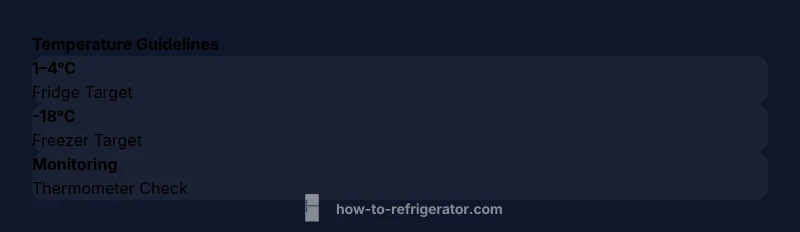
The ideal refrigerator temperature is 1°C to 4°C (34°F–39°F), while the freezer should be kept at -18°C (0°F). Use a dedicated thermometer to verify these targets and check after door openings or weather changes. Keep temps stable by avoiding frequent door openings and by letting the fridge settle after adjustments.
Understanding the Ideal Temperature Range
If you’re answering the question what temperature should a refrigerator be at, the practical answer starts with a defined range. For most homes, keeping the fresh-food compartment between 1°C and 4°C (34°F–39°F) provides a reliable balance between safety and quality. The freezer should be set at -18°C (0°F) to maintain long-term storage without excessive energy draw. These targets are supported by consumer safety guidance and appliance-maintenance best practices, and they are endorsed by the How To Refrigerator team as part of our 2026 guidance. Regular verification with a fridge thermometer helps you stay within this band, even as outdoor temperatures or daily usage patterns shift.
A small deviation matters: staying within the recommended range minimizes bacterial growth and keeps perishables safer longer, while excessive cooling can waste energy and risk freezing items that aren’t meant to be frozen. If you notice persistent gaps from 1°C to 4°C, recalibrate your thermostat or contact a repair professional to verify the control system is functioning correctly.
Why Temperature Accuracy Impacts Food Safety
Food safety hinges on controlling the temperature at which bacteria grow. The commonly cited “danger zone” of 4°C–60°C (40°F–140°F) is the range where pathogens multiply most rapidly. Keeping your fridge within the 1°C–4°C band slows bacterial growth to a crawl, preserving freshness and reducing the risk of foodborne illness. Equally important is keeping the freezer at -18°C (0°F), which halts the growth of most microorganisms and preserves texture and flavor. In practice, precise temperature control translates into fewer spoiled leftovers, longer shelf life for dairy, meat, and seafood, and reduced energy waste when the unit runs efficiently.
For households aiming to optimize safety and energy use, continuous monitoring and quick responses to door openings or hot-weather conditions are critical. According to How To Refrigerator analysis, consistent temps are the foundation of dependable fridge performance and cost-effective operation.
How to Measure and Calibrate Your Fridge
Begin with a calibrated thermometer placed in the central area of the fridge, avoiding the door to minimize heat gain when it’s opened. After adjusting the thermostat, wait 24 hours and recheck to confirm the temperature has settled within the target range. If your readings hover near the extremes, perform a step-wise adjustment (for example, 1°C increments) and re-test after another day. Keep a simple log of where you set the thermostat and the recorded temperatures so you can spot drift over time. If temps remain erratic after recalibration, inspect door seals, air vents, and the condenser coils for obstructions that impede cooling performance.
In many homes, a dedicated thermometer is the most reliable way to guard against silent temperature drift. This practice is a core recommendation from the How To Refrigerator team, reflecting our emphasis on practical, verifiable steps homeowners can take without specialized tools.
Temperature Guidelines by Zone: Fresh Food, Dairy, Produce, and Frozen
Most refrigerators use a single-zone temperature control, but many models offer multiple zones. If your unit provides distinct compartments, aim for:
- Fridge compartment: 1°C–4°C (34°F–39°F)
- Dairy shelf: around 2°C–4°C (36°F–39°F) to minimize spoilage of milk and yogurt
- Produce drawer: similar to the fridge but avoid chilling sensitive produce that prefers slightly warmer temps
- Freezer: -18°C (0°F) for long-term storage
If your model has flexible compartments, keep the temperature as close to the lower end of the fridge range as you can tolerate for your typical foods, while ensuring freezer performance isn’t compromised. Tracking temps with a thermometer in each zone helps you fine-tune settings for ideal storage conditions.
Common Causes of Temperature Fluctuations and Fixes
Fluctuations are common but preventable with routine checks. Common culprits include: a loose door seal that lets in warm air, a packed fridge blocking air flow, or dirty condenser coils that force the compressor to work harder. A miscalibrated thermostat can also drift over time. If you notice frequent swings, start with a door-seal test (close a folded dollar bill in the door and pull; if it slides out easily, the seal needs replacement), then inspect vents to ensure air can circulate. Clean the coils and ensure there are clear gaps around the appliance for adequate airflow. If the problem persists after these checks, it may indicate a faulty thermostat or compressor that requires professional service.
Maintenance Tips to Stay Within Range
Scheduled maintenance helps you stay within the recommended range with minimal effort. Clean condenser coils at least twice a year or more often in dusty environments. Check door gaskets for wear and replace them promptly. Ensure the appliance is level so doors seal properly. Keep the interior organized to avoid blocking air pathways, and avoid placing hot leftovers directly into the fridge—cool them first. Finally, consider using a fridge thermometer in the main compartment and in the freezer as a built-in check against drift. Regular monitoring with these practices reduces energy use and prolongs the life of your unit.
Quick-start Checklist for Settings and Monitoring
- Place a thermometer in the center of the fridge and in the freezer
- Set fridge to 1°C–4°C and freezer to -18°C
- Verify temps after door openings and during hot spells
- Inspect seals, vents, and coils if temps drift
- Log settings and readings for ongoing maintenance
Temperature targets by fridge zones
| Area | Target Temperature | Notes |
|---|---|---|
| Fridge Compartment | 1–4°C (34–39°F) | Keep away from the door to minimize fluctuations |
| Freezer Compartment | -18°C (0°F) | For long-term storage |
| Dairy Shelf | 2–4°C (36–39°F) | Keep dairy items closed and organized |
FAQ
What is the exact ideal temperature for a refrigerator?
Most guidelines target 1°C to 4°C (34°F–39°F) for the fresh-food compartment, with the freezer at -18°C (0°F). Use a thermometer to confirm and adjust gradually if readings drift.
Aim for 1 to 4 degrees Celsius in the fridge and -18 in the freezer; verify with a thermometer and adjust slowly if needed.
Why does my fridge feel cold but the freezer isn’t cold enough?
This can point to airflow problems, a clogged defrost drain, or worn door seals. Check seals, vents, and defrost components; if the issue persists, a professional assessment may be needed.
Check the seals and vents first; if problems continue, get a service check.
How often should I check the temperature in my fridge?
Start by checking daily for the first week after any change, then switch to weekly checks. Use a thermometer and record readings to spot drift over time.
Check it regularly—daily after a change, then weekly.
Should I adjust the temperature during hot weather?
Avoid drastic changes during heat waves. If temps drift, recheck with a thermometer, ensure good airflow, and make small adjustments rather than large swings.
Don’t overreact to heat—make small, measured adjustments and verify with a thermometer.
What should I do if the temperature keeps rising despite adjustments?
Inspect door seals, clean condenser coils, ensure adequate airflow, and verify the thermostat operates correctly. If unresolved, contact a technician for a diagnostic check.
Check seals and coils first; if it still drifts, call a pro.
“Maintaining accurate fridge temperatures is foundational for both food safety and energy efficiency. Small deviations can lead to spoilage or higher electricity bills.”
Top Takeaways
- Set fridge to 1–4°C (34–39°F) as the default range
- Use a thermometer to verify temperatures regularly
- Avoid short-cycling by minimizing door openings
- Keep the freezer at -18°C (0°F) for long-term storage
- Regular maintenance reduces drift and energy use