Understanding the Temperature Range of a Refrigerator
Discover the ideal temperature range for refrigerators, how to measure it, and practical steps to maintain safe, energy-efficient cooling in your home.


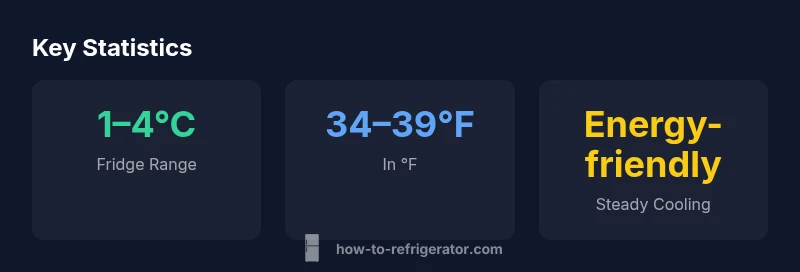
The recommended temperature range for the refrigerator is 1°C to 4°C (34°F to 39°F). Maintaining this range slows bacterial growth, preserves food quality, and can lower energy use. Use a dedicated thermometer in the middle of the fridge, check regularly, and avoid frequent door openings or hot leftovers that push temperatures outside the ideal band.
The science behind fridge temperatures
Temperature is more than a number on a dial; it governs how quickly bacteria multiply, how long foods stay safe, and how efficiently your appliance runs. Public health guidelines define a “danger zone” for perishable foods as roughly 40°F to 140°F (4°C to 60°C), where bacteria multiply rapidly. For home refrigeration, most food safety authorities agree that keeping the interior near 34°F to 39°F (1°C to 4°C) minimizes risk while avoiding unnecessary energy use. The How To Refrigerator team notes that while different models and configurations can create minor variances, the 1–4°C band is a practical target across most standard kitchen fridges. Small fluctuations are normal, but large swings can compromise milk, dairy, and leftovers. If you want to protect your family and reduce waste, regularly verify that your cooling system maintains this core range.
To help you reason about where your fridge sits, remember: interior temperatures are not perfectly uniform. Shelves closest to the door often run warmer, while zones near the back and bottom can be slightly cooler. This is why a dedicated thermometer placed in the middle of the fridge, away from vents, provides the most representative reading. (For official guidance, see FDA and CDC resources linked in the article.)
How to verify your temperature is in range
Verification is the first line of defense against improper cooling. Start with a reliable thermometer—digital models with a probe tend to give the most stable readings. Place the sensor in the center shelf, not in the door shelf or crisper drawers. Allow the fridge to reach steady state—24 hours is usually enough for a baseline measurement. Record the reading at the same time each day for a week to account for door openings and load changes.
If readings consistently fall outside 1–4°C, check for common culprits: a worn door gasket, overfilled shelves that impede airflow, or a blocked air vent. Calibrate temperature controls according to the manufacturer’s instructions and consider moving items away from the back to improve air circulation. If you’re unsure about the cause, consult your model’s manual or a professional technician. According to FDA guidelines (linked in the sources), maintaining stable refrigerator temperatures is critical for food safety.
Common ranges and model variability
Not every refrigerator behaves the same. Some units have multiple temperature zones, with the crisper section running slightly warmer than the dairy shelf. French-door and side-by-side designs can exhibit larger gradient differences between top and bottom, especially when doors are opened frequently. However, for routine food storage, aiming for the mid-range of 2–4°C in the main compartment captures the majority of scenarios. If your model has a separate temperature setting for the freezer, keep it at the standard −18°C (0°F) for optimal ice storage and to prevent frost buildup from affecting the refrigerator’s cooling cycle. In practice, most households will not need to chase perfect uniformity; a consistent ambient temperature and minimal door openings usually suffice.
A note on model diversity: older top-freezer units occasionally run warmer on warmer days, while newer energy-efficient models may fluctuate less due to improved compressors and sensors. Regardless of the model, the 1–4°C target remains a solid starting point.
Food safety implications by temperature range
Staying within the 1–4°C window reduces the likelihood that dairy, meat, and prepared foods will fall into unsafe conditions between checks. Dairy products, eggs, and ready-to-eat foods are particularly sensitive to temperature swings. If the fridge drifts toward the upper end of the range or briefly rises above it, be mindful of freshly prepared or long-stored items like leftovers. The American diet safety guidelines emphasize prompt refrigeration of perishable foods and keeping the cold chain intact as much as possible. While the exact time that food remains safe depends on several factors (type of food, container, and initial freshness), consistent storage at or below 4°C is a widely endorsed baseline. For authoritative details, you can review FDA and CDC resources cited in this article.
In practice, you’ll reduce risk by not overfilling, avoiding hot transfers into the fridge, and ensuring good air circulation around foods that emit moisture, such as vegetables and meats.
Practical tips to maintain stable temperature
Maintaining a steady refrigerator temperature is a combination of proper loading, good airflow, and clean components. Here are practical steps homeowners can take:
- Position the thermometer in the middle shelf, away from the door and vents.
- Keep the door closed as much as possible; avoid leaving the door ajar while you search for items.
- Do not overfill; allow air to circulate around items—especially tall containers and tall bottles.
- Clean condenser coils every 6–12 months, depending on usage; dusty coils reduce cooling efficiency and can raise interior temperatures.
- Check door seals for cracks or hardening; replace gaskets as needed to prevent cool air from leaking out.
- Keep the fridge at a stable ambient temperature—ideally in a kitchen environment that isn’t extremely hot or cold, which can affect performance.
These tips not only help maintain the safe temperature range but also improve energy efficiency, reduce wear on components, and extend the life of the appliance. As you implement these changes, you’ll notice more consistent readings on your thermometer and fewer fluctuations when you open the door.
For further guidance, consult the official food safety resources linked in the sources section of this article.
How to troubleshoot temperature problems
If your fridge won’t reach the 1–4°C range, start with the basics. Inspect the door gasket for wear or gaps and test for cold air leaks by placing a piece of paper at the door and closing it—if the paper slides out easily, the seal may be compromised. Next, examine the condenser coils for dust and debris; cleaning them can restore airflow and cooling efficiency. Verify that the thermostat is functioning by adjusting the control to a colder setting and monitoring changes over 24 hours. If the temperature remains high after these checks, consider service options: a faulty compressor, a sealed refrigerant issue, or a failing fan require professional attention. Always unplug the unit before performing any invasive maintenance. For persistent issues, refer to the model’s repair guide and the How To Refrigerator team’s troubleshooting resources.
How to optimize energy use while staying in range
Energy efficiency and proper temperature are not enemies. Moderate adjustments can reduce energy consumption without compromising safety. Keep the door closed, position the fridge away from heat sources (ovens and sunlit windows), and ensure the unit isn’t overfilled. Clean condenser coils to improve heat transfer; a dirty coil forces the compressor to work harder, which can cause temperature fluctuations and higher utility bills. If you’re considering a new fridge, look for models with a narrow operating range around 3°C and check for energy-efficient features such as variable-speed compressors and high-efficiency insulation. When possible, enable energy-saving modes during off-peak hours while maintaining a safe temperature range.
Quick maintenance routine for consistent cooling
- Weekly: check that the thermometer reading stays within 1–4°C and that the door is sealing properly.
- Monthly: inspect door seals for cracks, clean the seals, and clean the condenser coils if accessible.
- Biannually: measure interior temperature gaps with a thermometer on different shelves to understand distribution and adjust items accordingly.
- Annually: service the thermostat and inspect refrigerant lines if you notice persistent temperature drift that isn’t explained by loading or external heat.
A simple, regular routine can prevent temperature drift and help you keep food safe and your fridge running efficiently. Remember, small, consistent steps beat infrequent, large changes in maintaining the desired range.
Food safety quick-reference chart
- Target fridge temperature: 1–4°C (34–39°F)
- If food starts to smell sour or look off, discard it and recheck the fridge temperature
- Use a thermometer in the center to ensure accuracy
- For peak performance, avoid turning the thermostat to the coldest setting unless you’ve observed a real need
- Close the door quickly and minimize door openings during hot weather or after grocery shopping
Common refrigerator temperature guidance
| Aspect | Recommended Range | Notes |
|---|---|---|
| Fridge Temperature | 1–4°C (34–39°F) | FDA/CDC guidance aligns with this range for safety |
| Door Temperature | Higher than interior | Best practice: minimize door openings and drafts |
| Freezer Temperature | -18°C (0°F) | Keep separate from fridge to avoid cross-effects |
FAQ
What is the ideal fridge temperature?
The widely recommended range is 1°C to 4°C (34°F to 39°F). This balances food safety and energy efficiency. Use a thermometer to verify and adjust as needed.
Aim for 1 to 4 Celsius and check with a thermometer to stay within the safe zone.
Why does my fridge feel warm at times?
Variations can occur from door openings, poor seals, or airflow restrictions. Check gaskets, clear vents, and avoid overloading shelves. If temperatures stay high after adjustments, consider service.
Door openings and blocked vents can warm things up; check seals and airflow.
Can different parts of the fridge have different temperatures?
Yes. The top, back, and door areas can read differently from the center due to airflow patterns. Use a thermometer in the middle to monitor the overall range and adjust loading accordingly.
Yes—middle readings give a reliable overall picture.
How often should I check fridge temperature?
Check at least once a week for a month when establishing a baseline, then monthly or after major use changes. Keep notes to spot trends.
Check weekly when you’re tracking updates, then monthly.
Does summer heat affect fridge temperature more?
Yes. Higher ambient heat can cause more cycling and potential drift. Improve insulation around the fridge, keep it away from heat sources, and ensure doors seal properly.
Yes, hot days can push temps up if the fridge isn’t well-sealed.
What should I do if my fridge won’t reach 1°C?
First, verify the thermometer and seals. Clean coils, ensure vents aren’t blocked, and test the thermostat. If the issue persists, call a professional technician.
If it won’t reach 1°C after checks, call a pro.
“Maintaining the correct temperature is the simplest, most effective step a homeowner can take to protect food safety and reduce energy use.”
Top Takeaways
- Set fridge to 1–4°C (34–39°F) and verify with a thermometer.
- Place the thermometer in the middle shelf for accurate readings.
- Minimize door openings to prevent temperature spikes.
- Keep condenser coils clean and seals intact to maintain stability.
- If temps drift, follow a stepwise troubleshooting checklist.