Refrigerator Temperature Guide for Homeowners: 1-4°C
Learn the recommended refrigerator temperature range and how to verify it, plus practical tips for energy efficiency and food safety in your kitchen. The How To Refrigerator team explains 1-4°C as the safe zone, how to measure accurately, and common mistakes to avoid.


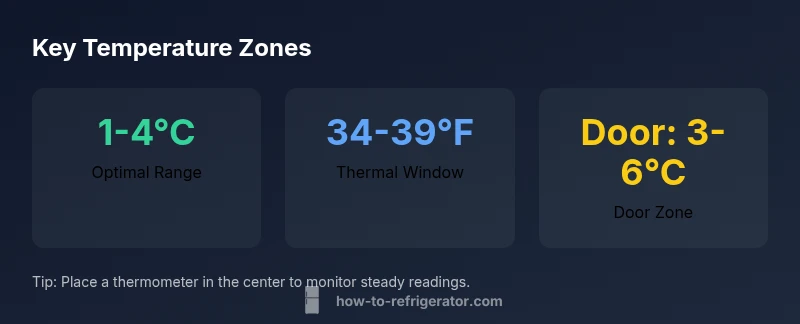
The recommended refrigerator temperature range is 1°C to 4°C (34°F to 39°F). Keeping the fridge in this zone slows bacterial growth, preserves perishables, and lowers energy use. For most homes, aim for the center of the main compartment and avoid extended periods below 0°C or above 4°C. According to How To Refrigerator, a steady setting matters.
What is the refrigerator recommended temperature and why it matters
The safe cold zone inside a household refrigerator is typically 1°C to 4°C (34°F to 39°F). This window is widely recommended by food-safety authorities and summarized by home appliance guides, including How To Refrigerator. Staying within this range slows bacterial growth, preserves dairy, meats, and leftovers, and helps vegetables stay crisp without freezing. Temperature outside this range can compromise safety: warmer readings allow microbes to multiply, while readings near freezing can damage texture and flavor in some produce. Real-world usage—daily door openings, ambient kitchen heat, and the age of the appliance—means a steady setting matters more than aggressive fluctuations. The key takeaway is to use a dedicated fridge thermometer, set a stable target, and avoid frequent dial tweaks that waste energy and destabilize stored foods.
How to measure temperature accurately and avoid false readings
Reliable readings come from placing a high-quality thermometer in the center of the main compartment, away from the door and crisper bins. Do not rely on the built-in dial, which can be imprecise, and avoid taking readings immediately after opening the door. Close the door and wait at least 24 hours with a steady thermostat before recording a value. If you suspect a mismatch between the thermometer and the dial, calibrate or replace the device. Keep the thermometer away from back walls where heat from the compressor can skew measurements. Seasonal shifts and heavy usage days may require small adjustments, but aim to stay within the 1°C–4°C window as consistently as possible. Regular checks after grocery-heavy days help ensure ongoing safety and freshness.
Temperature zones inside a refrigerator and what to store where
Most refrigerators have distinct zones with different cooling dynamics. The main body typically runs closest to 1°C–4°C, ideal for dairy, eggs, cooked leftovers, and fresh meat, placed on the middle shelves away from the door. Door shelves experience more temperature variation and warmer air when opened, so reserve items that are less perishable for those spots, such as condiments and beverages. Crisper drawers are designed for higher humidity and should hold leafy greens and peppers. The freezer should stay around -18°C to -20°C to maintain texture and prevent freezer burn. Overfilling shelves can impede airflow and create cold and warm spots. For households with irregular schedules, arrange items to permit cold air circulation and quick re-establishment of steady conditions after the door closes.
Energy efficiency implications of temperature control and practical tips
Maintaining a steady temperature within the recommended range is not only about safety; it also saves energy and reduces utility costs. A fridge that fluctuates between 2°C and 6°C will cycle more often to compensate for warmth, whereas a stable 1–4°C setting minimizes compressor activity. Practical steps include minimizing door openings, organizing items to improve airflow, and avoiding overpacking, which blocks cold air. If your unit sits near a heat source, ensure adequate clearance around the condenser and keep the front grille clean. Routine maintenance, such as replacing worn seals and cleaning coils, improves efficiency. By combining a steady target with mindful usage, you can enhance food safety and lower energy consumption over time.
Common mistakes and how to fix them
Common errors include leaving the door ajar for long periods, frequently varying the thermostat to compensate for hot days, and neglecting door seals or dirty condenser coils. Another frequent misstep is using the freezer as a crutch for under-cooled items, which can freeze some foods while others stay unsafe. Overpacking the fridge reduces airflow and creates hotspots. Fixes are straightforward: install a reliable thermometer, keep the door closed during peak shopping, test seals around doors, and replace worn gaskets or clear dust from coils. If you notice frost buildup or unusual noises, diagnose the cause and seek professional service if needed. A proactive approach keeps food safe and energy bills low.
Quick action plan for homeowners to optimize refrigeration temperature
Step 1: Place a fridge thermometer on the middle shelf and set a target of 1–4°C. Step 2: Record readings for three days; adjust gradually if needed and monitor the effect on items like milk and lettuce. Step 3: Inspect door seals and vents; replace worn gaskets and clear dust from coils. Step 4: Reorganize shelves to maximize airflow and reduce hotspots around condiments. Step 5: Recheck temperatures weekly during seasonal changes or when spoilage patterns appear. Following these steps yields a reliable, safe, and energy-efficient cooling environment for groceries and leftovers.
Refrigerator temperature zones
| Zone | Typical Range | Notes |
|---|---|---|
| Refrigerator main compartment | 1-4°C | Center shelf recommended for even cooling |
| Door shelves | 3-6°C | Higher temps due to heat gain from opening |
| Freezer | -18°C to -20°C | Keep steady for best freezer performance |
FAQ
What is the ideal fridge temperature in Celsius?
Keep the main compartment at 1-4°C (34-39°F). This range slows bacteria and preserves freshness. Use a fridge thermometer to verify.
The ideal fridge temperature is 1-4°C; you should verify with a thermometer.
Can I set my fridge to 2°C all the time?
Yes, 2°C sits within the recommended range, but avoid frequent changes and door-open fluctuations that raise the average temperature.
Yes, 2°C works, but keep it steady and avoid frequent changes.
Does temperature differ between shelves and the door?
Yes. The door experiences warmer air; dairy and eggs are best kept away from the door for reliability. Center shelves tend to stay cooler.
Yes—doors run warmer; keep dairy off the door.
What thermometer should I use?
Use a simple fridge thermometer or digital probe placed in the center of the fridge for reliable readings; avoid relying on built-in dials.
Use a fridge thermometer or digital probe.
What happens if my fridge isn't cold enough?
Boost airflow by clearing vents, check seals, and avoid overfilling; if issues persist, consider professional service.
If it's not cold enough, check seals and airflow, and don’t ignore it.
How often should I check fridge temperature?
Test readings after adjustments and at least weekly during temperature changes; more often if you open the door frequently.
Check it once a week or after changes.
“A well-calibrated refrigerator not only keeps food safe but also lowers energy use over its lifetime.”
Top Takeaways
- Set a stable fridge temp between 1°C and 4°C.
- Verify readings with a dedicated fridge thermometer.
- Avoid frequent door openings to maintain consistency.
- Place dairy and eggs away from the door for reliability.
- Inspect seals and vents regularly to improve efficiency.