What's the Refrigerator Temperature? A Homeowner's Guide
Discover the correct fridge and freezer temperatures, how to measure them, and practical fixes to keep food safe, energy-efficient, and waste-free. This How To Refrigerator guide helps homeowners troubleshoot temperature issues with clear, actionable steps.


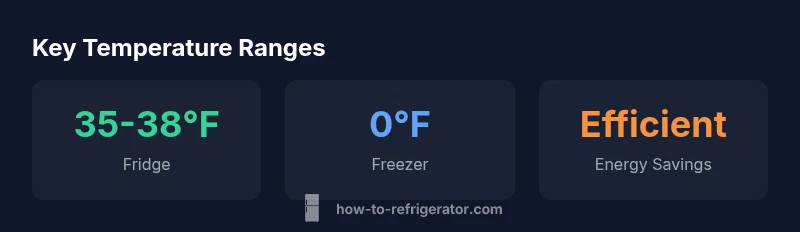
Most experts recommend keeping the fridge at 35-38°F (1.7-3.3°C) and the freezer at 0°F (-18°C). This range slows bacterial growth, preserves freshness, and minimizes energy use. If your thermometer reads outside these values, your cooling system may struggle or be poorly sealed. In this guide, How To Refrigerator explains how to verify and maintain the correct temperature.
Why Temperature Accuracy Matters
Understanding what's the refrigerator temperature isn't just about comfort; it directly affects safety, quality, and energy use. An improperly set fridge or a malfunctioning thermostat can allow bacteria to multiply or spoil perishable foods. According to How To Refrigerator, maintaining the main compartment at 35-38°F (2-3°C) and the freezer at 0°F (-18°C) creates a buffer against growth and keeps dairy, meats, and produce in peak condition. The How To Refrigerator Team notes that many households drift because of frequent door openings, crowded shelves, and neglected door seals. A few degrees off can mean more frequent compressor cycling, higher energy bills, and a greater risk of illness if you eat suspect leftovers. In this guide you’ll learn how to verify the temps, calibrate if needed, and implement practical steps to maintain consistent cooling across all zones.
How to Measure and Maintain It
Start with a dedicated fridge thermometer placed in the center of the main compartment, away from the door and vents. Digital thermometers are easiest to read, but a well-calibrated dial model can work too. Allow the fridge to reach steady-state temperatures for at least 24 hours after any change, and check readings on multiple shelves. If you notice drift, run a quick self-test: check door seals for gaps, ensure the gasket is clean, and confirm coils are not blocked by dust or food; dirty coils force the compressor to work harder. Regular maintenance, including cleaning shelves and rearranging items to allow air flow, will stabilize temperatures and reduce energy usage. If your thermometer reading diverges from the recommended range by more than a few degrees, consult the appliance manual or a qualified technician. How To Refrigerator provides practical steps to verify temperatures and avoid common misreadings.
Temperature Zones in Your Fridge
Different parts of the fridge are meant to stay different temperatures, which affects what you should store where. In most models, the back of the main compartment stays reliably near 35-38°F; the crisper drawers are slightly warmer to preserve produce; the door shelves are the warmest due to frequent opening. For best results:
- Top shelf: 35-38°F, ideal for ready-to-eat foods and leftovers.
- Middle shelf: 35-38°F, consistent with top shelf readings.
- Bottom shelf: 34-38°F; dairy products and leftovers stay longer here to minimize temperature fluctuations.
- Crisper drawers: 32-40°F with higher humidity settings if needed.
- Freezer compartment: 0°F or lower to maintain frozen foods. Store raw meats on the bottom shelf in a leak-proof container to prevent drips. This reduces cross-contamination and helps ensure uniform readings when you measure with a thermometer.
Common Temperature Mistakes and Fixes
Common mistakes include frequent door openings, placing hot foods directly in the fridge, overfilling shelves blocking air vents, and neglecting door gaskets. These actions cause temperature drift and uneven cooling. Fixes:
- Keep doors closed and avoid habitually leaving them ajar.
- Let hot foods cool before refrigeration.
- Don’t overload shelves; allow air to circulate.
- Clean and inspect door gaskets; vacuum dust from coils at least twice a year.
- Regularly test different shelves with a thermometer to confirm readings.
How to Adjust Temperature on Different Models
Most modern fridges allow temperature adjustments via a control panel, dial, or app. If you have a dial, start at the middle setting and wait 24-48 hours to recheck readings. Digital panels should be set to the mid-range and tested after any door-opening pattern changes. Some smart models provide separate fridge/freezer controls in the app; use these to fine-tune individual zones. Always refer to your model's manual for exact increments and recommended presets.
Practical Tips for Real-World Use
Keep a small fridge thermometer in the main compartment and check it weekly, especially during heat waves, holidays, or after grocery runs. Place the thermometer away from the door and near the center shelf for an accurate read. Avoid placing warm leftovers directly into the fridge; instead, chill them rapidly using shallow containers. Maintain consistent airflow by not overpacking and cleaning coils quarterly. If you notice repeated temperature swings, consider scheduling service—persistent drift can indicate a failing seal or faulty thermostat.
Quick Reference Check
Use this quick checklist to confirm your fridge is operating within the safe temperature range. After a change, wait 24 hours and re-check:
- Fridge temperature on the center shelf: 35-38°F.
- Freezer temperature: 0°F.
- Door seals: clean and inspect for cracks.
- Airflow: avoid overpacking and keep vents clear.
- Coils: vacuum dust from condenser coils at least twice a year.
- Power events: after outages or moves, recheck temps.
- If readings stay out of range after adjustments, schedule service with a qualified technician. The How To Refrigerator Team emphasizes following model-specific guidance and staying vigilant to prevent spoilage and waste.
Temperature ranges by compartment
| Area | Recommended Temperature | Notes |
|---|---|---|
| Fridge (main compartment) | 35-38°F | Maintain consistent temp reading |
| Freezer | 0°F | Keep stable for best results |
| Thermometer placement | Center shelf | Readings read accurately |
FAQ
What is the recommended temperature for a refrigerator?
Keep the main fridge at 35-38°F (1.7-3.3°C) to slow bacterial growth and preserve freshness. Use a separate thermometer for accuracy.
Keep your fridge at about 37 degrees Fahrenheit for safety and freshness.
How do I check fridge temp without built-in thermometer?
Place a freestanding fridge thermometer on the middle shelf, away from the door, and check after 24 hours.
Use a separate fridge thermometer in the middle shelf for 24 hours.
What should I do if the fridge reads too warm?
Inspect door seals, vents, and condenser coils. If readings stay high, recalibrate and consider service.
Check seals and coils, then recalibrate or call for service if it stays warm.
Does the freezer temperature affect fridge performance?
Yes. Keep the freezer at 0°F; if it drifts, the fridge may work harder to maintain temperature.
Keep the freezer at 0°F to help the fridge stay stable.
How often should I recalibrate the thermometer?
Check accuracy monthly and after power outages or a move; recalibrate per the thermometer's instructions.
Check it monthly or after power events.
“Maintaining the right temperatures is the simplest way to protect food and extend your appliance's life.”
Top Takeaways
- Check fridge Temps with a dedicated thermometer
- Keep temps in the recommended range to slow spoilage
- Inspect seals and coils regularly to prevent drift
- Calibrate and adjust based on readings