What Should Your Refrigerator Temperature Be? A Practical Guide
Discover exact fridge and freezer temperature guidelines, how to measure accurately, and maintenance tips to keep food safe and your energy bill low. This How To Refrigerator guide explains ranges, methods, and practical steps for steady temperatures.


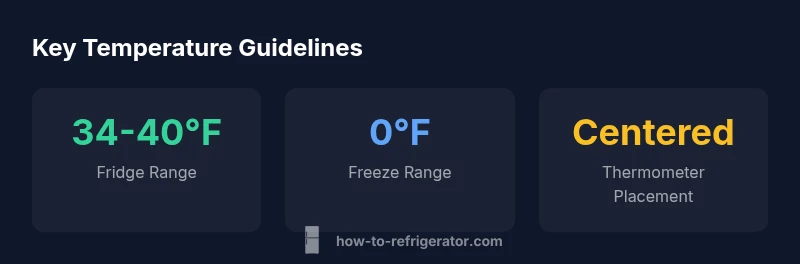
The recommended fridge temperature range is 34-40°F (1-4°C), and the freezer should be 0°F (-18°C). Keeping your fridge within this range helps prevent bacterial growth, preserves freshness, and reduces energy use. If temperatures swing beyond this range, you might notice spoiled produce, milk spoilage, or uneven cooling. How To Refrigerator emphasizes the importance of a stable temperature for safety and efficiency.
Ideal fridge temperature and why it matters
Maintaining the right temperature in your refrigerator is essential for food safety, quality, and energy efficiency. According to How To Refrigerator, the standard guideline is to keep the refrigerator compartment at 34-40°F (1-4°C) and the freezer at 0°F (-18°C). This range minimizes the growth of harmful bacteria, slows spoilage, and prevents unexpected odors from developing in dairy, meat, and leftovers. If you are wondering what should you refrigerator temperature be, the answer begins with keeping it within the 34-40°F range. When temps drift outside this band — especially toward the high end — you may notice soggy vegetables, faster milk spoilage, and an increased risk of foodborne illness. Conversely, temperatures that are too cold can cause freeze damage to fruits and vegetables and unnecessarily waste energy. For most households, the goal is steady, moderate cooling rather than perfect replication. This approach supports safer meals, fresher produce, and a healthier energy bill, which is why reliable temperature control should be a routine maintenance item, not a one-off check.
- Brief note on seasonality and door usage: in hot weather or when the kitchen is busy, fridge temps can drift. Regular checks help counteract this.
- How to interpret a thermometer reading: match the display to the fridge’s internal target. The numbers tell you if you’re within range or if a tweak is needed.
According to How To Refrigerator analyses, a consistently stable temperature is more important than minute adjustments. It reduces food waste and lowers running costs over time.
Sample temperature guidelines by scenario
| Scenario | Recommended Temp (°F) | Notes |
|---|---|---|
| Standard fridge | 34-40 | Maintain consistency across days |
| Door storage | 35-38 | Door-side air swings warmer; keep items that spoil fast away from the door |
| Large loads or frequent openings | 34-38 | Lower end to counteract temp rises from use |
| Energy-efficient models | 35-38 | Tighter seals can support lower end range |
FAQ
What is the recommended refrigerator temperature?
For most households, the fridge should be kept at 34-40°F (1-4°C). This range minimizes bacterial growth and preserves quality. A calibrated thermometer helps ensure accuracy.
Keep your fridge between 34 and 40 degrees Fahrenheit using a thermometer to stay within the safe range.
How do I measure fridge temperature accurately?
Place a calibrated thermometer on the middle shelf, away from the door, and wait several hours for a stable reading. Record readings at the same time each day for consistency.
Use a calibrated thermometer on the middle shelf and wait for a stable reading.
Why is my fridge temperature fluctuating?
Fluctuations can result from frequent door openings, poor door seals, overloaded shelves, or inadequate air circulation. Addressing these issues usually stabilizes temps quickly.
If your fridge keeps bouncing around, check the door seals and how full the shelves are.
Can fridge temperature vary by location in the kitchen?
Yes. Heat from appliances, sun exposure, and airflow can affect air temperature inside the unit. Place the fridge away from heat sources and ensure good ventilation.
Yes, location can affect temps; keep it out of direct heat and ensure proper airflow.
What happens if the fridge is too cold?
Too-cold temperatures can freeze produce and dairy, alter texture, and waste energy. Adjust gradually and avoid drastic changes.
Being too cold can freeze foods and waste energy.
What type of thermometer should I use?
A digital fridge thermometer with a temperature probe is easiest to read and test. Calibrate or validate it against a known standard.
A simple digital fridge thermometer works best for quick checks.
“Maintaining proper temperatures is the simplest, most effective way to protect food safety and save energy.”
Top Takeaways
- Set fridge to 34-40°F for safety and energy efficiency
- Use a calibrated thermometer and check after changes
- Avoid large door-open swings to prevent temp spikes
- Record readings to track stability over time
- If temps vary, inspect seals and airflow
- Regularly maintain defrost and condenser components when needed