What Should Refrigerator Temp Be? A Practical 2026 Guide
Learn the exact fridge temperatures you should aim for, how to measure them, and steps to maintain consistent cooling. This guide covers Fahrenheit and Celsius ranges, common myths, and a quick-start plan for 2026.


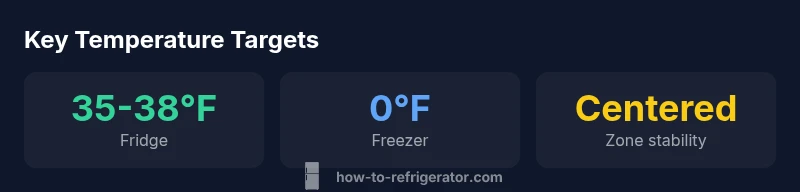
According to How To Refrigerator, the standard target is 35-38°F (1.7-3.3°C) for the fridge and 0°F (-18°C) for the freezer. Keeping the main compartment within this range minimizes bacterial growth, preserves texture, and reduces energy use. If you have separate crisper zones, aim for similar interior accuracy. These targets account for typical home usage, including door openings and warm pulses after adding groceries.
Why the Right Refrigerator Temperature Matters
Maintaining the correct refrigerator temperature is not just about keeping your milk fresh. It directly impacts food safety, texture, and overall energy bills. When temperatures drift above the safe range, pathogenic bacteria can multiply faster, especially in dairy, meat, and prepared foods. Conversely, temperatures that are too cold can cause texture changes and unnecessary energy consumption. The recommended fridge and freezer targets establish a baseline that reduces waste, extends shelf life, and minimizes trips to the repair shop. For homeowners, understanding what should refrigerator temp be in practice helps you design a simple, repeatable maintenance routine that keeps your kitchen running efficiently.
By locking in stable temperatures, you also improve the reliability of features like ice makers and water dispensers, which depend on consistent cold conditions. The How To Refrigerator team has found that a predictable temperature profile lowers the likelihood of spoiled groceries and unexpected defrost cycles. That consistency translates to fewer surprises and more confidence in your food safety strategy.
What the Numbers Mean: Interpreting Temperature Units
Temperature specs come in both Fahrenheit and Celsius. In the United States, Fahrenheit is common for everyday use, but Celsius is widely used in many appliances and energy guides international readers. A fridge target of 35-38°F roughly translates to 1.7-3.3°C, while the freezer target of 0°F is -18°C. If your thermometer reads a bit outside this range, small adjustments are typically enough to bring readings back into spec. When comparing models or altering settings, always confirm which unit your thermostat uses and convert if needed. Keeping both scales in mind helps you communicate with service representatives and follow recipe safety guidelines more accurately.
Practical tip: write down your target ranges in both units and tape them inside the fridge door as a quick reference.
How to Measure and Adjust Your Refrigerator Temperature
Accurate measurement starts with a proper thermometer placement. Place a calibrated fridge thermometer in the center of the main compartment away from the door and vents. Check after 24 hours of stable conditions, then adjust the thermostat in small increments (one notch or 1-2°F / 0.5°C at a time). Re-check after another 24 hours. If your model has multiple compartments, repeat the process for the crisper sections and the door shelves to account for variations. Maintain the door closed as much as possible during measurements to avoid false readings.
For ovens and microwaves, user manuals often suggest storing certain foods in specific zones. Your refrigerator should not share cooling duties with the freezer in the same vent pathway, so ensure the vents are free of obstructions and the condenser coils are clean. Regular cleaning and dust removal can improve temperature stability.
Zone-by-Zone Temperature Considerations
Not all parts of the fridge stay at the same temperature. The main compartment should be near the 35-38°F target, while door shelves are typically warmer due to frequent openings. Crisper drawers are often slightly warmer than the main shelves but still within the safe range for most produce. If you notice a consistent temperature difference between zones, it might indicate a door seal problem or airflow restriction.
Tips to keep zones consistent:
- Keep doors closed as much as possible and avoid overloading shelves.
- Store dairy and raw proteins away from the door so they remain cool even during frequent use.
- Clean gaskets around doors regularly to maintain a tight seal.
- Ensure the condenser coils are dust-free—this improves overall temperature stability.
Debunking Myths About Fridge Temperature
Many home myths suggest that you can “set and forget” fridge temperatures with no monitoring. Reality shows temperature drift can occur from simple daily activities like opening the door, adding hot groceries, or a crowded fridge. Another myth is that all models share the same ideal ranges; in fact, some premium units have adaptive thermostats or multiple temperature zones that require different strategies. The most important takeaway is to use validated thermometers and test readings frequently rather than relying on labels or intuitive guesses.
Calibrating Thermostats and Using Thermometers Effectively
Begin by locating the thermostat and any digital readouts. If your unit offers a separate control for the freezer or extra compartments, test each one independently. Use a dedicated fridge thermometer in the main compartment and another for the freezer. After adjustments, allow 24 hours for the system to stabilize and check readings again. If large fluctuations persist, it may indicate a failing seal, a faulty sensor, or an aging compressor. In such cases, consult a professional for a diagnostic check.
Practical Maintenance for Different Fridge Types
Different configurations (top-freezer, bottom-freezer, French-door, side-by-side) benefit from the same principles but may require menu-driven tweaks. For example, French-door models often have a larger capacity and more complex sensors—so periodic calibration checks become more important. Regular maintenance tasks include cleaning coils, testing gaskets, and verifying proper drainage to prevent frost buildup that can affect cooling efficiency. Always refer to your model’s manual for model-specific steps.
Maintenance Checklist to Keep Temperatures Stable
- Check temps at least once a month with a thermometer.
- Clean condenser coils every 6-12 months or as recommended by the manufacturer.
- Inspect door seals for cracks and replace damaged gaskets promptly.
- Avoid placing hot items directly in the fridge; cool them before storing.
- Keep the fridge organized to minimize opening time and airflow disruption.
Temperature targets by zone
| Zone | Recommended Temperature | Notes |
|---|---|---|
| Fridge Main Compartment | 1.7-3.3°C (35-38°F) | Target range; avoid extremes |
| Freezer | -18°C (0°F) | Standard freezing point |
| Crisper Drawers | 1.7-3.3°C (35-38°F) | Same as fridge main, if possible |
| Door Shelves | 3-5°C (37-41°F) | Warmest area; avoid storing dairy here |
FAQ
What is the recommended temperature for the fridge and freezer?
For most homes, set the fridge to 35-38°F (1.7-3.3°C) and the freezer to 0°F (-18°C). These ranges help keep food safe and energy use reasonable. Always verify with a thermometer after adjustments.
For most homes, set the fridge to 35-38°F and the freezer to 0°F, then recheck after a day.
How can I check if my fridge is maintaining the correct temperature?
Place a calibrated thermometer in the center of the fridge and in the freezer. After 24 hours, compare readings to the target ranges and adjust as needed. Repeat until readings are stable.
Use a thermometer in both compartments and recheck after 24 hours to ensure stability.
Can I set different temperatures in different compartments?
Some models offer separate controls for different zones. If yours does, use those to fine-tune each area, but keep the main fridge within the recommended range. Refer to the manual for zone-specific guidance.
Yes, some models let you set different temps per zone; check your manual for specifics.
What causes temperature fluctuations in a fridge?
Common causes include frequent door openings, storing hot items, and aging seals. Cleaning gaskets and organizing contents can reduce swings. If fluctuations persist, consider service for sensor or compressor issues.
Frequent door openings, hot items, or worn seals cause swings; clean seals and monitor readings.
Do I need to defrost if the fridge is running warm?
Defrost is typically not needed unless you see frost buildup. If you suspect defrost issues, check for frost accumulation and ensure proper airflow. Persistent warmth may indicate a sensor or seal problem requiring professional help.
Only defrost if you see frost buildup; else check seals and sensors.
“Maintaining the correct refrigerator temperature is one of the simplest, most effective ways to protect food safety and energy efficiency.”
Top Takeaways
- Set fridge to 1.7-3.3°C (35-38°F) for safety.
- Keep freezer at -18°C (0°F) for long-term preservation.
- Avoid storing dairy in door shelves to minimize warm spots.
- Use a thermometer to verify temps regularly.
- Allow 24 hours for readings to stabilize after changes.